Affiliate Disclosure: This post contains affiliate links. If you purchase through these links, I earn a small commission at no extra cost to you. I only recommend products I personally use and trust.
How Long Does Homemade Beef Jerky Last? Safe Storage Guide
If you’ve ever batch-made a pound of beautifully seasoned beef jerky and then wondered how long does homemade beef jerky last, you’re in good company. I’ve asked myself the same question — and as someone who studied food science before becoming an obsessive amateur butcher, I wanted real answers, not guesswork. The short version: properly made and stored homemade jerky lasts 1–2 weeks at room temperature, 1–2 months in the refrigerator, and up to 6–12 months in the freezer. But the long version is way more interesting — because it comes down to something called water activity, and it changes everything about how you store your jerky.
Stick with me and I’ll walk you through the food science, the storage methods ranked by effectiveness, signs your jerky has gone bad, and the exact gear I use to keep my batches safe and delicious for as long as possible.
The Food Science Behind Jerky Shelf Life
Here’s the thing that most jerky articles skip over: the reason jerky lasts as long as it does has almost nothing to do with “being dried” in the casual sense. It’s about water activity (Aw) — a measure of how much free, unbound water is available in a food for microbial growth.
Pathogens like Staphylococcus aureus and mold can’t grow below an Aw of 0.85. Most bacteria need an Aw above 0.91 to thrive. Properly dried jerky should reach an Aw below 0.85, ideally in the 0.70–0.75 range. This is what makes it shelf-stable — not magic, not salt alone, but the removal of free water that bacteria and mold need to survive.
The National Center for Home Food Preservation (NCHFP) at the University of Georgia — which I consider the gold standard for home preservation science — states that properly dried jerky will keep at room temperature for two weeks in a sealed container. But here’s the catch: “properly dried” is doing a lot of work in that sentence. If your jerky is still pliable and moist in the center, you’re not hitting those safe Aw levels, and your shelf life shrinks dramatically.
When I was testing recipes in grad school, we’d use a Novasina LabMaster-aw meter to measure Aw directly. Most home jerky makers can’t do that — but you can use the bend test: a properly dried strip should crack when bent sharply but not snap cleanly in two. If it bends without cracking, it needs more time in the dehydrator.
How Long Does Homemade Beef Jerky Last by Storage Method?
The storage method you choose has a massive impact on shelf life. Here’s the breakdown:
| Storage Method | Container Type | Estimated Shelf Life | Notes |
|---|---|---|---|
| Room Temperature | Sealed container or zip bag | 1–2 weeks | Cool, dark place; avoid humidity |
| Room Temperature | Vacuum-sealed bag | 3–4 weeks | No oxygen = slower oxidation and mold |
| Room Temperature | Vacuum + oxygen absorber | Up to 2 months | Best for pantry/long-term ambient storage |
| Refrigerator | Any sealed container | 1–2 months | Keeps flavor and texture best |
| Freezer | Freezer-safe bag or vacuum seal | 6–12 months | Quality degrades after 6 months; still safe longer |
Room Temperature Storage
Room temp works fine for short-term use — think a week’s worth of trail snacks or something you’ll tear through by next weekend. Store it in a cool, dark cabinet away from heat sources. A wide-mouth mason jar with a tight lid works great here and lets you see your supply at a glance. I always add a 300cc oxygen absorber to the jar — it removes residual oxygen, which slows fat oxidation (rancidity) and inhibits any aerobic mold that might have hitched a ride.
Refrigerator Storage
The fridge is my go-to for anything I plan to eat within a month. The cold temperature dramatically slows microbial activity and fat oxidation. The only downside: repeated temperature changes when you pull the container in and out can introduce condensation — moisture that works against you. Use an airtight container and try to let it come to room temp before opening if you’ve had it in the fridge awhile.
Freezer Storage
If you’re a batch maker like me (I regularly do 5-pound runs), the freezer is your best friend. Vacuum-seal individual portions before freezing to prevent freezer burn. A good vacuum sealer is probably the single best investment you can make for jerky storage — it extends fridge life, makes freezer storage nearly foolproof, and keeps flavors locked in tight. I use mine every single batch.
Homemade vs. Commercial Jerky: Why Store-Bought Lasts Longer
Let me be straight with you: commercial jerky outlasts homemade jerky significantly. Brands like Jack Link’s or Krave can have shelf lives of 1–2 years. Why? A few honest reasons:
- Preservatives: Sodium nitrite and sodium erythorbate inhibit bacterial and mold growth in ways that salt and vinegar alone can’t match.
- Controlled water activity: Commercial producers test Aw precisely and can hit 0.70 or lower consistently. Home dehydrators vary.
- Nitrogen flushing: Commercial packages are often flushed with nitrogen gas, eliminating oxygen entirely.
- HACCP-certified facilities: Industrial food safety programs reduce contamination risk from the start.
This doesn’t mean homemade jerky is inferior — in fact, it’s often far better in flavor and ingredients. But knowing its limitations helps you plan storage correctly. I’d rather make fresh batches every few months and keep it real than chase a 2-year shelf life at the cost of nitrates and weird additives.
Best Storage Practices for Maximum Shelf Life
Here’s my full workflow for maximum safe shelf life:
Step 1: Dry It Properly
Use a quality food dehydrator with adjustable temperature. Set to 160°F — this is the USDA-recommended internal temperature for beef jerky to eliminate pathogens including E. coli O157:H7 and Salmonella. Dry until strips crack-but-don’t-snap when bent.
Step 2: Cool Completely Before Packaging
Never seal warm jerky. Steam trapped inside creates condensation, raising the internal moisture and Aw. Let strips cool on a rack for at least 30–60 minutes before packaging.
Step 3: Choose Your Container
- Short-term (1–2 weeks): Mason jar or zip bag at room temp
- Medium-term (up to 2 months): Vacuum-sealed bag + oxygen absorber at room temp, or refrigerator
- Long-term (6–12 months): Vacuum-sealed freezer bag in the freezer
Step 4: Label With the Date
Sounds obvious, but I’ve pulled unlabeled bags from my freezer and genuinely had no idea if they were 3 months or 18 months old. Masking tape and a Sharpie are free. Use them.
Step 5: Check Before You Eat
Always do a quick spoilage check before eating stored jerky, especially if it’s been a few weeks. More on what to look for below.
How to Tell If Your Jerky Has Gone Bad
Trust your senses — they’re actually pretty good at detecting spoilage:
- Mold: White, green, or black fuzzy spots. Non-negotiable — throw it out. Don’t try to cut around mold on jerky the way you might on cheese; the meat structure allows mold to penetrate invisibly.
- Off smell: Rancid fat smells sour or paint-like. Bacterial spoilage can smell sour or ammonia-like. If it smells wrong, it is wrong.
- Unusual texture: Sliminess or unusual stickiness is a major red flag.
- Color changes: Some darkening is normal with age, but green or pink hues you didn’t intend are warning signs.
When in doubt, throw it out. Foodborne illness from improperly stored meat is genuinely nasty — not worth a pound of jerky.
Frequently Asked Questions
Does homemade beef jerky need to be refrigerated?
Not for short-term storage (1–2 weeks), as long as it’s properly dried and sealed. For anything beyond two weeks, refrigeration extends shelf life to 1–2 months and is recommended by the NCHFP for best flavor and food safety.
Can I freeze homemade beef jerky?
Yes — and it’s the best way to extend shelf life. Vacuum-sealed jerky in the freezer stays safe indefinitely, though quality is best within 6 months. Thaw in the fridge overnight or at room temperature for an hour before eating.
How long does homemade beef jerky last in a mason jar?
In a sealed mason jar at room temperature, expect 1–2 weeks. Add a 300cc oxygen absorber and that extends to 4–6 weeks. In the fridge in a mason jar, 1–2 months. The jar itself doesn’t extend shelf life — it’s the seal and the environment (oxygen, temperature, humidity) that matters.
What happens if I eat bad jerky?
Depending on the contaminant, symptoms range from mild GI upset to serious foodborne illness. Listeria monocytogenes, Salmonella, and E. coli O157:H7 are the primary concerns with improperly dried or stored meat. If you experience severe symptoms after eating questionable jerky, see a doctor.
Why does my homemade jerky have white spots?
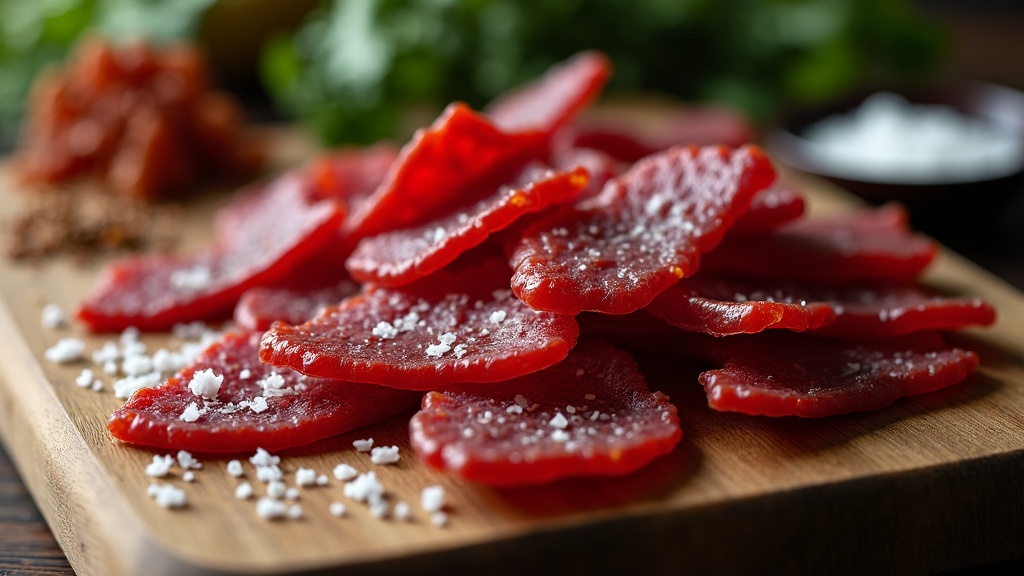
White spots can be salt crystallizing on the surface (harmless) or mold (not harmless). Salt crystals are hard, dry, and evenly distributed. Mold is fuzzy and often irregular. If you’re unsure, discard it — the cost of being wrong is too high.
The Verdict: Store Smart, Eat Safe
Here’s the takeaway: homemade beef jerky lasts 1–2 weeks at room temperature, 1–2 months refrigerated, and 6–12 months frozen. The key variables are how thoroughly you dried it (hitting that low water activity), what container you use, and whether you removed oxygen from the equation.
My personal recommendation: vacuum-seal your jerky in portioned bags, keep a week’s worth in the fridge for easy snacking, and freeze the rest. A good vacuum sealer, a pack of oxygen absorbers, and a reliable dehydrator are the three tools that make the biggest difference. Invest in those, and your jerky will outlast your willpower to leave it alone every single time.
Happy jerking. Stay safe. Eat well.
— Sam, Food Scientist & Amateur Butcher
Sources:
- National Center for Home Food Preservation (NCHFP), University of Georgia — So Easy to Preserve, 6th ed. 2014
- USDA Food Safety and Inspection Service — Jerky and Food Safety
- FoodSafety.gov — FoodKeeper App Storage Guidelines