Affiliate Disclosure: This post contains affiliate links. If you purchase through our links, we may earn a small commission at no extra cost to you. As an Amazon Associate I earn from qualifying purchases.
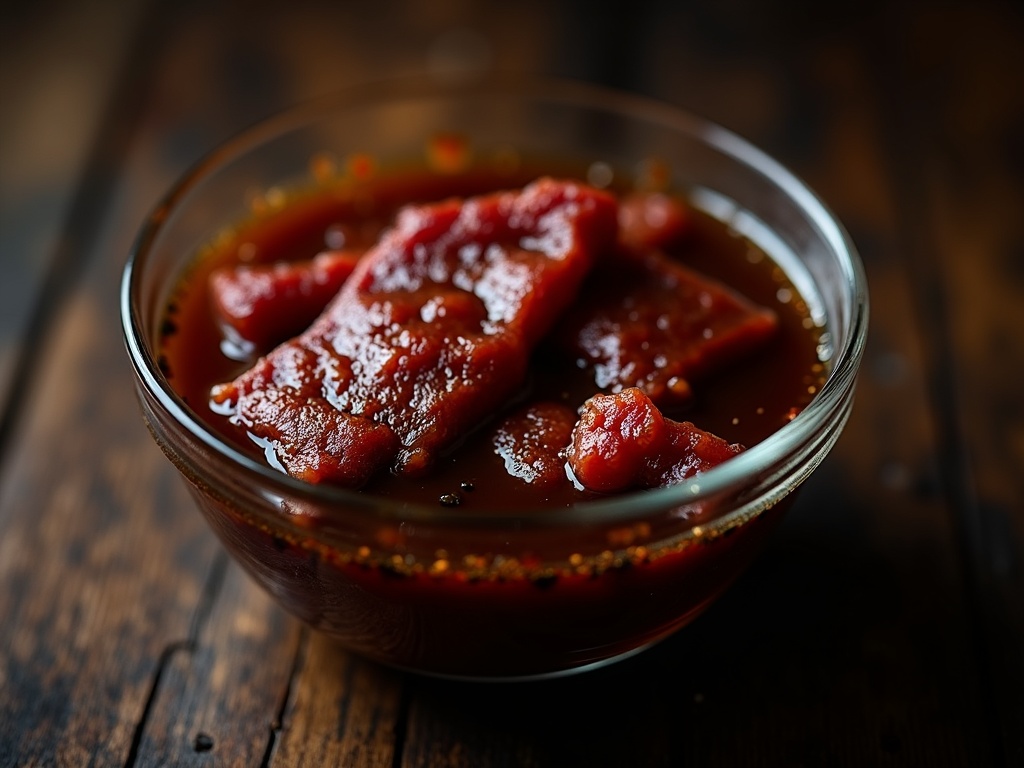
Every mediocre batch of jerky I’ve ever eaten had one thing in common: whoever made it thought the beef jerky marinade was just about flavor. It’s not. It’s chemistry — specifically, how salt, acid, and sugar interact with muscle proteins before a single piece of meat ever hits a dehydrator tray. Get the chemistry right and your jerky will be deeper, more complex, and structurally better than anything marinated haphazardly. Get it wrong and you’re making expensive shoe leather.
I’m . Food scientist, competitive jerky maker, and person who’s spent more time thinking about the Maillard reaction than is probably healthy. This is my complete guide to beef jerky marinades — the science behind them and five recipes I’ve tested obsessively.
The Science Behind a Great Beef Jerky Marinade
Three ingredients do the heavy lifting in any marinade. Everything else is flavor noise.
Salt: Osmosis and Curing
Salt is non-negotiable. It works through osmosis — drawing moisture out of the meat initially, then driving the brine back in as equilibrium reestablishes. This does two things: it redistributes water (making the meat more uniformly moist before drying), and it dissolves myosin proteins in the muscle fibers, which changes the texture of the finished jerky from rubbery to that satisfying, slightly springy chew.
The curing function is equally important. Salt inhibits bacterial growth by reducing water activity at the surface — one of your first lines of food safety defense before the heat of dehydration finishes the job. Sodium in soy sauce and Worcestershire isn’t just seasoning; it’s infrastructure.
Acids: Texture and Tenderizing
Acids — from citrus, vinegar, Worcestershire, or fermented ingredients — denature surface proteins. This opens up the outer muscle structure, allowing marinade to penetrate deeper and faster. Practically speaking, an acidic marinade at 12 hours will achieve more penetration than a non-acidic marinade at 24 hours.
Acid also affects texture. Lightly acidic marinades produce a slightly more tender bite in the finished jerky. Over-marinating in high-acid solutions (more than 48 hours) causes mushy, paste-like surface texture as the proteins over-denature — which is exactly why there’s a hard upper limit on marinade time.
Sugars: The Maillard Reaction
This is where I get excited. The Maillard reaction is a non-enzymatic browning reaction between amino acids and reducing sugars that occurs at elevated temperatures. In jerky, it’s responsible for that deep, roasted surface color and complex savory-sweet aroma that separates real jerky from beige dried meat.
Brown sugar, honey, mirin, and fruit juices all contain reducing sugars that fuel this reaction during the drying phase (particularly if you finish jerky with a brief high-heat oven blast). More sugar = more browning = more flavor. But too much sugar causes sticky, burnt exterior surfaces and significantly reduces shelf life. The sweet spot is 1–2 tablespoons per cup of marinade liquid.
Wet vs. Dry Marinade: When to Use Each
Wet marinades (liquid-based) are the standard for good reason: they penetrate the meat more uniformly, deliver acid, sugar, and salt simultaneously, and produce juicier, more complex-flavored jerky. Use wet marinades for cuts like top round and eye of round where you want flavor to reach the interior.
Dry rubs work differently. The dry salt draws surface moisture out, creating a concentrated brine on the meat’s exterior that slowly penetrates over time. Dry rubs produce a crustier, more intensely-flavored surface crust and are better suited for thinner-sliced jerky where penetration depth matters less. They’re also faster to apply at scale.
My rule: wet marinade for slices ¼ inch or thicker; dry rub for slices under 3/16 inch. For the five recipes below, all use wet marinades.
Marinating Time: The Numbers That Actually Matter
- Minimum: 6 hours. Below this, salt hasn’t penetrated more than the surface millimeter. The flavor will be superficial and the texture benefits minimal.
- Optimal: 12–24 hours. Salt and acid have penetrated deeply, myosin has been modified for texture, and sugars are well-distributed for even browning. This is where all five recipes below perform best.
- Maximum: 48 hours. Beyond this, especially in high-acid marinades, surface protein breakdown becomes noticeable — mushy texture, sometimes chalky or pasty finish. Not dangerous, just unpleasant.
Always marinate in the refrigerator (below 40°F). Marinating at room temperature accelerates bacterial growth on the meat surface before the dehydrator’s heat can address it.
5 Tested Beef Jerky Marinade Recipes
All recipes make enough marinade for 2 lbs of sliced beef (about 4–5 oz finished jerky). Marinate 12–24 hours in the refrigerator.
1. Classic Teriyaki
The benchmark everyone should master before experimenting. The mirin and brown sugar combo is the perfect fuel for the Maillard reaction.
- ½ cup low-sodium soy sauce
- ¼ cup mirin (Japanese sweet rice wine)
- 2 tablespoons brown sugar
- 1 tablespoon fresh ginger, grated (or 1 tsp ground ginger)
- 3 cloves garlic, minced (or 1 tsp garlic powder)
- 1 tablespoon rice vinegar
- ½ teaspoon black pepper
Whisk until sugar dissolves. This marinade produces deep mahogany-colored jerky with balanced sweet-savory flavor and good caramelization.
For this one, I recommend a quality low-sodium soy sauce — full-sodium soy creates jerky that’s genuinely too salty once the moisture drives out during drying.
2. Smoky Chipotle
Bold, smoky, with real heat that builds slowly. The lime juice provides acid; chipotles provide smokiness without requiring a smoker.
- ½ cup Worcestershire sauce
- ¼ cup soy sauce
- 2 chipotle peppers in adobo, minced (about 2 tablespoons)
- 1 tablespoon adobo sauce (from the can)
- 1 tablespoon smoked paprika
- 2 tablespoons lime juice (about 1 lime)
- 1 teaspoon garlic powder
- 1 teaspoon onion powder
- ½ teaspoon cumin
Blend briefly if you want a smoother marinade. The adobo sauce is key — don’t skip it. Produces rust-colored jerky with aggressive smoky heat.
Quality Worcestershire sauce is worth buying in bulk if you’re making regular batches — it’s the backbone of at least half my recipes and the gallon jugs are dramatically better value.
3. Garlic Pepper Traditional
This is the recipe that tastes like jerky your grandfather made — assuming your grandfather was good at jerky. No frills. Aggressive black pepper, deep soy-worcestershire backbone, simple.
- ½ cup soy sauce
- ¼ cup Worcestershire sauce
- 1 tablespoon coarse-ground black pepper
- 1½ teaspoons garlic powder
- 1 teaspoon onion powder
- ½ teaspoon red pepper flakes
- 1 teaspoon liquid smoke (optional, adds depth)
- 1 tablespoon brown sugar
The black pepper should be coarse — pre-ground powder doesn’t have the same bite in the finished jerky. This is my most-requested recipe for gift batches.
4. Korean BBQ
This one surprised me when I first tested it. The gochujang provides fermented heat and depth, the pear juice adds fruited sweetness and natural tenderizing enzymes (similar to pineapple), and the sesame oil adds aromatic complexity that other marinades can’t replicate.
- ¼ cup soy sauce
- 2 tablespoons gochujang (Korean red pepper paste)
- 3 tablespoons Asian pear juice (or apple juice)
- 1 tablespoon sesame oil
- 2 tablespoons brown sugar
- 3 scallions, thinly sliced
- 3 cloves garlic, minced
- 1 teaspoon fresh ginger, grated
- 1 teaspoon rice vinegar
Whisk well — gochujang needs to be fully dissolved. Pear or apple juice contains bromelain-adjacent enzymes that provide additional tenderizing beyond the acid. Strain the scallions before marinating if you want cleaner strips. This marinade produces jerky with complex, addictive flavor and a medium-heat finish.
5. Sweet Heat
Honey is one of the best Maillard reaction fuels you can use in jerky. Combined with sriracha and cayenne, this produces jerky with an intensely caramelized surface and a slow heat that builds with each piece.
- 3 tablespoons honey
- 2 tablespoons sriracha
- 3 tablespoons apple cider vinegar
- 2 tablespoons soy sauce
- 3 cloves garlic, minced
- ½ teaspoon cayenne pepper (adjust to heat preference)
- ½ teaspoon smoked paprika
- ½ teaspoon black pepper
The higher sugar content in this recipe means you need to watch your dehydrator temperature carefully — keep it at 160°F and check at the 4-hour mark to prevent burning. The finished jerky caramelizes beautifully and has a glossy surface. Not ideal for long storage (vacuum seal and eat within 3 weeks) due to honey’s hygroscopic nature.
Affiliate Tools Worth Having
Three tools that legitimately improve your marinade game:
- Low-sodium soy sauce: Buying by the gallon makes economic sense if you’re doing regular batches. Standard soy makes jerky that’s unpalatably salty once dried.
- Quality Worcestershire: Lea & Perrins in bulk is the standard. Generic worcestershire has a noticeably thinner flavor profile.
- Vacuum sealer for marinating: A vacuum sealer with a marinating canister reduces marinade time by 30–40% by pulling the marinade into the meat under negative pressure. What normally takes 12 hours can achieve similar penetration in 6–8 hours. Worth every penny if you’re making jerky on a schedule.
USDA Food Safety: The 160°F Rule
No marinade, no matter how salty or acidic, kills pathogens. The USDA recommends that all jerky reach an internal temperature of 160°F to kill E. coli O157:H7, Salmonella, and other pathogens. This is non-negotiable regardless of what your marinade contains.
The practical issue: most dehydrators run at 130–160°F, and the drying process can make bacteria more heat-resistant as moisture decreases — a phenomenon the USDA refers to as thermotolerance. Your safest approach:
- Dehydrate at 160°F until the jerky passes the bend test (bends without breaking, shows white fibers)
- Place finished jerky on a wire rack and heat in a 275°F oven for 10 minutes
- This guarantees internal temperature reaches 160°F
For complete guidance, the USDA FSIS Jerky Safety page is the authoritative source and worth reading in full.
Frequently Asked Questions
Can I reuse beef jerky marinade?
No. Marinade that has been in contact with raw meat contains raw meat juices and should be discarded. If you want a sauce to serve alongside finished jerky, set aside a separate portion before marinating — never use the marinade you soaked the raw meat in.
Does more marinade mean more flavor?
Not in the way most people think. Flavor penetration is limited by diffusion rate into muscle tissue — it’s a function of time and concentration, not volume. What matters is that the meat is fully submerged or in a sealed bag with good contact. A vacuum sealer or zip-lock bag with air pressed out is more effective than a giant bowl of marinade.
Can I over-marinate beef jerky?
Yes. Past 48 hours, especially in acidic marinades, the surface proteins break down to a mushy or chalky texture. In very high-acid marinades (heavy citrus or vinegar), this can happen in 24 hours. Stick to the 12–24 hour optimal window and you won’t have issues.
Do I need curing salt in my marinade?
It depends on your process. If you’re hitting 160°F internal temperature as described above, curing salt (Prague Powder #1) is optional for short-term consumption. If you’re making large batches for long-term storage (over 2 weeks at room temperature) or using a smoker that runs below 160°F, adding 1 teaspoon of Prague Powder #1 per 5 lbs of meat is strongly recommended as an additional safety layer.
Why does my marinated jerky taste flat after drying?
Two common culprits: (1) you used full-sodium soy sauce and the saltiness crushed every other flavor note, or (2) you didn’t include enough sugar for Maillard browning to develop during drying. The sweet component in a marinade isn’t just sweetness — it’s the precursor for the complex roasted flavor compounds that make jerky taste like jerky. Add 1–2 tablespoons of brown sugar or honey to your next batch and compare.
Sam’s Take: My Personal Favorite
The Garlic Pepper Traditional is the recipe I make most often, but the Korean BBQ is the one I’m most proud of. It took me six iterations to get the gochujang-to-pear juice ratio right, and when it landed, it was the first batch I’ve ever made that completely disappeared at a competition judging table before I even got to taste my own jerky.
Start with the teriyaki — it’s the best teaching recipe because every component is clearly identifiable in the finished product. Once you can taste the Maillard browning from the brown sugar, the soy depth, and the bright acid note from the rice vinegar as separate elements, you’ll understand how to build every other marinade from scratch.
That’s the real goal: not a collection of recipes, but an understanding of why they work. Once you have that, you can fix a flat batch, adjust heat level on the fly, and build your own signature recipe. The chemistry doesn’t change. Only the ratios do.
—
Food scientist, competitive jerky maker, Maillard reaction enthusiast
Sources: USDA FSIS Jerky Safety Guidelines

