This post contains affiliate links. As an Amazon Associate I earn from qualifying purchases.
I’ve been making jerky for over a decade, and I’ll be honest—I’ve ruined plenty of batches. There was a winter evening a few years back where I yanked a tray of eye of round out of the dehydrator, took one bite, and nearly cracked a molar. The jerky was basically beef leather. Not the good kind. The kind you’d use to sole a boot.
Tough jerky is one of the most common complaints I hear from home jerky makers, and the good news is it’s almost always fixable—or at least preventable. Whether your batch came out chewy and rubbery or hard and brittle, this guide will walk you through exactly what went wrong and what to do about it.
Why Does Beef Jerky Turn Out Tough?
To fix the problem, you need to understand the science. Beef is made up of muscle fibers, connective tissue (collagen), and fat. When you dry meat, you’re driving out moisture—ideally getting the water activity low enough to prevent microbial growth (below 0.85 Aw) while preserving chew and flexibility.
Here’s where things go sideways:
Muscle Fiber Orientation
If you cut with the grain—meaning your slices run parallel to the long muscle fibers—those fibers stay intact and create long, stringy, tough strips. Cutting against the grain severs those fibers, giving you a much more tender chew. This is probably the single biggest variable in jerky texture. A 90-degree change in how you slice the meat can transform a batch from rope to ribbon.
Collagen and Connective Tissue
Collagen doesn’t break down during jerky dehydration the way it does in a long braise. At dehydrator temperatures (130–165°F), connective tissue just dries out and becomes rubbery or leathery. That’s why lean cuts with less connective tissue—eye of round, top round, flank steak—make consistently better jerky than cuts like chuck or brisket, which are loaded with collagen better suited for low-and-slow cooking.
Drying Temperature and Time
Too high for too long = dry, hard, brittle jerky. Too low or too short = chewy, underdone jerky. The USDA recommends reaching an internal temperature of 160°F to ensure food safety, and most dehydrators run between 130–165°F. Getting the balance right is part art, part science—and part knowing your machine.
Is It Too Chewy or Too Hard? Know the Difference
Before you try to fix it, you need to diagnose it correctly. Chewy and tough are not the same thing.
Chewy / Rubbery Jerky
If your jerky bends without cracking and feels like you’re chewing through a rubber band, it’s likely one of these issues:
- Cut with the grain instead of against it
- Sliced too thick (over 1/4 inch)
- Underdone—not enough drying time or temperature
- Wrong cut of meat (too much connective tissue)
Chewy jerky usually still has some moisture in it, which actually makes it easier to rescue.
Hard / Brittle Jerky
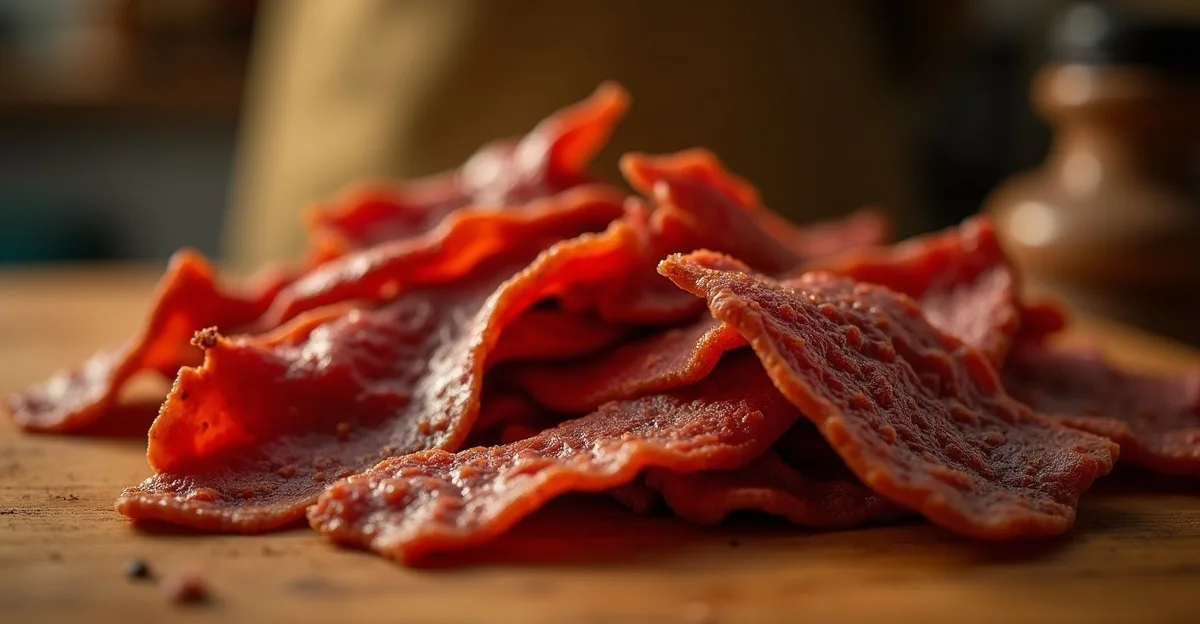
If your jerky snaps cleanly when you bend it—like a cracker—it’s overdone. The moisture content is too low. You’ve pushed past the ideal 20–30% remaining moisture range into something closer to beef jerky jerky. This is harder to fix, but not impossible.
How to Fix Already-Made Tough Jerky
Good news: there are a few reliable methods to salvage a tough batch. The goal is to reintroduce just enough moisture to soften the meat without making it soggy or creating a food safety risk.
The Steaming Method (Best for Hard/Brittle Jerky)
Set up a steamer basket over boiling water. Place the jerky strips in the basket, cover, and steam for 5–10 minutes. Check every few minutes—you want to soften it, not cook it. The steam rehydrates the surface fibers and makes the jerky pliable again. Let it cool on a rack before eating or re-storing. This works remarkably well on overdone batches.
The Oven Method (Good for Both Types)
Preheat your oven to 250°F. Wrap the tough jerky strips loosely in aluminum foil—this traps steam from the meat itself. Place on a baking sheet and heat for 15–20 minutes. Unwrap and let cool. The low heat gently loosens the muscle fibers without pushing more moisture out. This is my go-to method because it’s easy and consistent.
The Microwave Method (Quick Fix)
Place jerky on a microwave-safe plate. Lay a damp (not soaking wet) paper towel over the top. Microwave in 15-second bursts, checking texture after each burst. Usually 30–45 seconds total is enough. This is the fastest method but the least precise—easy to overshoot and make it rubbery in the other direction. Use it when you’re impatient (like me, on most Sundays).
Important note on food safety: Any time you add moisture back to jerky, you’re potentially raising the water activity. Store rehydrated jerky in the fridge and eat within 2–3 days. Don’t leave it at room temperature for extended periods.
Preventing Tough Jerky Next Time
The best fix is making it right the first time. Here are the variables I control on every single batch:
Cut Thickness: The 1/4-Inch Rule
Slice your meat to 1/4 inch (about 6mm) consistently. Thicker than that and the outside dries before the inside has a chance to catch up, leaving you with a dry exterior and chewy center. Thinner and you risk over-drying too quickly. A good electric meat slicer is a game changer for consistency—I fought hand-slicing for years before finally getting one, and I’ll never go back.
If you’re slicing by hand, partially freeze the meat for 1–2 hours first. It firms up beautifully and makes thin, even slices much easier to achieve.
Marinade Time: Minimum 4 Hours, Ideal 12–24
Salt in your marinade does more than add flavor—it denatures proteins and begins breaking down muscle fibers, which contributes to tenderness. A rushed 1-hour marinade gives you flavor on the outside and a tougher interior. I aim for at least 12 hours in the fridge, and I’ve found overnight (18–24 hours) hits the sweet spot for most cuts.
Check out our Beef Jerky Marinade Guide for the full science on what each ingredient actually does to the meat.
Temperature and Time: Hit 160°F Internal
The USDA recommends heating beef jerky to an internal temperature of 160°F to kill pathogens like Salmonella and E. coli. Most home dehydrators struggle to achieve this reliably on their own—the USDA actually recommends finishing jerky in a 275°F oven for 10 minutes after dehydrating if you’re not using a unit that can guarantee 160°F throughout.
A digital meat thermometer is essential. I target 145–155°F during dehydration and then finish in the oven. This also helps with texture—the brief oven blast tightens the muscle fibers just enough without drying them out.
Speaking of dehydrators, if yours can’t maintain consistent temps, that might be your problem. Our roundup of best cheap food dehydrators for beef jerky covers budget options that still hit proper temperatures.
Meat Selection: Go Lean, Go Right
Here are the cuts I recommend, ranked by consistency of results:
- Eye of Round – My personal favorite. Very lean, tight grain, slices beautifully against the grain.
- Top Round – Slightly more affordable, great flavor, minimal connective tissue.
- Flank Steak – Excellent flavor, pronounced grain makes it easy to slice against. Can be pricier.
- Bottom Round – Works well but has slightly more connective tissue than top round.
Avoid chuck roast, brisket, or any cut with heavy marbling or visible connective tissue bands. The fat goes rancid during storage and the collagen just makes your jerky chewy and tough regardless of how well you dry it.
A quality food dehydrator with adjustable temperature control also makes a massive difference in repeatability. Once you dial in the temp and time for your specific machine, you can hit the same texture batch after batch.
When to Just Start Over
Sometimes the batch is beyond saving. If your jerky has any of these characteristics, toss it and take notes for next time:
- It’s completely desiccated—more powder than strip when you handle it
- There’s visible mold (this means it was underdone and stored improperly—food safety issue)
- The flavor is off—rancid fat from a too-fatty cut doesn’t improve with rehydration
- The texture after multiple fixing attempts is still inedible
Don’t be too hard on yourself. I’ve scraped entire batches. Write down what went wrong—cut thickness, marinade time, temperature, dehydrator time—and adjust one variable at a time. That’s how you get dialed in.
Final Thoughts from Sam
Tough jerky is frustrating, but it’s one of those problems that has clear, correctable causes. Most of the time, it comes down to three things: cut direction, slice thickness, and drying time. Nail those three and you’ll be making consistently great jerky.
The rescue methods—steaming, oven wrapping, microwave with a damp towel—are legitimately useful and have saved me more batches than I care to admit. But prevention is always better than the cure.
If you’re dialing in your technique and want to level up your flavor at the same time, check out our complete marinade science guide—understanding what each ingredient does at a molecular level changed how I approach every batch.
Now go fix that jerky. You’ve got this.