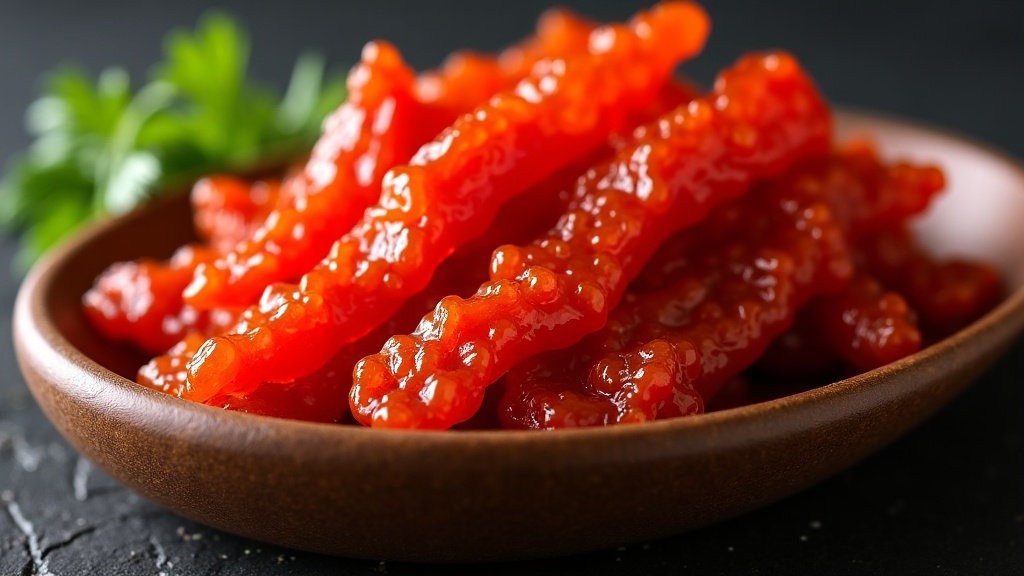
Korean-Style Beef Jerky Recipe: Gochujang, Soy and Sesame Marinade
About three years into my jerky-making journey, my neighbor Dan brought back gochujang from a trip to Seattle’s Koreatown. “Try this,” he said. I did. Game changer. That sweet-spicy-funky Korean chili paste turned my standard teriyaki game completely upside down. Since then, I’ve run this Korean beef jerky recipe through probably 40 different batches in the garage, tweaking the ratios until my kids stopped asking for the teriyaki and started requesting “the red stuff” instead.
This isn’t some Americanized knockoff—this is legitimate Korean bulgogi-style jerky with gochujang front and center, balanced with soy, sesame, and just enough sweetness to caramelize during drying. It’s got layers: sweet up front, savory in the middle, heat on the finish. If you’ve only ever made basic jerky, this recipe will recalibrate what you think jerky can be.
What Makes Korean Beef Jerky Different
Traditional American jerky relies heavily on soy sauce, Worcestershire, and liquid smoke. Korean beef jerky (often called yukpo or bulgogi-style jerky) brings in gochujang, sesame oil, ginger, and garlic for a completely different flavor architecture. The gochujang adds fermented depth and moderate heat—not blow-your-head-off spicy, but enough to keep things interesting. Sesame oil gives it that nutty, toasted finish you get in Korean BBQ.
The other big difference: sugar content. Korean marinades tend to run sweeter than Western jerky, which means more caramelization during the drying process. You’ll get darker edges, a slight tackiness, and an almost candied texture if you nail the timing. It’s not traditional leathery jerky—it’s softer, chewier, more like what you’d get at a Korean market.
Korean Beef Jerky Recipe: Ingredients and Marinade Ratios
This recipe makes about 1 pound of finished jerky from 2 pounds of raw beef. I use eye of round or top round—lean cuts with minimal fat. Fat doesn’t dehydrate and will shorten your shelf life.
| Ingredient | Amount |
|---|---|
| Top round or eye of round beef | 2 lbs |
| Gochujang (Korean chili paste) | 3 tablespoons |
| Soy sauce | 1/3 cup |
| Brown sugar | 1/4 cup |
| Sesame oil | 2 tablespoons |
| Rice vinegar | 2 tablespoons |
| Fresh ginger, grated | 1 tablespoon |
| Garlic, minced | 4 cloves |
| Toasted sesame seeds | 1 tablespoon |
| Black pepper | 1/2 teaspoon |
| Green onions, sliced (optional) | 2 stalks |
Where to buy: You can grab gochujang on Amazon if your local grocery doesn’t stock it. Same goes for sesame oil and a food dehydrator if you don’t have one yet.
Step-by-Step Preparation
1. Prep the beef: Trim all visible fat from your beef. Fat = rancidity. I can’t stress this enough. Slice against the grain into 1/8″ to 1/4″ thick strips. Thinner = crispier. Thicker = chewier. I go 3/16″ for that sweet spot. Pro tip: freeze the beef for 45-60 minutes before slicing. It firms up and makes clean cuts way easier.
2. Make the marinade: In a large bowl, whisk together gochujang, soy sauce, brown sugar, sesame oil, rice vinegar, grated ginger, and minced garlic. The gochujang won’t fully dissolve—that’s fine. Just get it evenly distributed. Stir in sesame seeds and black pepper. If you’re using green onions, toss them in now.
3. Marinate: Add beef strips to the marinade. Use your hands—get in there and massage the marinade into every piece. Cover and refrigerate for at least 6 hours. I usually go overnight (12-16 hours). The longer it sits, the deeper the flavor penetrates. I’ve done 24 hours before and it’s almost too intense, so don’t push past that.
4. Pre-dry prep: Pull the beef out of the fridge. Lay strips on paper towels and pat off excess marinade. You want the meat coated, not dripping. Excess liquid extends drying time and creates uneven texture.
Drying Methods: Dehydrator vs Oven vs Smoker
I’ve made this recipe all three ways. Here’s the real talk on each:
Dehydrator (my go-to): Set to 160°F. Arrange strips in a single layer on trays—don’t overlap. Drying time: 4-6 hours depending on thickness and your dehydrator’s airflow. Check at 4 hours. The jerky should bend without breaking, with no moisture beading up. This method gives you the most control and the most consistent results. If you’re serious about jerky, get a dehydrator.
Oven: Preheat to 175°F (or your oven’s lowest setting). Place strips directly on oven racks with a foil-lined sheet pan on the bottom rack to catch drips. Prop the oven door open about 2 inches with a wooden spoon to let moisture escape. Drying time: 3-5 hours. Rotate racks every 90 minutes. The oven works, but it’s less efficient and your house will smell like Korean BBQ for 48 hours (not necessarily a bad thing).
Smoker: This is where Korean beef jerky gets next-level. Run your smoker at 160-175°F with a mild wood like apple or cherry. Korean flavors are bold enough to handle smoke, but don’t go heavy with mesquite or hickory—it’ll overpower the gochujang. Drying time: 4-5 hours. The smoke adds a whole other dimension. If you’ve got a pellet smoker, this is the move.
How to Tell When It’s Done
Tear a piece in half. You should see fibrous texture inside, no wet spots, no raw-looking areas. The jerky should bend and crack slightly but not snap clean in half. If it snaps, you’ve overdone it—it’ll be brittle and dry. If it bends completely without resistance, give it another 30-60 minutes. The sweet spot is when it cracks at about 90 degrees of bend. That’s the magic zone.
Korean-style jerky tends to stay softer than traditional jerky because of the sugar content. Don’t chase leather-dry texture—you want some give, almost a candied chew.
Storage and Shelf Life
Let the jerky cool completely—at least 30 minutes at room temp. This prevents condensation in your storage container. I use vacuum-sealed bags for long-term storage (2-3 months in the pantry, 6 months in the fridge). If you don’t have a vacuum sealer, use ziplock bags and squeeze out as much air as possible. Store in a cool, dark place.
Because of the higher sugar content in this Korean beef jerky recipe, it’s slightly more prone to moisture absorption than plain jerky. If you live in a humid climate, refrigerate it. I’m in Wisconsin, so humidity’s not usually an issue, but in summer I toss it in the fridge just to be safe.
Once you open a bag, consume within 1-2 weeks for peak texture and flavor. If you see any mold, fuzziness, or off smells, toss it immediately.
Frequently Asked Questions
Can I use chicken or pork instead of beef?
Absolutely. I’ve done this marinade with pork loin and chicken breast. Both work great. Slice thin, marinate the same way, but reduce drying time—poultry dries faster than beef. Check at 3 hours for chicken, 3.5 hours for pork. Make sure internal temp hits 165°F for food safety.
Is gochujang really spicy?
Not crazy spicy—it’s more of a warm heat with sweetness and funk. On a scale of 1-10, gochujang is maybe a 4 or 5. If you’re heat-sensitive, start with 2 tablespoons instead of 3. If you want more kick, add 1/2 teaspoon of gochugaru (Korean chili flakes) to the marinade.
Can I substitute gochujang with something else?
Technically yes, but you’ll lose the signature flavor. Sriracha + miso paste is the closest substitute (2 tablespoons sriracha + 1 tablespoon miso). It won’t be authentic, but it’ll get you in the ballpark. Honestly, just buy the gochujang—one jar lasts months and you’ll use it for everything.
How thin should I really slice the beef?
Aim for 3/16″ (about the thickness of two credit cards stacked). Thinner than 1/8″ and it gets brittle and chippy. Thicker than 1/4″ and you’re looking at 7+ hour dry times and inconsistent texture. A meat slicer makes this way easier, but a sharp knife and a semi-frozen roast work just fine.
Why is my jerky sticky after drying?
That’s the sugar caramelizing—it’s normal for Korean-style jerky. If it’s excessively sticky, you either didn’t pat off enough marinade before drying or your drying temp was too low. Next batch, blot more aggressively and make sure you’re hitting 160°F minimum. A little tackiness is fine and actually desirable for this style.
Final Thoughts on Korean Beef Jerky
This Korean beef jerky recipe with gochujang has become my most-requested batch. I make it for camping trips, road snacks, and gifts. My oldest kid (12) started calling it “Seoul strips” and the name stuck. It’s got complexity that basic jerky just doesn’t—every bite unfolds in stages.
If you’ve never worked with gochujang before, this is a perfect entry point. It’s forgiving, it’s bold, and it makes jerky that actually stands out. Run this recipe once, dial in your preferred thickness and heat level, and it’ll go into permanent rotation. That’s what happened in my garage, anyway.

