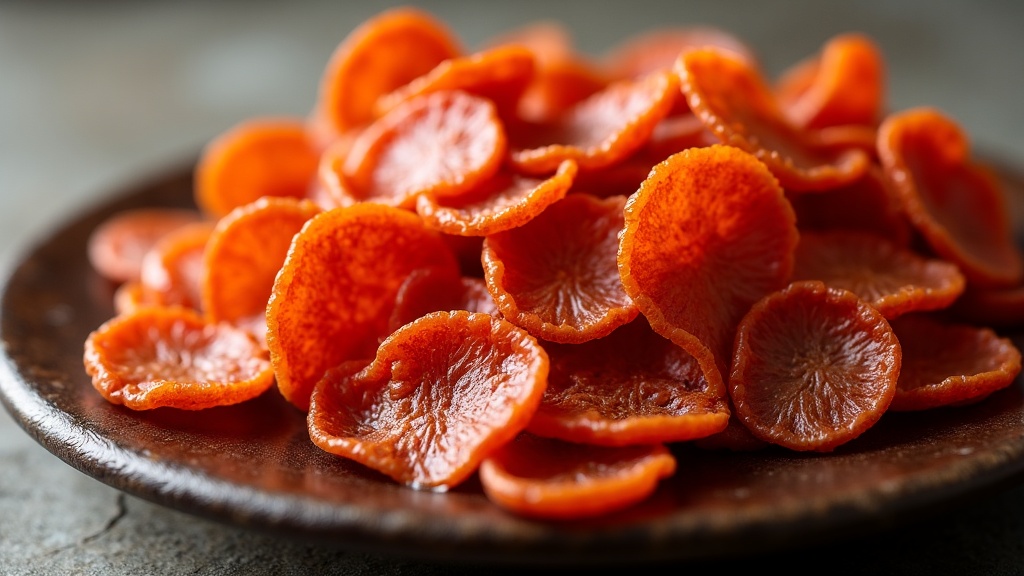
Mushroom Jerky Recipe: Plant-Based Jerky That Actually Satisfies
I’ve made over 400 batches of jerky in the last eight years, and I’ll be honest—when my daughter asked me to try mushroom jerky, I was skeptical. But after dialing in the right technique, mushroom jerky has become one of my most-requested batches, even among my meat-eating friends.
The secret is treating mushrooms like any protein: proper prep, the right marinade ratios, and low-and-slow dehydration. Skip the overcomplicated recipes you’ll find elsewhere. This is the streamlined approach that actually works.
Why Mushrooms Make Great Jerky
Mushrooms have a natural advantage that most plant-based proteins don’t—they’re already packed with umami and have a meaty texture when properly prepared. Unlike tofu or seitan that need heavy seasoning to taste like anything, mushrooms bring their own savory depth.
The key is choosing mushrooms with dense, thick flesh that can handle 6-8 hours in the dehydrator without disintegrating. Delicate button mushrooms won’t cut it here.
Best Mushrooms for Jerky (Ranked)
After testing every variety I could find at three different grocery stores, here’s what actually works:
| Mushroom Type | Texture Rating | Best For | Notes |
|---|---|---|---|
| King Oyster | 10/10 | Traditional jerky strips | Thick stems slice perfectly, closest to meat texture |
| Shiitake | 8/10 | Rich, smoky flavor | Smaller pieces, intense umami |
| Portobello | 7/10 | Chip-style jerky | Remove gills first, caps work better than stems |
| Oyster | 6/10 | Budget option | Thinner, more delicate—tear into strips |
My go-to is king oyster mushrooms. They’re meatier, hold up better during dehydration, and you can slice them lengthwise into proper jerky strips. Most Asian markets carry them for $4-6 per pound.
The Base Mushroom Jerky Recipe
This recipe makes enough for 1 pound of fresh mushrooms (yields about 2-3 ounces dried jerky).
Ingredients
- 1 lb king oyster mushrooms (or mushroom of choice)
- 1/4 cup tamari or soy sauce
- 2 tablespoons maple syrup
- 1 tablespoon liquid smoke
- 1 tablespoon olive oil
- 2 teaspoons smoked paprika
- 1 teaspoon garlic powder
- 1 teaspoon onion powder
- 1/2 teaspoon black pepper
- 1/4 teaspoon cayenne (optional)
Step-by-Step Instructions
1. Prep the mushrooms: Clean with a damp paper towel (don’t wash them—they’ll absorb water like a sponge). For king oysters, slice lengthwise into 1/4-inch thick strips. For portobellos, remove the dark gills with a spoon, then slice into 1/4-inch strips. For shiitakes, remove stems and slice caps.
2. Make the marinade: Whisk together all liquid ingredients and spices in a bowl. Taste it—it should be slightly too salty and too sweet. Remember, you’re reducing a pound of mushrooms down to 2-3 ounces, so flavors concentrate.
3. Marinate: Toss mushroom slices in marinade, making sure every piece is coated. Let sit for 30-60 minutes. Unlike meat, mushrooms don’t need overnight marinating—they absorb flavor quickly.
4. Arrange on dehydrator trays: Place mushroom slices on dehydrator trays in a single layer, leaving space between pieces. Don’t overlap or they’ll stick together.
5. Dehydrate: Set your dehydrator to 135°F. King oyster mushrooms take 6-8 hours. Shiitakes take 5-7 hours. Portobellos take 7-9 hours. Check at the 5-hour mark and every hour after.
6. Test for doneness: Mushroom jerky should be dry to the touch, leathery, and pliable but not brittle. It’ll crisp up slightly as it cools. If you can squeeze out any moisture, it needs more time.
Critical Tips for Success
After making dozens of batches, here’s what separates mediocre mushroom jerky from the stuff people actually ask for seconds of:
Don’t skimp on the oil. That tablespoon of olive oil in the marinade is non-negotiable. It helps the seasoning stick and gives the jerky a satisfying mouthfeel. Without it, you get dry, chalky pieces.
Slice uniformly. Inconsistent thickness means some pieces turn to cardboard while others stay soggy. Use a ruler if you have to—1/4 inch is the sweet spot.
Rotate your trays. Most dehydrators have hot spots. Swap tray positions halfway through for even drying. I learned this the hard way after burning an entire batch on the bottom tray.
Store properly. Mushroom jerky doesn’t last as long as beef jerky. Keep it in an airtight container in the fridge for up to 2 weeks, or freeze for 2-3 months.
Flavor Variations That Work
Once you nail the base recipe, here are my tested variations:
Teriyaki Mushroom Jerky
Replace maple syrup with mirin, add 1 tablespoon rice vinegar, 1 teaspoon fresh grated ginger, and 1 teaspoon sesame oil. Top with sesame seeds before dehydrating.
Spicy BBQ Mushroom Jerky
Add 2 tablespoons tomato paste, increase cayenne to 1 teaspoon, add 1/2 teaspoon cumin. Swap smoked paprika for chipotle powder if you want serious heat.
Herb & Garlic Mushroom Jerky
Reduce soy sauce to 3 tablespoons, add 2 tablespoons balsamic vinegar, increase garlic powder to 2 teaspoons, add 1 teaspoon dried thyme and 1 teaspoon dried rosemary.
Oven Method (If You Don’t Have a Dehydrator)
You can make mushroom jerky in your oven, but it’s trickier. Set your oven to its lowest setting (usually 170-200°F). Prop the door open with a wooden spoon to let moisture escape. Place mushrooms on a wire rack over a baking sheet.
Check every 30 minutes and rotate pans. Oven jerky typically takes 3-4 hours but can dry unevenly. I’ve done it in a pinch, but if you’re making jerky more than twice a year, just grab a basic dehydrator. The $40 models work fine.
Common Mistakes to Avoid
Using wet mushrooms: I see this constantly. If your mushrooms are damp when they go into the dehydrator, you’re adding hours to your drying time and risking spoilage. Pat them completely dry after cleaning.
Over-marinating: More than 90 minutes and mushrooms start breaking down and getting mushy. They’re not meat—they don’t need overnight in the fridge.
Dehydrating at high heat: Temperatures above 145°F cook the mushrooms instead of drying them. You’ll end up with brittle chips instead of chewy jerky.
Storing warm jerky: Let it cool completely before sealing in containers. Warm jerky creates condensation, which means mold. I learned this lesson with a ruined batch of shiitake jerky that looked perfect until day three.
Frequently Asked Questions
Can you make mushroom jerky without a dehydrator?
Yes, but it’s less consistent. Use your oven on the lowest setting with the door cracked open. Expect 3-4 hours of drying time and check frequently. An air fryer also works—set it to 135°F and check every 30 minutes.
How long does mushroom jerky last?
Properly dried and stored in an airtight container in the refrigerator, mushroom jerky lasts 2 weeks. In the freezer, it’ll keep for 2-3 months. It doesn’t have the shelf stability of beef jerky because there’s no salt-curing process and mushrooms retain more moisture.
What does mushroom jerky taste like?
It’s savory, chewy, and intensely umami—closer to teriyaki beef jerky than anything else. The texture isn’t identical to meat, but it’s satisfying in its own way. King oyster mushrooms have the meatiest bite. My 12-year-old son, who’s never met a vegetable he liked, demolishes this stuff.
Is mushroom jerky healthy?
Compared to most beef jerky, yes. It’s lower in calories and fat, has no cholesterol, and mushrooms provide B vitamins and selenium. That said, it’s still high in sodium from the marinade. If you’re watching salt intake, reduce the soy sauce to 3 tablespoons and add an extra tablespoon of maple syrup for balance.
Can I use canned or jarred mushrooms?
Don’t. Canned mushrooms are already cooked and waterlogged. They’ll turn to mush in the dehydrator. Fresh mushrooms are non-negotiable for this recipe. Frozen might work if you thaw and thoroughly dry them first, but I haven’t tested it enough to recommend it.

