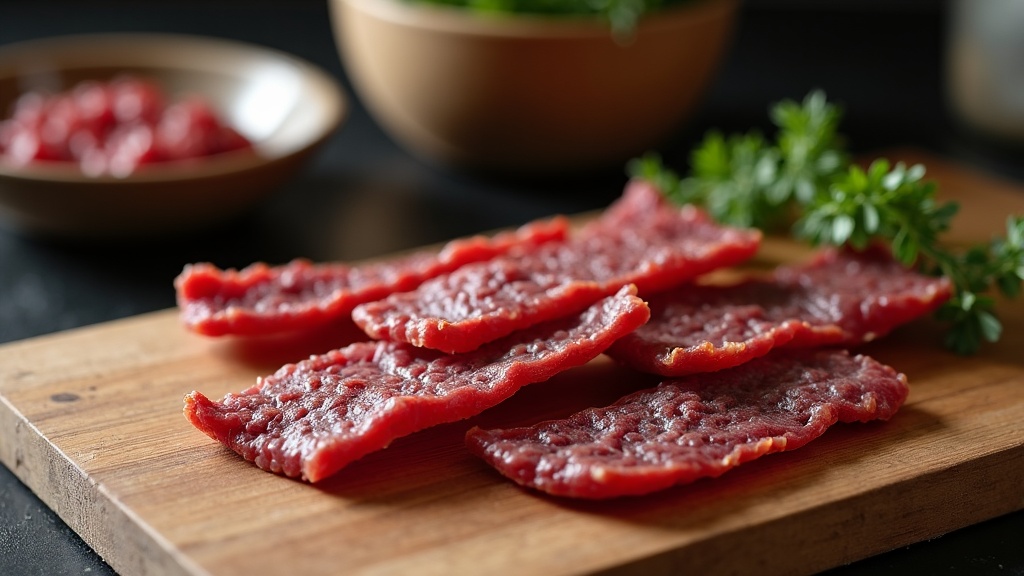
I’ve been making jerky in my garage for eight years, and here’s the honest answer: plan on 12-16 hours total from start to finish. That breaks down to 30-45 minutes for prep and slicing, 4-12 hours for marinating, and 4-8 hours for dehydrating. The actual hands-on time? Maybe an hour. The rest is just waiting.
After 400+ batches, I can tell you the biggest variable isn’t your recipe or equipment—it’s how thick you slice your meat and how patient you are with the marinade. Let me walk you through the real timeline so you know exactly what to expect.
The Complete Beef Jerky Timeline
Here’s how a typical batch breaks down in my garage. I’m using a food dehydrator at 160°F, which is what I recommend for most home jerky makers.
Stage 1: Prep and Slicing (30-45 Minutes)
This is your active work time. I spend about 30 minutes trimming fat, partially freezing the meat (makes slicing way easier), and cutting 3-5 pounds of beef into strips. If you’re new to this, add 15 minutes while you figure out your knife angles.
The key trick: pop your meat in the freezer for 45-90 minutes before slicing. You want it firm but not frozen solid. This lets you get consistent 1/4-inch slices, which directly affects your drying time later.
Stage 2: Marinating (4-12 Hours)
This is where most people get impatient, but it matters. I do a minimum 6-hour marinade, usually overnight. That’s 8-12 hours in the fridge in a sealed bag, flipped once halfway through.
Can you get away with 4 hours? Yeah, and I have when I’m in a rush. But 6+ hours gives you deeper flavor penetration, especially if you’re using a teriyaki or soy-based marinade. I’ve never found a benefit to going past 24 hours—you just start getting mushy texture.
Stage 3: Dehydrating (4-8 Hours)
This is the big variable. In my dehydrator with temperature control, I run 160°F for 4-6 hours for 1/4-inch strips. Thicker cuts (3/8-inch) need 6-8 hours.
I check at the 4-hour mark and then every 30-60 minutes. You’re looking for meat that bends and cracks but doesn’t snap in half. If it snaps, you’ve gone too far and made meat candy (which my kids love but isn’t technically jerky).
How Slicing Thickness Affects Time
This is the single biggest factor you control. Here’s what I’ve documented across hundreds of batches:
| Slice Thickness | Dehydrator Time (160°F) | Oven Time (175°F) | Best For |
|---|---|---|---|
| 1/8 inch (thin) | 3-4 hours | 3-4 hours | Crispy jerky, faster batches |
| 1/4 inch (standard) | 4-6 hours | 4-5 hours | Classic jerky texture |
| 3/8 inch (thick) | 6-8 hours | 5-7 hours | Chewy, substantial jerky |
| 1/2 inch (very thick) | 8-10 hours | 6-8 hours | Steak-like chew, not beginners |
I stick with 1/4-inch cuts for 90% of my batches. It’s the sweet spot between reasonable drying time and good texture.
Dehydrator vs. Oven vs. Smoker: Time Differences
I’ve used all three methods over the years. Each has different timelines and tradeoffs.
Food Dehydrator (My Standard Method)
Running at 160°F, this takes 4-6 hours for standard 1/4-inch strips. The benefit is even airflow and precise temperature control. I can load it up at 10 PM and check it when I wake up, though I don’t usually let it run overnight until I’m confident in my batch timing.
With a good Nesco dehydrator or similar, you’re looking at minimal variation batch to batch. That consistency is worth the equipment cost if you’re serious about jerky.
Oven Method
Set your oven to 175°F (lowest setting for most ovens) and prop the door open 2-3 inches with a wooden spoon. You’re looking at 4-5 hours for 1/4-inch strips. The issue is temperature fluctuation and less efficient moisture removal.
I did this for my first year before getting a dehydrator. It works, but you need to rotate trays every 90 minutes and watch more closely. The time savings aren’t worth the babysitting, in my opinion.
Smoker Method
If you’re adding smoke flavor with a smoker, plan on 4-6 hours at 160-180°F. First 1-2 hours with light smoke, then just heat to finish drying.
This is my weekend method when I want something special. Same timeline as a dehydrator but with added smoke complexity. The prep and marinating time stays the same—you’re just changing the final drying stage.
Variables That Slow You Down (Or Speed You Up)
After tracking hundreds of batches, here’s what actually affects your timeline:
Humidity in Your Kitchen
High humidity days add 1-2 hours to drying time. I’m in Wisconsin, so summer batches take noticeably longer than winter ones. If you’re in the South or making jerky on a rainy day, add time to your estimate.
How Much You Load Your Dehydrator
Overloading trays can add 2-3 hours. You want air circulation between strips—no overlap, no touching. I learned this the hard way when I tried to cram 5 pounds into a dehydrator rated for 3 pounds. Added 3 hours and got uneven results.
Fat Content
Lean cuts like top round or eye of round dry faster than cuts with marbling. Fat takes longer to dry and affects shelf life, so I trim aggressively. This isn’t a huge time factor—maybe 30-60 minutes difference—but it’s noticeable.
Pre-Drying Your Strips
Some people pat their marinated strips dry with paper towels before loading the dehydrator. I tested this over 10 batches and saved about 45 minutes average on drying time. Worth it if you’re in a rush, though it wastes some marinade.
The Realistic One-Day Jerky Schedule
Here’s how I run a batch when I want same-day jerky (rare, but possible):
- 7:00 AM: Pull meat from freezer, let partially thaw for 45 minutes
- 7:45 AM: Slice meat into 1/4-inch strips (30 minutes)
- 8:15 AM: Mix marinade, bag everything, into the fridge
- 2:15 PM: Pull from fridge (6-hour marinade minimum)
- 2:30 PM: Load dehydrator, start at 160°F
- 6:30 PM: Start checking (4-hour mark)
- 7:30-8:00 PM: Done, cool down, package
That’s a compressed schedule. My normal routine is slicing and marinating after dinner one night, then running the dehydrator the next afternoon. Much less rushed.
Can You Speed Up the Process?
I’ve tried every shortcut. Here’s what actually works:
Thinner slices: Going from 1/4-inch to 1/8-inch saves 1-2 hours of drying time. Trade-off is you get crispier, less chewy jerky.
Higher temperature: Bumping to 170-175°F can save 30-60 minutes, but you risk case hardening (dried exterior, raw interior). I only do this when I’m desperate and watching closely.
Skip the marinade: A dry rub only needs 1-2 hours versus 6-12 for wet marinade. I do this maybe 5% of the time when I want same-afternoon jerky.
What doesn’t work: trying to rush the dehydrating stage by cranking temp to 200°F+. You’ll cook your jerky instead of drying it, and the texture goes wrong.
When to Check If Your Jerky Is Done
Don’t rely on time alone. I start checking at the 4-hour mark and then every 30-60 minutes after that. Grab a piece, let it cool for 30 seconds (important—it’ll seem more done when hot), then bend it.
You want it to bend and crack without breaking completely. White fibers should be visible in the crack, but no moisture should bead up. If it snaps clean in half, you’ve overdone it slightly (still edible, just drier than ideal).
I pull my batches when about 80% of pieces hit that bend-and-crack stage. The last 20% that seem slightly underdone will finish drying as everything cools in the open air.
Frequently Asked Questions
Can you make jerky in under 8 hours total?
Yes, if you use thin slices (1/8-inch), a short marinade (2-4 hours), and a dehydrator at 165-170°F. I’ve done start-to-finish batches in 6-7 hours when necessary. The jerky is good but not as flavorful as my standard overnight-marinade batches.
Does ground beef jerky take less time than sliced jerky?
Usually yes. Ground jerky pressed thin (1/8 to 3/16-inch) in a jerky gun typically dries in 3-5 hours. It’s faster because of consistent thickness and more surface area. The trade-off is different texture—more like a meat stick than traditional jerky.
How long can marinated meat sit before dehydrating?
I’ve gone up to 48 hours in the fridge with good results. Beyond that, the texture starts getting mushy, especially with acidic marinades (citrus, vinegar). If you need to delay, I’d say 36 hours is your safe maximum before texture degrades.
Why did my jerky take 10 hours when the recipe said 6?
Most common reasons: slices too thick, dehydrator overloaded, humid day, or your dehydrator’s actual temp is lower than the setting. I’d check your slice thickness first—it’s the usual culprit. If you don’t have a thermometer to verify your dehydrator temp, that’s worth checking too.
Can you leave jerky in the dehydrator overnight?
I do this regularly once I know my batch timing. If I start a batch at 8 PM, I know my dehydrator will finish around 2-4 AM for standard cuts. I check before bed (around 11 PM) to confirm it’s progressing normally, then pull it in the morning. The jerky just sits in the turned-off dehydrator cooling down—no harm done.
My Bottom Line After 400+ Batches
Plan on 12-16 hours start to finish, with only 1 hour of actual hands-on work. The bulk of that time is marinating (6-12 hours) and dehydrating (4-8 hours). Both stages are passive—you’re not standing there watching.
If you want same-day jerky, it’s doable in 8-10 hours with thin slices and a short marinade, but you sacrifice some flavor depth. My recommendation for beginners: slice and marinade after dinner on Day 1, then run your dehydrator after work on Day 2. You’ll have jerky by bedtime without feeling rushed, and the overnight marinade gives you better results than trying to compress everything into one day.
The timing gets predictable after your first 5-10 batches. You’ll figure out your dehydrator’s quirks, your preferred slice thickness, and how long your marinade needs. Then it’s just routine.

