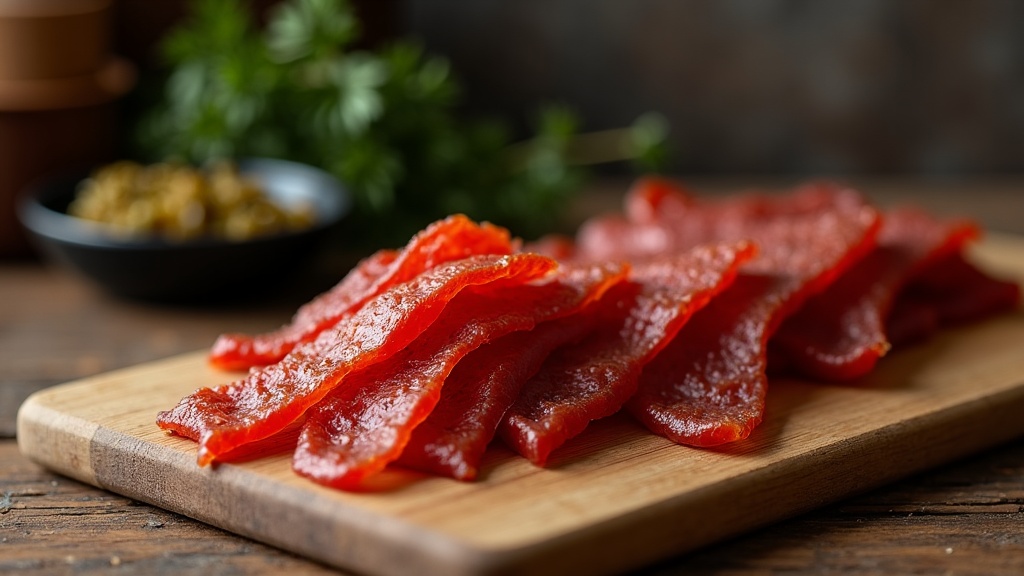
Can You Make Jerky Without Marinade?
Yes, you can absolutely make jerky without marinade — and after 400+ batches in my garage, I’d argue dry-rubbed jerky often turns out better. You skip the wet mess, get more control over salt penetration, and the meat develops a cleaner, more concentrated flavor. I’ve been making jerky both ways for eight years, and about 60% of my batches now use a dry cure instead of a liquid marinade.
The marinade-free method isn’t just easier — it’s actually closer to how commercial jerky operations work. Let me walk you through exactly how to do it, why it works, and when you’d still want to use a marinade.
Marinade vs. Dry Rub: What’s the Actual Difference?
A marinade is a liquid mixture (soy sauce, Worcestershire, vinegar, etc.) that you soak meat in for 4-24 hours. A dry rub is a mixture of salt, sugar, and spices that you massage directly onto the meat surface. Both methods season the meat and help preserve it, but they work differently.
With a marinade, the liquid carries flavors into the meat through osmosis. The problem? Meat can only absorb so much liquid, and most of what you taste is actually on the surface anyway. You also end up with dripping, messy slices that take longer to dehydrate.
With a dry cure, salt draws moisture out of the meat while simultaneously carrying spices inward through diffusion. The meat stays firm, dries faster, and you get better texture control. The salt concentration is more precise because you’re not diluting it in liquid.
Why I Started Making Jerky Without Marinade
Around batch 150, I got tired of the marinade mess. My garage fridge had three different containers of marinating meat, each with a gallon bag taking up space. One bag leaked in the fridge overnight — soy sauce everywhere. That’s when I started experimenting with dry cures.
The results surprised me. The jerky had a cleaner beef flavor, less “wet” tasting, and a better chew. My kids actually preferred it. I wasn’t masking the meat with liquid smoke or teriyaki sauce — I was enhancing what was already there.
Here’s what I learned about the advantages:
- Faster prep: No soaking time, no bags to deal with. Apply the rub and you’re done in 10 minutes.
- Less mess: No liquid to spill, no sticky counters, no marinade-soaked paper towels.
- Better moisture control: Dry curing pulls out water, giving you a head start on dehydration.
- More consistent results: Every piece gets the same salt ratio, not dependent on how well it soaked.
- Cleaner equipment: No marinade residue baked onto dehydrator trays.
The Basic Dry Cure Method for Jerky
Here’s my standard no-marinade process. This makes about a pound of finished jerky from 2 pounds of raw meat.
Ingredients
- 2 pounds beef (top round, bottom round, or eye of round), sliced ¼-inch thick
- 2 tablespoons kosher salt
- 1 tablespoon brown sugar
- 2 teaspoons black pepper
- 1 teaspoon garlic powder
- 1 teaspoon onion powder
- ½ teaspoon red pepper flakes (optional)
Process
1. Slice the meat: Partially freeze the meat (90 minutes in the freezer) so it’s firm but not frozen solid. Slice against the grain for tender jerky, with the grain for chewier jerky. Keep it consistent at ¼-inch — use a ruler if you need to.
2. Mix your dry cure: Combine all the dry ingredients in a bowl. This is your base — you can modify it endlessly (more on that below).
3. Apply the cure: Work in batches. Put a handful of meat slices in a bowl, sprinkle with cure, and massage it in with your hands. Really work it into the meat. You want even coverage on all surfaces. Don’t dump all the cure on at once — you’ll end up with some pieces over-salted and others bland.
4. Rest the meat: This is the crucial step people skip. Put the cured meat in a covered container or zip-top bag and refrigerate for 4-8 hours. Overnight is ideal. This gives the salt time to penetrate and equalize throughout the meat. You’ll see liquid pooling in the bottom — that’s the cure doing its job.
5. Pat dry: Before loading the dehydrator, pat each piece with paper towels. You want the surface dry, not wet. This cuts down on drying time.
6. Dehydrate: Arrange on trays without overlapping. Set your food dehydrator to 160°F (or follow your model’s jerky setting). Check at 4 hours, then every 30 minutes after that. Total time is usually 5-7 hours depending on thickness and humidity.
7. Test for doneness: The jerky should bend without breaking, with no moisture beading when you bend it. It should feel dry but still pliable, not brittle.
Dry Cure vs. Marinade: Side-by-Side Comparison
| Factor | Dry Cure (No Marinade) | Wet Marinade |
|---|---|---|
| Prep Time | 10-15 minutes | 20-30 minutes (mixing, bagging) |
| Cure/Marinate Time | 4-8 hours (overnight best) | 4-24 hours |
| Mess Factor | Minimal — just spice dust | High — liquid spills, sticky surfaces |
| Drying Time | 4-6 hours (drier starting point) | 6-8 hours (wetter meat) |
| Flavor Profile | Clean, concentrated beef flavor | More complex, liquid smoke/sauce notes |
| Texture | Firmer, drier, more “snap” | Slightly softer, more pliable |
| Salt Control | Precise — easy to measure | Variable — depends on absorption |
| Equipment Cleanup | Easy — dry trays | Harder — sticky residue |
| Best For | Traditional jerky, pepper jerky, simple flavors | Teriyaki, BBQ, complex sauces |
My Go-To Dry Rub Variations
Once you nail the basic technique, you can go wild with flavors. Here are my most-requested variations from 400+ batches:
Classic Black Pepper
2 tbsp kosher salt, 1 tbsp coarsely ground black pepper, 1 tbsp brown sugar, 1 tsp garlic powder. Simple, beefy, perfect for purists.
Spicy Red Pepper
2 tbsp kosher salt, 1 tbsp brown sugar, 1 tbsp red pepper flakes, 2 tsp paprika, 1 tsp cayenne. My oldest kid’s favorite.
Garlic Herb
2 tbsp kosher salt, 1 tbsp brown sugar, 1 tbsp garlic powder, 2 tsp dried thyme, 1 tsp dried rosemary (crushed fine), 1 tsp black pepper. More savory than spicy.
Sweet & Smoky
2 tbsp kosher salt, 2 tbsp brown sugar, 1 tbsp smoked paprika, 1 tsp chipotle powder, 1 tsp garlic powder. Add liquid smoke (4-5 drops per pound) if you want extra smoke — apply with a spray bottle before dehydrating.
When You Should Still Use a Marinade
I’m not anti-marinade. There are times when wet is better:
Teriyaki or Asian-style jerky: You need soy sauce, ginger, and sesame oil to get that flavor. Dry rubs can’t replicate it.
BBQ or sauce-based jerky: If you’re going for that sticky, saucy finish, a marinade is the way. Try adding a tablespoon of BBQ sauce to your marinade base.
Tough cuts of meat: If you’re working with a less tender cut, the acid in a marinade (vinegar, pineapple juice, citrus) can help break down the fibers. Dry cures don’t tenderize.
When you want that “commercial” flavor: Store-bought jerky usually has liquid smoke, soy sauce, and Worcestershire — all liquid ingredients. If you’re trying to replicate that, go wet.
Common Mistakes to Avoid
Not resting the meat: If you skip the 4-8 hour cure time, the salt won’t penetrate evenly. You’ll get salty exteriors and bland interiors. Don’t rush this step.
Over-salting: More salt doesn’t mean better preservation at home dehydrator temps. Stick to 1 tablespoon of kosher salt per pound of meat. If you use table salt, cut that in half — it’s more concentrated.
Uneven slicing: Thick pieces take forever to dry, thin pieces turn into chips. Keep it consistent at ¼-inch. A meat slicer is worth it if you’re making jerky regularly.
Skipping the pat-dry: After the cure rest, there’s surface moisture. Pat it off before dehydrating or you’ll add an hour to your drying time.
Not testing doneness: Jerky should bend and crack slightly, but not snap in half. If it snaps clean, it’s over-dried. If moisture beads when you bend it, it needs more time.
Storage and Shelf Life
Dry-cured jerky stores just as well as marinated jerky — sometimes better because it starts drier. I vacuum seal mine in half-pound portions using a vacuum sealer. Stored this way in a cool, dark place, it lasts 2-3 months easy. In the fridge, 6 months. In the freezer, a year.
If you don’t have a vacuum sealer, use zip-top bags with as much air pressed out as possible. Add a food-safe oxygen absorber packet if you’re storing it longer than a month.
Frequently Asked Questions
Do you need to add cure #1 (pink salt) when making jerky without marinade?
For home jerky dried at 160°F, cure #1 (sodium nitrite) isn’t required — the heat and dehydration are sufficient for safety. I don’t use it in my batches. However, if you’re drying below 145°F or want to extend shelf life beyond 3 months at room temperature, adding ¼ teaspoon of cure #1 per pound of meat adds an extra safety margin. Follow the manufacturer’s instructions — more is not better.
Can you use regular table salt instead of kosher salt?
Yes, but cut the amount in half. Table salt is finer and more concentrated by volume than kosher salt. If a recipe calls for 2 tablespoons of kosher salt, use 1 tablespoon of table salt. Otherwise, your jerky will be over-salted. I prefer kosher salt because it’s easier to control and distribute evenly across the meat surface.
How long does meat need to sit with a dry rub before dehydrating?
Minimum 4 hours, but overnight (8-12 hours) is ideal. The salt needs time to diffuse into the meat fibers. In my testing, jerky cured for 8+ hours had noticeably better flavor penetration and more even seasoning than batches that only sat for 2-3 hours. I usually apply the cure before bed and dehydrate the next morning.
Can you make jerky without any salt at all?
Technically yes, but I don’t recommend it. Salt isn’t just for flavor — it inhibits bacterial growth and draws out moisture, both critical for safe jerky. Without salt, you’re relying entirely on heat and dehydration, which is riskier. If you’re on a sodium-restricted diet, you can reduce the salt to 1½ teaspoons per pound (the minimum I’d use), but eliminating it completely compromises both safety and shelf life.
Does dry rub jerky taste less flavorful than marinated jerky?
Not less flavorful — differently flavorful. Dry-rubbed jerky has a cleaner, more concentrated beef taste with spices as a supporting role. Marinated jerky has a bolder, more complex flavor where the sauce is the star. Neither is objectively better. I prefer dry rub for everyday snacking and marinade for special occasion batches like teriyaki or bourbon BBQ. Try both methods and see what you like.

