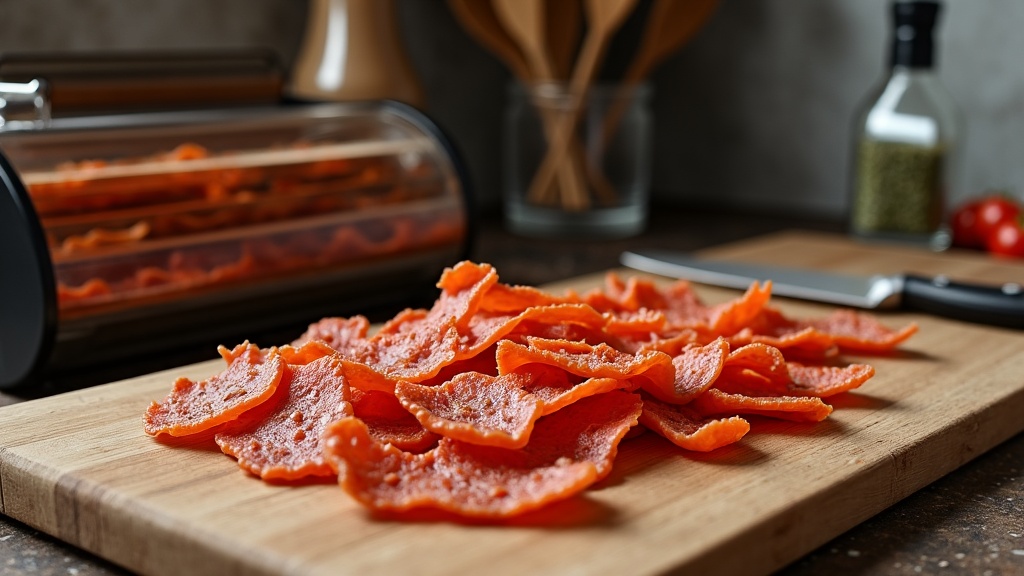
Have You Never Had Dry Jerky Before?
If you’re complaining that your jerky is “too dry,” I’ve got news for you: that’s exactly what it’s supposed to be. Over eight years and 400+ batches in my garage, the most common complaint I hear from people trying homemade jerky for the first time is that it’s too dry compared to the gas station stuff they’re used to—and I have to explain that they’ve finally tasted real jerky.
The confusion is understandable. Most commercial jerky is engineered to be soft, moist, and shelf-stable through preservatives and moisture-retaining additives. Traditional jerky—the stuff people have been making for thousands of years—is legitimately dry. It has to be. That’s the entire point of dehydrating meat.
What “Dry” Jerky Actually Means
Properly dried jerky should bend and crack but not break in half. When you tear off a bite, you should see some fibrous texture, not a uniform spongy interior. The surface should have a slight sheen from the marinade or seasoning, but you shouldn’t be able to squeeze moisture out of it.
Here’s the benchmark I use: if you fold a piece of jerky and it bends past 90 degrees without cracking, it’s not done. If it snaps cleanly in half like a cracker, you’ve overdone it. The sweet spot is that firm, leathery texture that requires a good chew but doesn’t turn into shoe leather.
After removing jerky from my food dehydrator, I let it cool for 10 minutes before the bend test. The moisture content continues to equalize as it cools, so what feels slightly stiff warm will be perfect at room temperature.
Why Commercial Jerky Feels Different
Walk into any convenience store and pick up a bag of jerky. It’s soft, tender, easy to bite through. That’s not because they’ve perfected some ancient technique—it’s because they’ve added humectants (moisture-retaining agents), preservatives like sodium nitrite, and sometimes even injected the meat with solutions before drying.
The target moisture content for most commercial jerky is around 20-30%, compared to traditional jerky at 10-15%. That extra moisture makes it more palatable to people who aren’t used to the real thing, but it also means shorter shelf life without refrigeration and higher reliance on chemical preservatives.
I’m not knocking commercial jerky entirely—Jack Link’s has its place on road trips—but calling it “too dry” is like complaining that homemade bread is too crusty compared to Wonder Bread. You’re comparing two different products.
The Science Behind Drying Meat
Bacteria need moisture to grow. Period. When you reduce the moisture content of meat below about 15%, you create an environment where bacteria can’t multiply. That’s why jerky has been a survival food for centuries—properly dried meat doesn’t spoil.
The USDA recommendation for homemade jerky is to dry until the internal temperature hits 160°F (for beef) or 165°F (for poultry) and the final moisture content is low enough that bacteria can’t thrive. Using a meat thermometer during the first hour of drying helps ensure you hit safe temperatures.
When people make jerky “less dry” by under-dehydrating, they’re not just changing the texture—they’re potentially creating food safety issues. I’ve seen people pull jerky early because they want it tender, then wonder why it got moldy after a week in a ziplock bag.
Different Styles of Jerky: A Comparison
Not all jerky has the same target dryness. Here’s how different styles compare:
| Style | Moisture Content | Texture | Shelf Life (Room Temp) |
|---|---|---|---|
| Traditional Dry Jerky | 10-15% | Firm, leathery, requires good chew | 2-3 months sealed |
| Commercial Soft Jerky | 20-30% | Tender, easy to bite, moist | 6-12 months (with preservatives) |
| Biltong (South African) | 30-40% | Softer, more steak-like, sliced thin | 1-2 weeks sealed |
| Asian-Style Sweet Jerky | 15-20% | Slightly sticky, tender but still dry | 3-4 weeks sealed |
Each style has its place, but if you’re making traditional American-style jerky, you’re shooting for that 10-15% moisture range. Anything higher and you’re compromising shelf life and food safety.
How to Make Properly Dry Jerky
After 400+ batches, here’s my foolproof process for hitting the right dryness level every time:
Start With the Right Cut
Lean meat dries better. I use eye of round, bottom round, or top round—cuts with minimal fat marbling. Fat doesn’t dehydrate; it goes rancid. Trim every visible bit of fat before slicing.
Slice against the grain at 1/4 inch thickness for tender jerky, or with the grain for a chewier texture. Consistent thickness is critical—use a meat slicer if you’re making jerky regularly.
Dehydrate at the Right Temperature
I run my dehydrator at 160°F for the first 2 hours to hit safe internal temperatures, then drop to 145°F for the remaining time. Total drying time is usually 4-6 hours depending on meat thickness and humidity.
Don’t trust the timer—trust the bend test. Every batch is different based on meat thickness, fat content, marinade sugar levels, and ambient humidity.
Test and Adjust
Pull a piece from the center of the dehydrator (usually the slowest-drying spot) and let it cool for 10 minutes. Bend it. If it bends without cracking, it goes back in. If it cracks but doesn’t break, you’re done. If it snaps clean, you’ve gone too far—but it’s still edible, just chewier.
When Dry Becomes TOO Dry
You can over-dry jerky. I’ve done it more times than I care to admit, usually when I got distracted and left a batch in too long. Overdried jerky is brittle, snaps when you bend it, and has the texture of cardboard.
The good news: it’s salvageable. Put the overdried jerky in a sealed container with a slice of fresh bread overnight. The jerky will absorb moisture from the bread and soften up slightly. Don’t leave it too long or you’ll undo all your dehydration work.
Alternatively, overdried jerky makes excellent pemmican or jerky powder for seasoning. Blend it into dust and use it in soups, stews, or backpacking meals.
Storage for Maximum Shelf Life
Even properly dried jerky needs proper storage. I use vacuum-sealed bags for long-term storage (2-3 months), or mason jars with oxygen absorbers for batches I’m working through over a few weeks.
Room temperature is fine for the first month if it’s properly dried and sealed. After that, I move it to the fridge or freezer. Freezing doesn’t hurt jerky at all—I’ve pulled year-old vacuum-sealed jerky from the freezer and it’s been perfect.
If you see any moisture condensation inside your storage container, your jerky wasn’t dry enough. Pull it out immediately and dehydrate for another hour or two.
The Learning Curve
If this is your first batch of real dry jerky, give your taste buds a few tries to adjust. The first time I made jerky, I thought I’d ruined it because it wasn’t like the Jack Link’s I grew up eating. Three batches later, I couldn’t go back to commercial jerky—it tasted weird and chemical-laden by comparison.
Dry jerky has more concentrated beef flavor. You’re not masking the meat with moisture and additives. The marinade flavors are more intense. The texture requires a proper chew, which makes it more satisfying and longer-lasting.
That’s the whole point of jerky—concentrated nutrition and flavor that lasts. If you wanted soft and moist, you’d just eat a steak.
Frequently Asked Questions
Is dry jerky safe to eat?
Yes, properly dried jerky is safe and actually safer than under-dried jerky. The low moisture content prevents bacterial growth. Just ensure you hit 160°F internal temperature during the first phase of drying, and dry until the jerky bends and cracks without breaking.
How do I know if my jerky is too dry or just right?
The bend test is your friend. Let a piece cool completely, then bend it. If it bends past 90 degrees without cracking, keep drying. If it cracks but doesn’t snap clean, it’s done. If it breaks in half like a cracker, you’ve overdried it (but it’s still edible).
Can I rehydrate jerky that’s too dry?
Yes. Place overdried jerky in a sealed container with a slice of fresh bread for 8-12 hours. The jerky will absorb moisture from the bread and soften slightly. Check it every few hours so you don’t overdo it and create food safety issues.
Why is my homemade jerky so much drier than store-bought?
Commercial jerky contains humectants (moisture-retaining agents) and preservatives that allow higher moisture content while remaining shelf-stable. Homemade jerky relies on low moisture alone for preservation, so it needs to be drier. This is actually a good thing—you’re avoiding unnecessary additives.
How long does properly dried jerky last?
In a sealed container at room temperature, 2-3 months. In the fridge, 6 months. In the freezer, up to a year. The key is keeping it sealed and dry. If you see any moisture condensation in your storage container, the jerky wasn’t dry enough and should be consumed quickly or re-dried.

