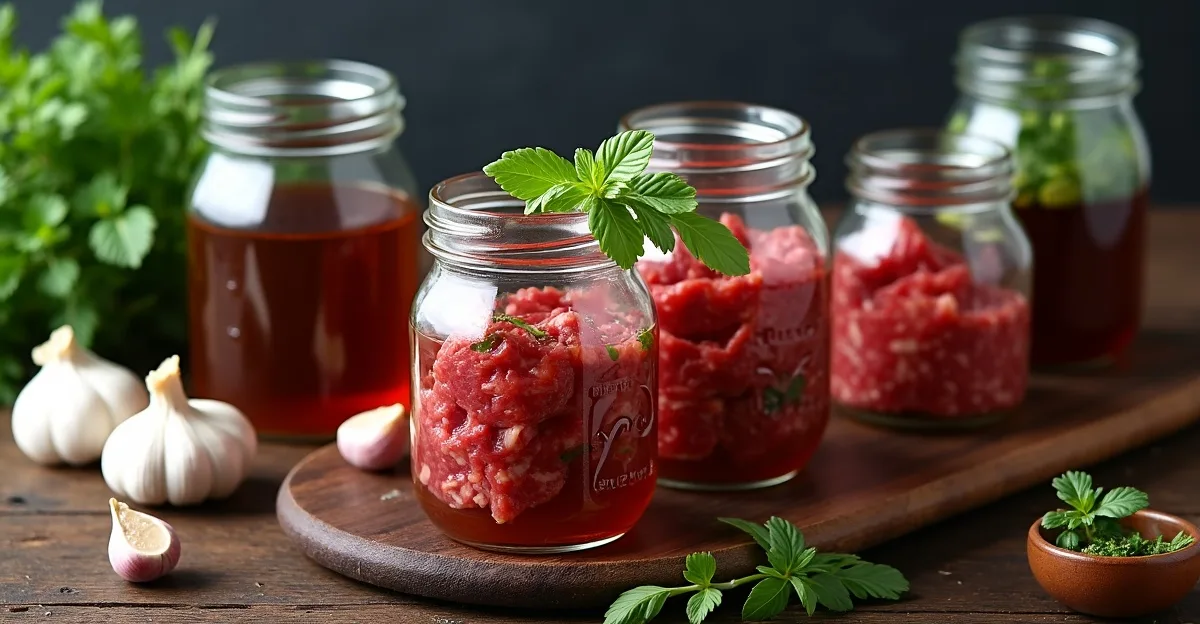
Quick Recipe Reference: All 8 Marinades at a Glance
Jump to any recipe or use this table to choose your next batch:
| Recipe | Flavor Profile | Best For | Marinade Time | Difficulty |
|---|---|---|---|---|
| Classic Soy Sauce | Savory, slightly sweet | Beginners, classic taste | 8-16 hours | Easy |
| Teriyaki | Sweet, tangy, tropical | Sweet-tooths, gift giving | 6-12 hours | Easy |
| Spicy Habanero | Fiery, fruity heat | Heat seekers | 8-12 hours | Moderate |
| Black Pepper & Garlic | Bold, peppery, garlicky | Purists, steakhouse fans | 8-16 hours | Easy |
| Sweet & Smoky | BBQ-style, campfire | BBQ lovers, parties | 8-16 hours | Easy |
| Whiskey & Brown Sugar | Rich, complex, oak notes | Bourbon fans, gifts | 10-16 hours | Moderate |
| Worcestershire Garlic Herb | Herbaceous, savory | Sophisticated palates | 16-20 hours | Moderate |
| Low-Sodium | Balanced savory-sweet | Health-conscious | 8-16 hours | Easy |
I’ve spent 8 years making jerky in my Milwaukee garage. Over 400 batches. Dozens of failed experiments. These 8 marinade recipes are the survivors — the ones that passed the test of repeatability, flavor balance, and real-world practicality.
The marinade is where jerky lives or dies. I’ve seen people obsess over cuts and drying methods while completely phoning it in on the marinade — and the result tastes like seasoned shoelaces. The marinade is your flavor delivery system. It’s doing three jobs at once: seasoning the meat, tenderizing it, and creating the complex, layered taste that makes jerky genuinely addictive.
Every recipe below has been tested across multiple batches with different cuts. I’ve noted what works, what doesn’t, and the small adjustments that turn good jerky into great jerky.
Marinade Fundamentals (Before You Start)
Marinating Time: 6–24 Hours
Six hours is the minimum for meaningful flavor penetration into 1/4-inch slices. Most of my best batches marinate overnight — 12–16 hours. Beyond 24 hours, salt-heavy marinades start to break down the meat texture in ways I don’t love. If you’re using an acid (citrus, vinegar, pineapple juice), keep it closer to 6–12 hours — acids tenderize fast and can make texture mushy if left too long.
Temperature: Always Refrigerate
Marinate in the refrigerator. Always. Raw meat sitting in warm marinade is a food safety problem. I use zip-lock bags laid flat in the fridge — they maximize surface contact and are easy to flip.
Flip It
Flip or agitate the bag every few hours if you can. Gravity pulls marinade to the bottom, and the top strips end up under-seasoned. Flip before bed, flip in the morning.
Ratios (per 2 lbs of meat)
All recipes below are sized for 2 lbs of sliced beef. This yields roughly 12–14 oz of finished jerky depending on the cut and drying method.
Recipe 1: Classic Soy Sauce
The baseline. Simple, savory, universally loved.
Flavor: Savory, slightly sweet | Time: 8-16 hours | Difficulty: Easy
Ingredients
- 1/2 cup soy sauce
- 2 tbsp Worcestershire sauce
- 1 tbsp brown sugar
- 1 tsp garlic powder
- 1 tsp onion powder
- 1 tsp coWorcestershire saucei>
- 1/2 tsp curing salt (Prague Powder #1) — optional
Instructions
Whisk all ingredients until sugar is dissolved. Add sliced beef, seal bag, refrigerate 8–16 hours. The soy sauce forms the salt backbone; Worcestershire adds a fermented depth that straight salt can’t replicate. Brown sugar caramelizes slightly during drying, creating a subtle glaze.
Flavor profile: Savory, slightly sweet, classic deli-counter jerky taste.
Recipe 2: Teriyaki
Sweet, sticky, and dangerously snackable.
Flavor: Sweet, tangy, tropical | Time: 6-12 hours | Difficulty: Easy
Ingredients
- 1/4 cup soy sauce
- 1/4 cup pineapple juice (not from concentrate)
- 3 tbsp honey
- 1 tbsp rice wine vinegar
- 1 tsp sesame oil
- 1/2 tsp ground ginger
- 1/2 tsp garlic powder
- 1/4 tsp white pepper
Instructions
Whisk together. Note: pineapple juice contains bromelain (a natural tenderizer), so don’t marinate beyond 12 hours or the texture softens too much. The honey creates a slightly tacky surface that gets beautifully chewy when dried.
Flavor profile: Sweet, tangy, slightly tropical. Great for people who find regular jerky too salty.
Drying note: The sugar content means this can stick to dehydrator trays. Lightly spray trays with cooking spray first.
Recipe 3: Spicy Habanero
Not for the faint-hearted. Actually spicy — not “jerky spicy.”
Flavor: Fiery, fruity heat | Time: 8-12 hours | Difficulty: Moderate
Ingredients
- 1/2 cup soy sauce
- 2 tbsp apple cider vinegar
- 2–3 fresh habanero peppers, minced (wear gloves)
- 1 tbsp hot sauce (Cholula or similar)
- 1 tsp cayenne pepper
- 1 tsp garlic powder
- 1 tsp onion powder
- 1/2 tsp smoked paprika
- 1 tbsp brown sugar (to balance heat)
Instructions
Mince habaneros finely — the smaller the pieces, the more evenly distributed the heat. Whisk all ingredients. Taste your marinade before adding meat. 2 habaneros is medium-hot, 3 is serious heat. The apple cider vinegar brightens everything and keeps the heat from feeling one-dimensional.
Flavor profile: Fiery, bright, with a fruity habanero note behind the heat.
Warning: The dehydrator will release capsaicin vapor while drying this batch. Run it in a ventilated area or outside.
Recipe 4: Black Pepper & Garlic (Peppered)
The purist’s jerky. Big pepper flavor, bold garlic, nothing hidden.
Flavor: Bold, peppery, garlicky | Time: 8-16 hours | Difficulty: Easy
Ingredients
- 1/2 cup soy sauce
- 2 tbsp Worcestershire sauce
- 2 tsp coarsely cracked black pepper (use a mortar and pestle or crush peppercorns — pre-ground is too fine)
- 1 tsp garlic powder
- 4 cloves fresh garlic, minced
- 1/2 tsp red pepper flakes
- 1/2 tsp onion powder
Instructions
Mix well. The combination of garlic powder AND fresh minced garlic gives you two different flavor registers — the powder integrates into the meat, the fresh garlic leaves visible bits on the surface that crisp up during drying. Cracked pepper is non-negotiable here; the large pieces create heat bursts as you chew.
Flavor profile: Bold, peppery, garlicky. Classic steakhouse flavor in jerky form.
Recipe 5: Sweet & Smoky
BBQ-inspired. Great for people who love that campfire flavor without a smoker.
Flavor: BBQ-style, campfire | Time: 8-16 hours | Difficulty: Easy
Ingredients
- 1/2 cup soy sauce
- 2 tbsp ketchup
- 2 tbsp brown sugar
- 1 tbsp apple cider vinegar
- 1 tsp liquid smoke (hickory)
- 1 tsp smoked paprika
- 1/2 tsp garlic powder
- 1/2 tsp onion powder
- 1/4 tsp cayenne
Instructions
Whisk thoroughly. Liquid smoke is potent — 1 tsp is enough. More than that and the flavor turns acrid and artificial. The smoked paprika adds depth and a brick-red color that’s beautiful on finished jerky. Ketchup might seem weird, but it adds body and a faint tomato sweetness that rounds the whole thing out.
Flavor profile: Sweet, smoky, slight tangy kick. Crowd-pleaser at parties.
Recipe 6: Whiskey & Brown Sugar
Adult upgrade. The bourbon cooks off during drying, leaving complex caramel notes.
Flavor: Rich, complex, oak notes | Time: 10-16 hours | Difficulty: Moderate
Ingredients
- 1/3 cup soy sauce
- 1/4 cup bourbon or Tennessee whiskey
- 3 tbsp brown sugar
- 1 tbsp Dijon mustard
- 1 tsp garlic powder
- 1 tsp black pepper
- 1/2 tsp smoked paprika
Instructions
Combine all ingredients. Use a real bourbon you’d actually drink — the flavor comes through. Cheap whiskey just tastes like rubbing alcohol. The Dijon might seem like an odd addition, but it contains turmeric and acids that help break down muscle fibers and integrate the other flavors.
Flavor profile: Rich, slightly sweet, complex oak notes with a hint of mustard on the finish.
Note: The alcohol fully evaporates during the 4–6 hour drying process. This is fully shelf-stable and appropriate for all audiences.
Recipe 7: Worcestershire Garlic Herb
Deeply savory with herbal complexity. My personal everyday favorite.
Flavor: Herbaceous, savory | Time: 16-20 hours | Difficulty: Moderate
Ingredients
- 1/3 cup soy sauce
- 1/4 cup Worcestershire sauce
- 3 cloves garlic, minced
- 1 tsp dried thyme
- 1 tsp dried rosemary, crushed
- 1 tsp black pepper
- 1/2 tsp onion powder
- 1 tbsp olive oil
Instructions
Whisk together. The olive oil helps carry fat-soluble flavor compounds from the herbs into the meat. Crush the rosemary between your fingers before adding — releases more aromatic oils. This recipe develops even better flavor at the 16–20 hour marination mark compared to most others.
Flavor profile: Herbaceous, savory, complex — more “fine dining” than most jerky.
Recipe 8: Low-Sodium
For those watching sodium without sacrificing flavor.
Flavor: Balanced savory-sweet | Time: 8-16 hours | Difficulty: Easy
Ingredients
- 1/2 cup low-sodium soy sauce (Kikkoman low-sodium works well)
- 2 tbsp balsamic vinegar
- 1 tbsp honey
- 1 tsp garlic powder
- 1 tsp onion powder
- 1 tsp black pepper
- 1/2 tsp smoked paprika
- 1/4 tsp celery seed (adds savory umami notes without sodium)
Instructions
Low-sodium soy sauce has roughly 40% less sodium than regular — around 575mg per tablespoon vs 920mg. Balsamic vinegar provides acidity and a natural sweetness that compensates for the reduced salt intensity. Celery seed is a secret weapon — it’s high in natural glutamates, which boost umami perception and make food taste more seasoned than it is.
Flavor profile: Balanced savory-sweet, noticeably less salty but still full-flavored.
Pre-Made Seasoning Mixes (For When You Don’t Want to Measure)
Look, sometimes you just want to dump a packet in and go. These are solid commercial options that I keep on the shelf for lazy batch days:
- Hi Mountain Jerky Cure & Seasoning — Multiple flavors, comes with curing salt included. Very consistent results.
- LEM Backwoods Jerky Seasoning — Great range of flavor options, easy to scale.
- Nesco Jerky Seasoning Spice — Budget-friendly, pairs well with Nesco dehydrators.
Final Marinade Tips
- Don’t reuse marinade. Once raw meat has soaked in it, that liquid is contaminated. Toss it.
- Pat dry before dehydrating. Surface moisture steams the meat instead of drying it. Paper towels, 2–3 passes per strip.
- More surface area = more flavor. Slicing against the grain gives more surface area exposure than with-the-grain slices of the same thickness.
- Salt is a preservative. The salt content of your marinade (especially from soy sauce) inhibits microbial growth during the drying process. Don’t aggressively reduce soy sauce unless you’re adding curing salt.
- Test a small batch first. Before committing 2 lbs of meat to a new recipe, marinate and dry 3–4 strips first. Taste, adjust, then go big.
These 8 recipes give you a foundation — but every one of them is a starting point. Once you understand the balance of salt / acid / sweet / heat in a marinade, you’ll start improvising naturally. That’s where the really good stuff comes from.
— Sam, JerkyScience.com

