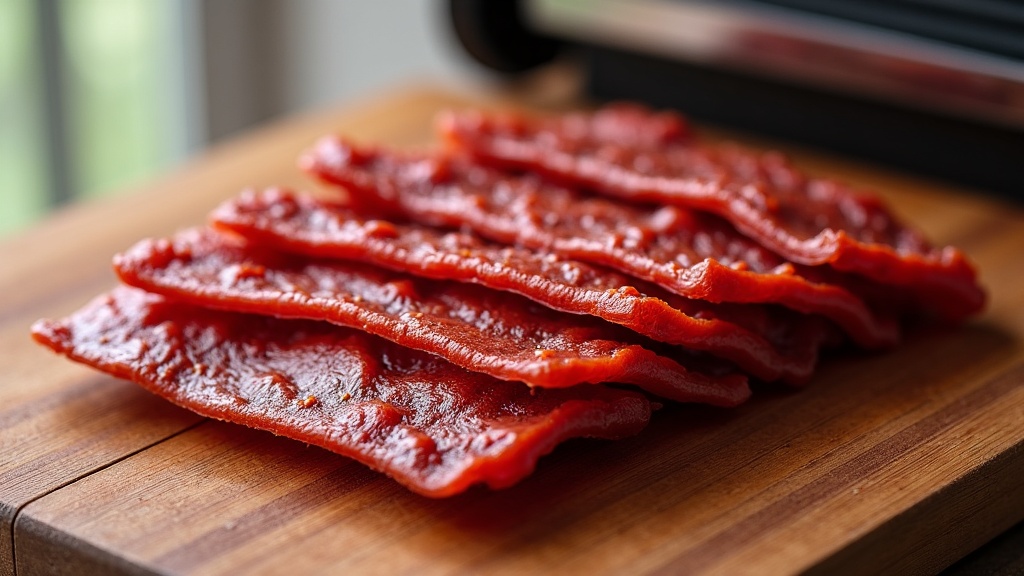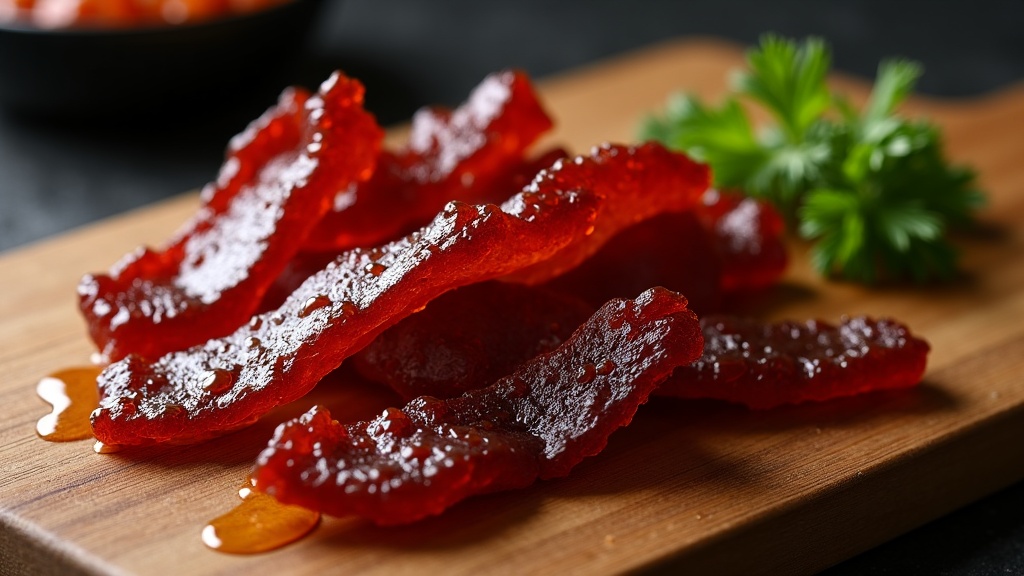
Sweet Teriyaki Beef Jerky Recipe: The Crowd-Pleasing Classic
After eight years and 400+ batches in my garage jerky lab, I can tell you with absolute certainty: teriyaki beef jerky is the gateway flavor that turns skeptics into believers. This teriyaki beef jerky recipe has converted more friends and family members into jerky enthusiasts than any other marinade I’ve tested—including my kids’ soccer team, my wife’s book club, and three separate batches for Christmas gifts that led to “can you make more?” texts in January.
The magic is in the balance. Too sweet and you’ve got candy leather. Too salty and people wince. This recipe hits that sweet-savory spot that makes people reach for a second piece before they’ve finished the first.
The Base Teriyaki Beef Jerky Recipe
This makes about 12-16 ounces of finished jerky from 2 pounds of raw meat.
Ingredients
- 2 lbs top round or eye of round beef, trimmed and sliced 1/8 to 1/4 inch thick
- 3/4 cup soy sauce (I use low-sodium)
- 1/2 cup brown sugar, packed
- 1/4 cup pineapple juice
- 2 tablespoons honey
- 2 tablespoons rice vinegar
- 1 tablespoon fresh ginger, minced (or 1 teaspoon ground)
- 4 cloves garlic, minced
- 1 teaspoon sesame oil
- 1/2 teaspoon black pepper
- 1/4 teaspoon red pepper flakes (optional, for mild heat)
- 1 tablespoon sesame seeds (optional, for topping)
Equipment You’ll Need
- Food dehydrator (my workhorse for eight years)
- Sharp slicing knife or meat slicer
- Large zip-top bags or covered container for marinating
- Paper towels
Step-by-Step Instructions
1. Prep Your Meat
Trim every visible bit of fat. I mean it—fat doesn’t dehydrate, it goes rancid. Pop your beef in the freezer for 60-90 minutes until it’s firm but not frozen solid. This makes slicing dramatically easier and more consistent.
Slice with the grain for a chewier texture, against the grain for easier tearing. I go with the grain for teriyaki because the sweet glaze makes up for any extra chew. Target 1/8 to 1/4 inch thickness—consistency matters more than the exact measurement.
2. Mix the Marinade
Combine soy sauce, brown sugar, pineapple juice, honey, rice vinegar, ginger, garlic, sesame oil, black pepper, and red pepper flakes in a bowl. Whisk until the sugar dissolves. This takes about a minute.
The pineapple juice does double duty: flavor and tenderizing. It contains bromelain, an enzyme that breaks down proteins. Don’t marinate longer than 24 hours or the meat can get mushy.
3. Marinate
Put your sliced beef in a gallon zip-top bag or covered container. Pour the marinade over, seal, and massage to coat every piece. Refrigerate for 6-12 hours, flipping the bag halfway through.
I typically start this after dinner and dehydrate the next morning. The 8-10 hour sweet spot gives you full flavor penetration without over-tenderizing.
4. Pat Dry and Load the Dehydrator
Pull the meat from the marinade and lay each piece on paper towels. Pat dry—this step prevents sticky jerky and speeds up drying time. You want the surface tacky but not dripping.
If you’re adding sesame seeds, sprinkle them on now while the meat is still slightly wet.
Arrange strips on dehydrator trays without overlapping. Air circulation is critical—crowding extends drying time by hours.
5. Dehydrate
Set your dehydrator to 160°F. Dry for 4-6 hours, checking at the 4-hour mark. Teriyaki marinade has more sugar than most recipes, so it takes slightly longer to dry.
Your jerky is done when it bends and cracks but doesn’t break in half. It should feel dry to the touch with no moisture beading when you squeeze it.
6. Cool and Store
Let the jerky cool completely before storing—this can take 30-60 minutes. Warm jerky creates condensation in storage bags, which leads to mold.
Store in airtight containers or zip-top bags. It’ll keep at room temperature for 1-2 weeks, or refrigerated for 1-2 months.
Ingredient Variations That Actually Work
I’ve tested dozens of variations. Here’s what moves the needle:
| Variation | What It Does | Sam’s Take |
|---|---|---|
| Swap pineapple juice for orange juice | Brighter citrus flavor, less tropical sweetness | Works great—slightly more tangy finish |
| Add 1-2 tsp sriracha | Mild heat with garlic undertones | My go-to for adult gatherings |
| Use coconut aminos instead of soy sauce | Gluten-free, slightly sweeter | Tastes different but still good—less salty |
| Substitute maple syrup for brown sugar | Deeper, woodsy sweetness | Interesting twist, not traditional teriyaki |
| Add 1/4 cup bourbon | Smoky depth, alcohol cooks off | Fancy version for gifts—people love it |
Common Mistakes (I’ve Made Them All)
Mistake #1: Not Trimming Fat Thoroughly
I learned this the hard way in batch #23. Left some fat thinking it’d add flavor. Two weeks later, rancid smell in my storage container. Fat does not dehydrate—it oxidizes and ruins everything.
Mistake #2: Over-Marinating
The pineapple juice tenderizes, but too much time makes the meat mushy. I once forgot a batch in the fridge for 36 hours. The texture was weird—almost pre-chewed. Stick to 6-12 hours max.
Mistake #3: Skipping the Pat-Dry Step
Early batches I’d go straight from marinade to dehydrator. The result? Sticky, tacky jerky that never quite dried right and took forever. Patting dry removes excess marinade and speeds drying by 1-2 hours.
Mistake #4: Crowding the Dehydrator
When you’re excited about a big batch, it’s tempting to cram every tray. Don’t. Overlapping pieces stick together and create wet spots that won’t dry. Leave space between each strip.
Best Cuts of Beef for This Recipe
Top round and eye of round are my defaults. They’re lean, affordable, and widely available. You can usually find them at any grocery store for $5-8 per pound.
Sirloin tip works too if it’s on sale. Flank steak makes excellent jerky but costs more—I save it for special occasions or when I find it marked down.
Avoid ribeye, chuck, or anything marbled. You’ll spend half your prep time trimming fat, and the waste isn’t worth it.
Scaling the Recipe
This recipe scales linearly. Want to make 4 pounds? Double everything. Making 1 pound for a test batch? Cut it in half.
My dehydrator holds about 2.5 pounds of sliced meat comfortably across 5 trays. When I make larger batches for the holidays, I run it twice rather than cramming.
How to Know When It’s Actually Done
The bend-and-crack test is your friend. Pick up a piece and bend it. It should flex and show white fibers in the bend, maybe crack slightly, but not snap clean in half.
If it snaps like a cracker, you’ve over-dried it. Still edible, just tougher. If it bends without any resistance and feels moist, keep going another 30-60 minutes.
Teriyaki jerky tends to stay slightly more flexible than plain marinades because of the sugar content. That’s normal. Just make sure there’s no moisture when you squeeze it.
Frequently Asked Questions
Can I make teriyaki beef jerky in the oven instead of a dehydrator?
Yes, but it’s trickier. Set your oven to its lowest temperature (usually 170-200°F), prop the door open slightly with a wooden spoon for air circulation, and lay the strips on wire racks over baking sheets. Check every hour. It typically takes 3-5 hours. I did this for my first year before getting a dehydrator—it works, but the dehydrator gives more consistent results.
How long does homemade teriyaki beef jerky last?
At room temperature in an airtight container, plan on 1-2 weeks. Refrigerated, it’ll go 1-2 months easily. Frozen, up to 6 months. I’ve never had a batch last that long—it gets eaten first. The sugar in teriyaki can make it slightly more prone to moisture absorption, so I usually refrigerate it after the first week if there’s any left.
Can I use this marinade for other meats?
Absolutely. I’ve done turkey, chicken, and even salmon jerky with this recipe. Turkey breast is leaner and dries faster—check it at 3 hours. Chicken works but can get stringy if you slice it too thin. Salmon is fantastic but needs a shorter marinating time, about 4 hours max.
My jerky turned out too salty. What went wrong?
Probably over-dried or you used regular soy sauce instead of low-sodium. As jerky dehydrates, flavors concentrate. Regular soy sauce has about 900mg sodium per tablespoon—it gets intense. Switch to low-sodium soy sauce (about 500mg) and check your jerky earlier in the drying process.
Why is my teriyaki jerky sticky?
Sugar attracts moisture from the air, especially in humid environments. Make sure you patted the meat dry before dehydrating, and ensure it’s fully dried (no moisture when squeezed). Store it with a food-safe silica gel packet if you live somewhere humid. I’m in Wisconsin—summer humidity can make teriyaki jerky tacky within days if you’re not careful.