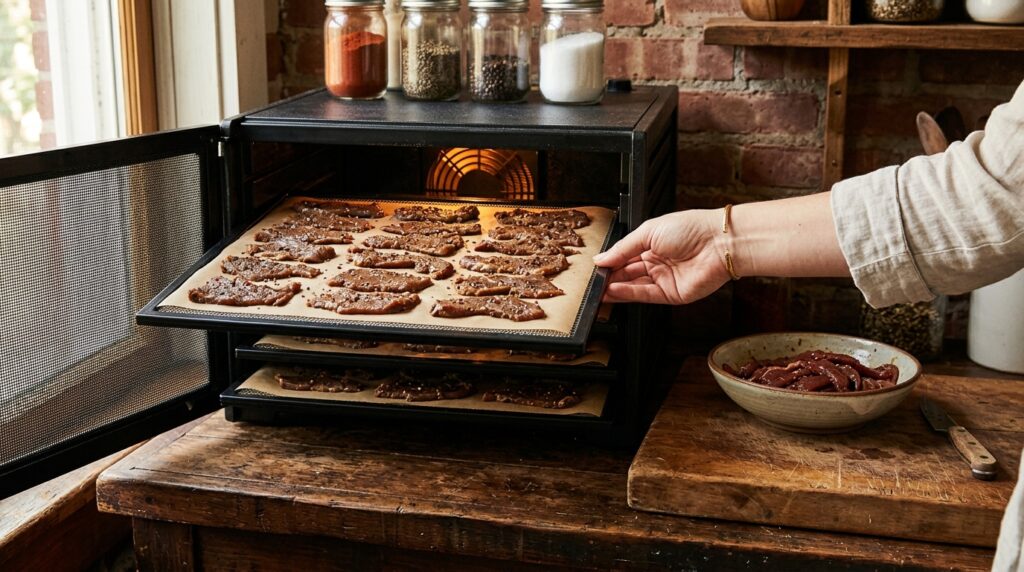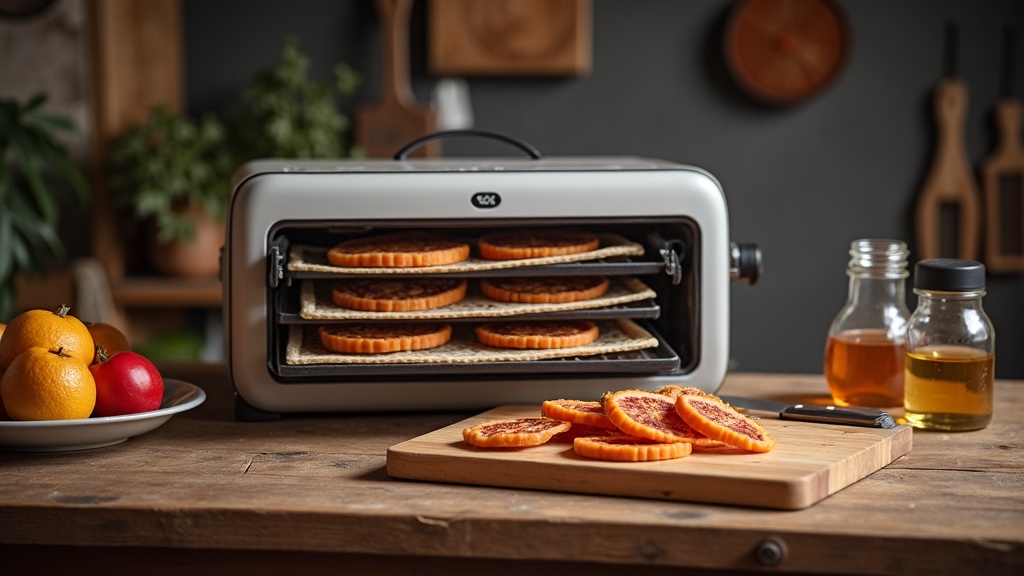
I get this question from new jerky makers all the time, and my answer is always the same: your dehydrator is not on a stopwatch, it is on a moisture-removal job. If you are staring at a batch and wondering whether it will be done before bed, I can save you some trial and error right now.
For home jerky, most food dehydrator runs take about 4 to 8 hours, while other foods can stretch anywhere from 1 hour for herbs to 12 hours for wetter fruit. That range feels wide because drying time changes fast when you tweak thickness, marinade, tray spacing, humidity, and how well your machine actually moves air. I learned that after a few early batches came out half perfect and half shoe leather.
The Short Answer
If you are making beef jerky in a home dehydrator set around 160F, plan on 4 to 8 hours for most batches. Thin strips cut around 1/8 inch usually finish closer to 4 to 5 hours. Thicker strips cut closer to 1/4 inch, or strips coated in a sticky sweet marinade, usually need 6 to 8.
For other foods, the answer moves around more. Apple slices often need 6 to 10 hours, banana slices can run 6 to 12, mushrooms usually land around 4 to 8, and herbs can be done in 1 to 4. That is why I tell people to use the clock as a checkpoint, not a decision maker. Start checking at the early end of the range, then let texture make the final call.
Why This Technique Works
A dehydrator works best when you treat it like an airflow tool instead of a tiny oven. With jerky, you are trying to pull moisture out gradually enough that the strip dries evenly from the outside toward the center. When that happens, you get chew instead of mush, and you avoid the beginner problem where the edges are brittle while the middle still feels damp.
- Consistent slice thickness gives every strip about the same drying curve, so one tray does not turn into a sorting project.
- Blotting marinade off the surface helps the meat start drying sooner instead of steaming in sugar and soy.
- Single-layer spacing lets air hit the full strip, which matters a lot once trays start getting crowded.
- Checking by bend and feel instead of only by time keeps you from overdrying the batch in the last hour.
I have tried the lazy version too. I have overloaded trays, skipped blotting, and mixed thick hand-cut strips with thinner ones because I was in a hurry. Every shortcut added time or gave me a batch I had to pick through piece by piece. If you want more predictable runs, a solid dehydrator like the COSORI Food Dehydrator or the NESCO Snackmaster Pro helps, but prep discipline still matters more than brand names.
What Changes the Clock the Most
The fastest batches I run are lean beef sliced thin, marinated overnight, blotted well, and laid out with breathing room on every tray. The slowest are thicker strips with a sugary glaze, packed too tightly, on a humid summer day in the garage. Same machine, same setting, completely different finish time.
Step-by-Step Method
When somebody asks me how to keep a jerky batch on schedule, this is the workflow I use. None of it is fancy. It is just the set of habits that keeps drying time honest and texture consistent.
- Choose a lean cut. Eye of round, top round, and sirloin tip are my usual picks because they dry cleanly and do not leave you paying for fat that will not store well anyway.
- Partially freeze the meat for 30 to 45 minutes before slicing. That firms it up and makes it much easier to cut even strips.
- Slice with your target texture in mind. Go about 1/8 inch for a firmer, faster-drying jerky, or closer to 1/4 inch if you want more chew.
- Marinate long enough for flavor, then blot the strips before loading. Wet-looking strips almost always add extra time.
- Set the dehydrator to 160F, arrange the meat in a single layer, and keep pieces from touching where you can.
- Start checking around hour 4. Pull finished pieces as they pass the bend test and let thicker pieces continue in shorter rounds.
That last step matters more than people expect. A batch does not finish all at once unless your slicing was almost machine-perfect. I usually pull a few pieces early, then another round 30 to 45 minutes later. Once you accept that, you stop ruining thin strips while waiting on the thick ones.
Tools That Actually Help
You do not need a garage full of gadgets, but a few things earn their keep. A sharp slicing knife matters. Mesh sheets are handy for sticky marinades or smaller snack strips. If your dehydrator dial feels vague, a digital instant-read thermometer helps you verify what the trays are really seeing, and dehydrator mesh sheets save cleanup when sugary drips want to weld themselves to the rack.
Time, Texture, and Doneness Cues
The trick with dehydrator timing is that the clock gets you close, but cooling and handling the strip tells you the truth. Hot jerky almost always feels softer than cooled jerky, so I pull a test strip, let it sit a few minutes, and then bend it. If it folds like deli meat, it is not done. If it snaps clean in half, I pushed it too far.
| Food or Texture Goal | Typical Temp | Usual Time | What You Want to See |
|---|---|---|---|
| Thin beef jerky | 160F | 4 to 5 hours | Bends easily with light surface cracking |
| Chewier thick-cut jerky | 160F | 6 to 8 hours | Firm, dry outside, no wet center when bent |
| Apple slices | 135F | 6 to 10 hours | Leathery and pliable, not sticky-wet |
| Banana slices | 135F | 6 to 12 hours | Dry surface with a flexible middle |
| Herbs | 95F to 105F | 1 to 4 hours | Leaves crumble cleanly in your fingers |
- Thin strips finish faster, but they can go from perfect to too brittle in less than an hour.
- Sugary marinades hold surface moisture longer and make the batch look less done than it really is.
- Humidity slows everything down, especially in a garage in the middle of summer.
- Cooling a test piece for five minutes gives you a more honest doneness read than bending it hot off the tray.
Texture is where personal preference comes in. My kids like softer strips that still flex easily, while I like a more traditional chew with a little crack along the grain. Neither is wrong. What matters is that the strip is dry enough that you are not trapping moisture in the center.
How Marinade Changes Drying Time
A salty, thinner marinade usually dries cleaner than one loaded with brown sugar, honey, or thick bottled sauce. Sweet marinades can give you great flavor, but they also slow the surface dry-down and make the jerky feel tacky longer. I still use them, I just stop pretending the batch will finish on the same schedule as a simpler soy-based mix.
Mistakes That Ruin the Batch
The biggest mistake is uneven slicing. If half your strips are thin and the rest are thick, you did not create one batch. You created three or four drying schedules sharing the same trays. You can still save it by pulling pieces in waves, but it is annoying and easy to mess up. I would rather spend a few extra minutes slicing cleanly than babysit a sloppy load for two extra hours.
The next batch-ruiner is crowding trays because you want to get more done at once. When strips touch or overlap, airflow drops and moisture gets trapped. That adds time and makes the finished texture inconsistent. The third problem is trusting the factory dial like it is laboratory gear. Some dehydrators run hot, some run cool, and some are noticeably different from top to bottom. Learn your machine. If one side dries faster, rotate trays. If your 160F batch always behaves like it is drying slower than expected, verify the temperature and adjust your expectations.
Two Lessons I Learned the Hard Way
First, do not bag jerky while it is still warm. Warm pieces can sweat inside the container and undo some of the drying work you just spent hours finishing. Let the batch cool first. Second, do not keep chasing one more hour just because one thick strip feels slightly softer than the rest. Pull the done pieces, finish the stragglers separately, and keep the good jerky good.
Bottom Line
A food dehydrator usually takes 4 to 12 hours depending on what you are drying, but for home beef jerky the real-world answer is usually 4 to 8 hours at 160F. If your slices are thin, your trays are not crowded, and you blot the marinade well, you will usually finish on the early side of that range. If your strips are thick, sticky, or packed tight, the clock stretches fast.
If you want a practical rule to remember, it is this: prep for consistency, then start checking early and let texture decide the finish line. That approach has saved me more meat than any seasoning trick ever has. A dehydrator does not need magic. It just needs airflow, patience, and somebody paying attention during the last stretch.