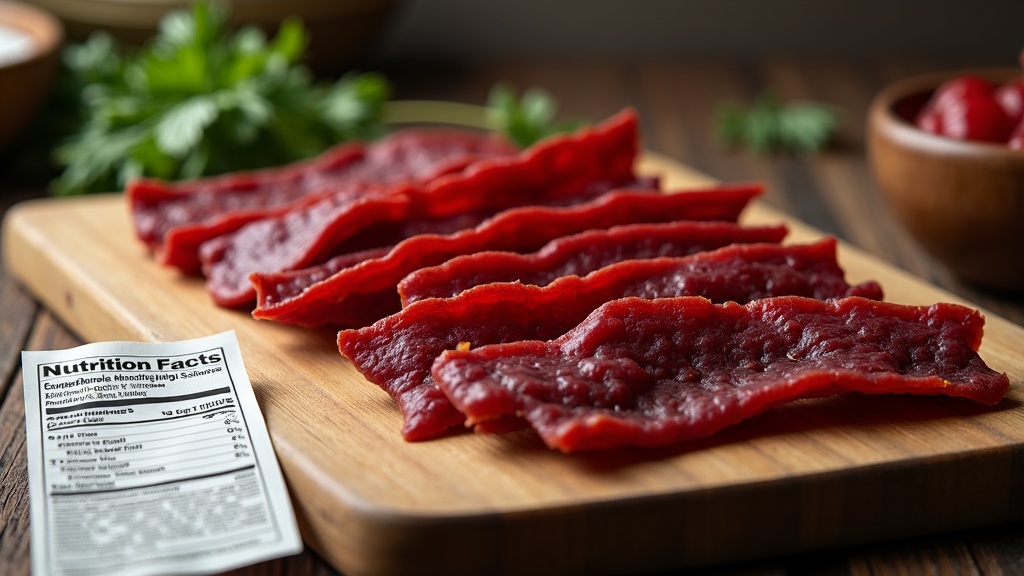
My 10-year-old asked me last month why he can’t just eat beef jerky for every meal since it’s “basically all protein.” I gave him the dad answer — “because I said so” — but the question stuck with me. Is jerky actually a good protein source, or is it just expensive dried meat with a health halo?
After 8 years and 400+ batches of homemade jerky, I’ve got the real answer. And it’s more nuanced than the nutrition label makes it look.
The Protein Numbers: How Much Are You Actually Getting?
Let’s start with the facts. According to USDA data, a 1-ounce serving of beef jerky contains approximately 9-10 grams of protein. For comparison, the same weight of raw beef (85% lean) has about 7 grams. The dehydration process removes 60-70% of the weight in water, so you’re getting more concentrated protein per ounce.
Here’s what that looks like in my garage lab:
- 1 pound raw eye of round (my go-to cut): ~90 grams protein
- After dehydrating: ~6 ounces finished jerky with the same 90 grams protein
- Per ounce of finished jerky: ~15 grams protein
Commercial jerky varies. Jack Link’s Original runs about 9g per ounce. Krave beef jerky is closer to 11g. My homemade batches consistently hit 14-15g because I’m using pure lean meat — no fillers, extenders, or moisture-retention additives.
Why Dehydration Makes Jerky Protein-Dense
When you dehydrate beef, you’re not changing the protein content — you’re just removing water. Fresh beef is about 60-70% water. Properly made jerky is 20-30% water. The protein stays exactly the same; it’s just packed into a smaller, lighter package.
This is why jerky feels like such an efficient protein source. You can carry 2 ounces in your pocket and get 20-30 grams of protein without refrigeration. Try doing that with a steak.
But here’s the catch my kids don’t think about: you’re also concentrating everything else in the meat — including sodium from the cure. More on that nightmare later.
Protein Quality: Does Jerky Deliver Complete Nutrition?
Not all protein is created equal. The big question isn’t just “how much protein?” — it’s “what kind of protein?”
Beef jerky is a complete protein, meaning it contains all nine essential amino acids your body can’t make on its own. The amino acid profile looks like this (per 100g):
- Leucine: ~1,700mg (critical for muscle protein synthesis)
- Isoleucine: ~900mg
- Valine: ~1,000mg
- Lysine: ~1,800mg
- Plus adequate amounts of methionine, phenylalanine, threonine, tryptophan, and histidine
The leucine content is particularly relevant if you’re eating jerky post-workout. Research suggests you need about 2-3 grams of leucine to trigger muscle protein synthesis. Two ounces of my jerky gets you there.
Jerky vs. Other Portable Protein Sources: The Real Comparison
I’ve tested this with my own hiking and work snacks. Here’s how jerky stacks up:
| Protein Source | Protein per oz | Refrigeration? | Sugar | Sodium | Sam’s Take |
|---|---|---|---|---|---|
| Homemade jerky | 14-15g | No | 0-2g | 400-600mg | Best overall if you make it yourself |
| Commercial jerky (Jack Link’s) | 9g | No | 3g | 590mg | Convenient but expensive and salty |
| Protein bars (average) | 5-7g | No | 10-20g | 150-250mg | Candy bars in disguise |
| Hard boiled eggs | 6g | Ideally yes | 0g | 70mg | Cheaper but less portable |
| Canned tuna (in water) | 7g | No (until opened) | 0g | 200-300mg | Good value, but mercury limits frequency |
| String cheese | 6-7g | Yes | 0g | 200mg | Kids love it, melts in the car |
Where Jerky Wins
- Protein density: More grams per ounce than almost anything shelf-stable
- Portability: Doesn’t need refrigeration, won’t leak or crush in a backpack
- Ingredient quality (homemade): You control exactly what goes in
- Satiety: High protein + chewing time = actually fills you up
Where Jerky Loses
- Sodium: Even my low-sodium recipe hits 400mg per ounce
- Cost: Commercial jerky runs $2-4 per ounce; hard boiled eggs are ~$0.20 each
- Additives (commercial): Sugar, preservatives, flavor enhancers
- Texture: Some people just can’t stand it
The Sodium Problem: Why It Actually Matters
Here’s the part that keeps me from letting my kids eat jerky like popcorn: sodium.
A typical 1-ounce serving of commercial beef jerky contains 500-700mg of sodium. The American Heart Association recommends no more than 2,300mg per day (ideally 1,500mg). Three ounces of jerky — a normal snack for an active kid — puts them at 1,500-2,100mg. That’s their entire day’s sodium in one sitting.
Why so much? Because salt is critical to the curing process. It inhibits bacterial growth, draws out moisture, and enhances flavor. You can’t make safe jerky without it.
My workaround for homemade batches:
- Use reduced-sodium soy sauce (40% less sodium than regular)
- Replace half the soy sauce with coconut aminos
- Skip added salt in the marinade — rely only on what’s in the soy sauce
- Result: ~400mg sodium per ounce instead of 600+
It’s still high. But it’s manageable if jerky isn’t your only salty food that day.
Sugar and Additives in Commercial Jerky
Most commercial jerky I’ve tested contains 3-5 grams of sugar per ounce. That’s added sugar — brown sugar, honey, corn syrup, or “natural flavors” (which often means concentrated fruit juice).
Brands like Krave and Epic lean into this with flavors like Sweet Chipotle or Maple Bacon. I get it — sugar balances the salt and makes jerky more palatable. But if you’re eating it as a high-protein snack, those grams add up fast.
Check the ingredients list. If sugar appears in the first three ingredients, it’s a significant component. Look for:
- Sugar, brown sugar, honey
- Corn syrup, high fructose corn syrup
- Molasses, maple syrup
- Pineapple juice concentrate, apple juice concentrate
Other additives to watch for:
- MSG (monosodium glutamate): Flavor enhancer, generally recognized as safe but some people avoid it
- Sodium nitrite: Preservative and color fixative, used in curing — safe in regulated amounts
- Natural smoke flavor: Liquid smoke extract — not harmful, just not actual smoking
None of these are dealbreakers, but they’re worth knowing about if you’re trying to eat clean.
Homemade vs. Commercial: The Nutritional Breakdown
I ran a side-by-side comparison of my standard recipe versus Jack Link’s Original. Here’s what I found per 1-ounce serving:
Sam’s Homemade Jerky (Eye of Round, Low-Sodium Recipe)
- Protein: 15g
- Fat: 1.5g
- Carbs: 2g (from soy sauce)
- Sugar: 0g
- Sodium: 410mg
- Ingredients: beef, reduced-sodium soy sauce, coconut aminos, black pepper, garlic powder, onion powder
Jack Link’s Original Beef Jerky
- Protein: 9g
- Fat: 1g
- Carbs: 3g
- Sugar: 3g
- Sodium: 590mg
- Ingredients: beef, water, sugar, contains 2% or less of: salt, spices, dried soy sauce, hydrolyzed corn protein, maltodextrin, natural flavors, paprika extract
The homemade version wins on protein, loses slightly on sodium (though mine is still lower), and crushes it on ingredient quality. The tradeoff? I spent 8 hours making it versus 5 minutes buying a bag at the gas station.
Best Uses: When Jerky Actually Makes Sense
After years of trial and error, here’s when I actually use jerky as a protein source:
1. Post-Workout Snack (With Caveats)
Jerky delivers protein and leucine, but it’s missing carbs for glycogen replenishment. I pair 2 ounces of jerky with a banana or rice cake after lifting. Works great. Just jerky alone? Not ideal.
2. Hiking and Backpacking Fuel
This is where jerky shines. Lightweight, calorie-dense, doesn’t spoil. I carry 4-6 ounces on day hikes and pair it with trail mix. The sodium is actually helpful here — you’re sweating it out.
3. Kids’ Lunches (In Moderation)
My kids get 0.5-1 ounce of homemade jerky in their lunchboxes 2-3 times a week. It’s a protein boost that doesn’t need refrigeration and they actually eat it. I balance the sodium with low-sodium snacks the rest of the day.
4. Emergency Car Snack
I keep a bag in the glove box for soccer practice pickups when I’m starving. Two ounces holds me over until dinner without spiking my blood sugar like a protein bar would.
How Much Jerky Is Too Much?
I follow a simple rule: no more than 2-3 ounces of jerky per day, and not every day.
Why? Sodium. At 400-600mg per ounce, 3 ounces puts me at 1,200-1,800mg — most of my daily limit. Add in other meals and I’m over.
The other concern is processed meat classification. The WHO categorizes processed meats (including jerky) as Group 1 carcinogens, meaning there’s evidence linking regular consumption to increased cancer risk. The key word is “regular.” Occasional jerky consumption isn’t the problem — eating it daily for years might be.
My approach: Jerky is a tool, not a dietary staple. I use it when it makes sense (hiking, travel, emergencies) and eat whole-food proteins the rest of the time.
Frequently Asked Questions
Is beef jerky a good source of protein for weight loss?
Yes, with caveats. Jerky is high in protein and low in carbs, which supports satiety and muscle retention during a calorie deficit. But the sodium can cause water retention, masking fat loss on the scale. Stick to 1-2 ounces per day and choose low-sugar varieties.
Can you eat beef jerky every day?
You can, but I wouldn’t recommend it. The sodium content and processed meat classification make daily consumption less than ideal. I treat jerky like bacon — great occasionally, not a dietary staple.
Is homemade jerky healthier than store-bought?
Usually, yes. Homemade jerky lets you control the sodium, sugar, and additives. My batches have 50% more protein and 30% less sodium than Jack Link’s. The downside is time — figure 6-8 hours start to finish.
Does beef jerky have more protein than chicken?
Per ounce, yes. Beef jerky has 9-15g of protein per ounce depending on the brand. Cooked chicken breast has about 8-9g per ounce. But fresh chicken is cheaper, more versatile, and lower in sodium.
What’s the best jerky for high protein?
Look for brands using whole muscle cuts (not ground and formed) with minimal added ingredients. Epic, Chomps, and People’s Choice tend to have higher protein and cleaner labels. Or make your own — you’ll get 14-15g per ounce and full control over ingredients. Browse high-protein jerky options on Amazon.
The Bottom Line: Is Jerky Actually a Good Protein Source?
Yes — but with asterisks.
Beef jerky delivers high-quality, complete protein in a portable, shelf-stable form. It beats protein bars on ingredient quality and beats most other snacks on protein density. For hiking, travel, or emergency snacks, it’s legitimately excellent.
But the sodium content and processed meat classification mean it’s not something I’d eat daily. I treat it like a specialty tool — perfect for specific situations, not a go-to protein source for everyday meals.
My kids still ask why they can’t eat it for every meal. My answer now is more honest: “Because we’d all be thirsty, broke, and our blood pressure would hate us. But you can have it in your lunchbox on Friday.”
That’s the real answer.
Affiliate Disclosure: This article contains Amazon affiliate links. When you purchase through these links, I earn a small commission at no extra cost to you. These commissions help me keep making jerky in my garage and writing these guides. I only recommend products I’ve personally tested or would use myself. If you’re looking for quality jerky-making supplies or high-protein jerky to try, check out these options on Amazon.