How to Make Beef Jerky in a Dehydrator: Recipe That Actually Works
After making 400+ batches of beef jerky in my garage, I can tell you the dehydrator method is hands-down the most reliable way to make consistently good jerky at home. You get even heat, controlled airflow, and predictable results every single time—no oven babysitting, no second-guessing the temperature.
Here’s the exact process I’ve refined over eight years of weekend jerky sessions. This is the recipe I come back to when I need to crank out five trays for the kids’ school lunches or a camping trip.
What You Need: Equipment and Ingredients
Essential Equipment
- Food dehydrator — I use a dehydrator with adjustable temperature control. You need something that hits 160°F minimum for food safety.
- Sharp knife or meat slicer — A budget electric meat slicer changed my life. Consistent 1/4-inch slices in five minutes instead of 30.
- Mixing bowl and gallon ziplock bags — For marinating. I use bags because they let you massage the marinade into every piece.
- Paper towels — For patting down excess marinade before loading trays.
The Basic Jerky Recipe
This makes about 1 pound of finished jerky from 3 pounds of raw meat:
- 3 lbs beef (top round, bottom round, or eye of round — lean cuts work best)
- 3/4 cup soy sauce
- 1/4 cup Worcestershire sauce
- 2 tablespoons brown sugar
- 2 teaspoons black pepper (freshly ground)
- 2 teaspoons garlic powder
- 1 teaspoon onion powder
- 1 teaspoon smoked paprika
- 1/2 teaspoon cayenne (optional, adjust to taste)
Step-by-Step Dehydrator Jerky Process
Step 1: Freeze and Slice the Meat
Put your beef in the freezer for 1-2 hours until it’s firm but not frozen solid. This makes slicing way easier—the meat doesn’t slide around under the knife. I aim for 1/4-inch thick slices, cutting WITH the grain for chewier jerky or AGAINST the grain for more tender pieces.
Real talk: The difference between 1/8-inch and 1/4-inch slices is about 2 hours of drying time. I stick with 1/4-inch because it’s more forgiving and still gets fully dried.
Step 2: Mix Your Marinade
Whisk together all your liquid and dry ingredients in a bowl. Taste it—it should be salty and punchy because flavors mellow out during drying. If it tastes good raw, it’ll taste bland when it’s done.
I’ve tested this ratio probably 80 times. The brown sugar balances the salt without making it sweet, and the smoked paprika adds depth without being obvious.
Step 3: Marinate (8-24 Hours)
Drop your sliced meat into gallon ziplock bags, pour the marinade over, squeeze out the air, and seal. Massage the bag to coat every piece, then refrigerate.
Timing matters:
- 8-12 hours: Good flavor penetration, lighter taste
- 16-20 hours: Sweet spot—full flavor without being overpowering
- 24+ hours: Maximum flavor, can get slightly mushy if you go past 36 hours
I usually start marinading Saturday night and load the dehydrator Sunday morning.
Step 4: Pat Dry and Load Trays
Pull the meat out and lay the pieces on paper towels. Pat off excess marinade—you want them damp, not dripping. Too much liquid on the trays means longer drying time and potential for uneven results.
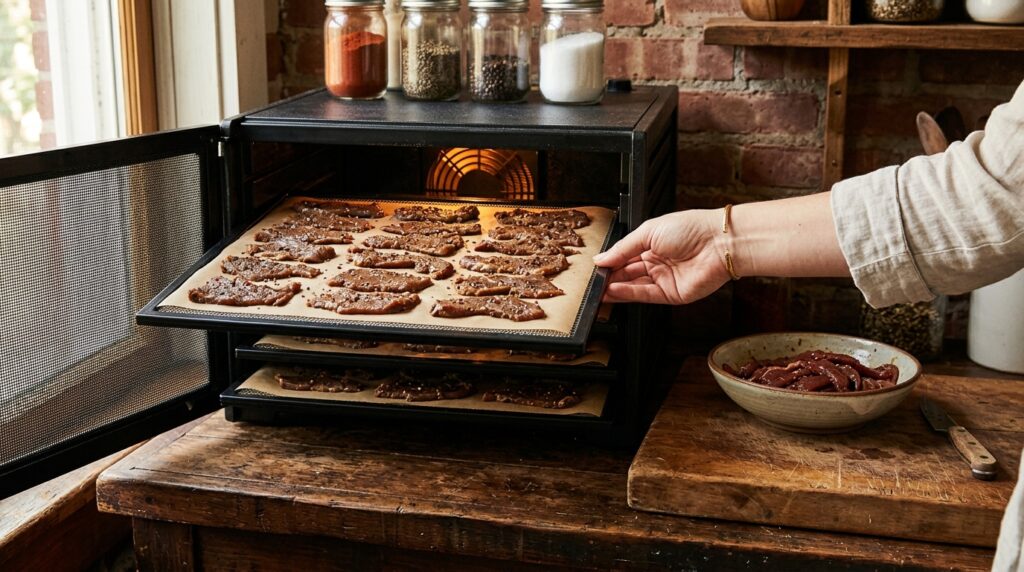
Arrange strips on dehydrator trays in a single layer with space between each piece. Don’t overlap. Air needs to circulate around every strip or you’ll end up with wet spots.
Step 5: Dehydrate at 160°F
Set your dehydrator to 160°F. This is the USDA-recommended temperature for safely drying meat—it kills bacteria while removing moisture.
Drying time breakdown:
| Thickness | Time at 160°F | Notes |
|---|---|---|
| 1/8 inch | 3-4 hours | Easy to overdry, becomes brittle |
| 1/4 inch | 5-7 hours | My go-to thickness, best texture |
| 3/8 inch | 8-10 hours | Requires checking for wet centers |
Start checking at the 4-hour mark. Pick up a piece and bend it—it should crack slightly but not snap in half. If it bends without cracking, give it another hour.
Step 6: Rotate Trays Halfway Through
Around hour 3 or 4, swap the position of your trays. Bottom trays usually dry faster because of how most dehydrators push air. Five minutes of rotation saves you from having some pieces done and others still wet.
How to Tell When Jerky Is Done
This is where most people screw up. Jerky should be:
- Dry to the touch — No tacky or wet spots
- Firm but pliable — Bends and cracks slightly without breaking clean through
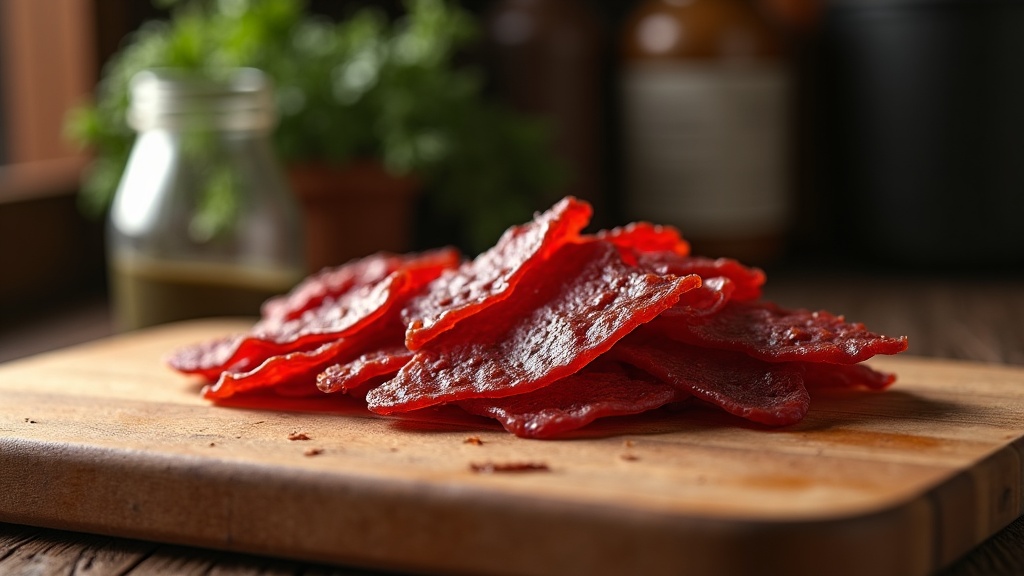
- Dark in color — Rich mahogany brown, not red or pink inside
- Slightly leathery — Not crumbly, not spongy
Cut a thick piece in half. The inside should look uniform—no moisture pockets or different colored centers. When in doubt, give it another 30 minutes. Overdrying is better than underdrying when it comes to food safety.
Common Mistakes (and How to Avoid Them)
Using fatty meat: Fat doesn’t dehydrate—it goes rancid. Stick with lean cuts. I trim every visible fat streak before slicing. Takes an extra 10 minutes but adds weeks to shelf life.
Slicing too thick: Anything over 1/4 inch takes forever to dry and risks wet centers. If you’re hand-slicing and struggling with consistency, partially freeze the meat first.
Skipping the pat-down: Excess marinade pooling on trays = sticky jerky that takes 3 extra hours to dry. Always dab off the drips.
Opening the dehydrator every 20 minutes: You’re letting heat and efficiency escape. Check it at hour 4, rotate trays, then leave it alone until hour 5 or 6.
Stopping too early: Slightly underdried jerky spoils in days instead of weeks. When you think it’s done, give it 30 more minutes. I learned this the hard way with a batch that got moldy after 4 days in a ziplock.
Storing Your Finished Jerky
Let the jerky cool completely before storing—about 30 minutes on the counter. Warm jerky in a sealed container creates condensation, which creates mold.
I use vacuum seal bags for long-term storage. Gets me 2-3 months in the pantry, 6+ months in the fridge. For shorter term (1-2 weeks), regular ziplock bags work fine if you squeeze out the air.
Pro tip: Toss in a food-safe desiccant packet if you’re storing for more than a month. Absorbs any residual moisture.
Flavor Variations Worth Trying
Once you nail the basic recipe, here are my tested variations:
- Teriyaki: Swap half the soy sauce for teriyaki sauce, add 1 tbsp honey, 1 tsp ginger
- Spicy: Double the cayenne, add 1 tsp crushed red pepper, 1/2 tsp hot sauce
- Sweet BBQ: Add 3 tbsp brown sugar, 2 tbsp apple cider vinegar, 1 tbsp liquid smoke
- Peppered: Triple the black pepper, add 1 tsp coarse sea salt on top before drying
Frequently Asked Questions
Do I need to cook the meat before dehydrating?
No, but you need to dehydrate at 160°F or higher to kill bacteria. The USDA says heating meat to 160°F during the drying process is safe—you don’t need to pre-cook it. Some people pre-heat their meat in the oven to 160°F before dehydrating at lower temps, but if your dehydrator hits 160°F, you’re good to go straight from marinade to trays.
Can I use ground beef instead of sliced meat?
Absolutely. You’ll need a jerky gun to form the strips. Use 90/10 or 93/7 lean ground beef, same marinade (mixed directly into the meat), and dry at 160°F for 4-6 hours. The texture is different—more like a meat stick—but my kids actually prefer it.
Why is my jerky tough and brittle?
You overdried it. Next batch, check it 30-60 minutes earlier. Also make sure you’re slicing with the grain for chewier texture—if you slice against the grain and overdry, you get brittle crumbles. There’s no way to fix overdried jerky, but you can grind it up and use it as a topping or trail mix ingredient.
How long does homemade jerky last?
Properly dried and stored jerky lasts 1-2 weeks in a ziplock at room temperature, 1-2 months vacuum sealed in the pantry, or 6+ months vacuum sealed in the fridge. If you see any mold, moisture, or off smell, toss the whole batch. I date every bag with a Sharpie so I know exactly how old it is.
What’s the best cut of beef for jerky?
Top round, bottom round, and eye of round are my top three. They’re lean, affordable (usually $4-6/lb), and have consistent grain structure. Flank steak works too but costs more. Avoid anything with visible marbling—ribeye makes terrible jerky because the fat doesn’t dry and goes rancid.