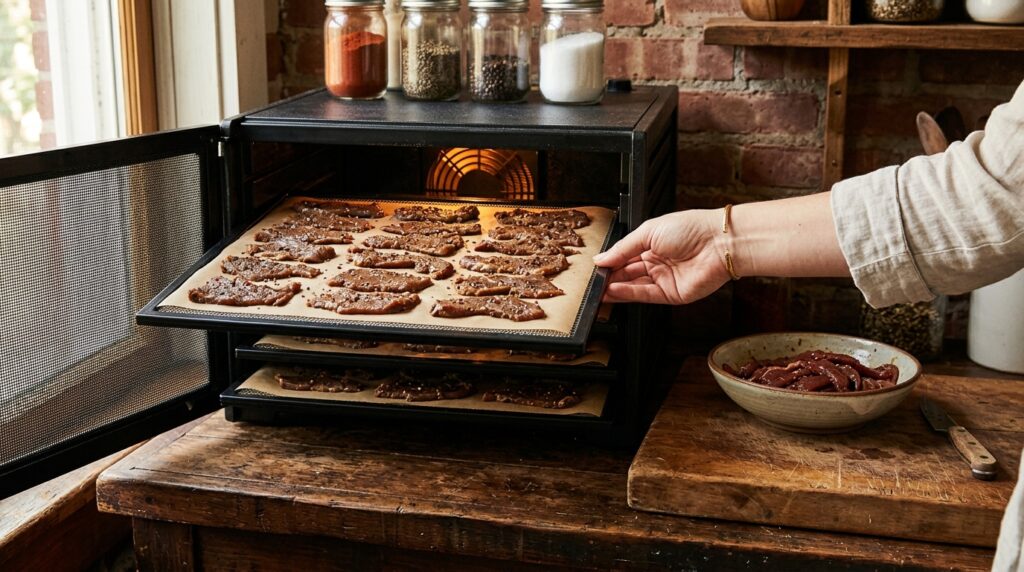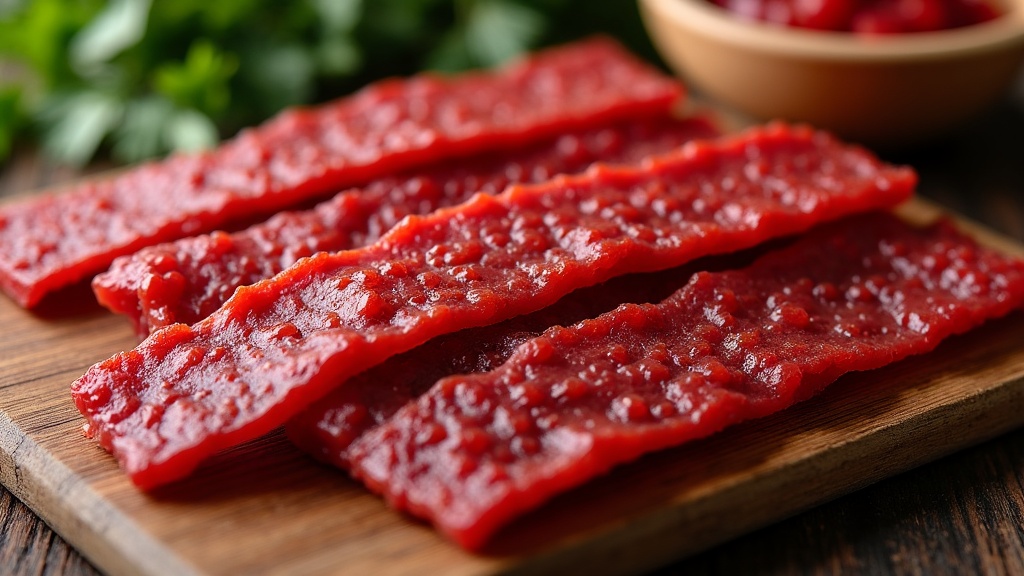
I’ve made beef jerky in my oven at least 150 times over the past eight years, and here’s what I tell everyone who asks: set your oven to the lowest temperature (ideally 170°F), crack the door open with a wooden spoon, and plan on 4-6 hours depending on thickness. You don’t need a dehydrator—your kitchen oven works just fine if you understand the three things that matter most: low heat, airflow, and patience.
The biggest mistake people make is cranking the oven too hot thinking it’ll speed things up. It won’t. You’ll cook the meat instead of drying it, and you’ll end up with tough, crumbly jerky that tastes like regret. Let me walk you through exactly how I do it.
Why Oven Jerky Actually Works
I started with a dehydrator—my wife gave me one for Christmas in 2018—but I’ve tested oven batches dozens of times when I’m running multiple marinades at once and need the extra capacity. The oven has one major advantage: space. You can fit 3-5 pounds of meat across multiple racks instead of being limited to dehydrator trays.
The tradeoff is that ovens aren’t designed for low-temp drying, so you need to compensate. Most home ovens have a minimum setting around 170-200°F, which is higher than the ideal 145-165°F range. That’s why the cracked door technique is non-negotiable—it dumps excess heat and allows moisture to escape instead of just steaming your meat.
What You’ll Need
Equipment
- Oven – Conventional or convection (convection is better because the fan helps with airflow)
- Wire cooling racks – Oven-safe wire cooling racks that fit inside your baking sheets
- Baking sheets – To catch drips
- Wooden spoon or oven-safe prop – To hold the oven door open 2-4 inches
- Sharp knife – For slicing meat (or ask your butcher to do it)
- Instant-read thermometer – Optional but helpful for checking internal temp
- Paper towels – For blotting excess marinade
Ingredients (Basic Batch)
- 2-3 lbs beef (eye of round, bottom round, or sirloin tip)
- ½ cup soy sauce
- ½ cup Worcestershire sauce
- 2 tbsp brown sugar
- 1 tbsp black pepper
- 1 tsp garlic powder
- 1 tsp onion powder
- ½ tsp red pepper flakes (optional)
Selecting and Preparing the Meat
I’ve tried every cut at this point. Eye of round is my go-to because it’s lean, affordable, and has a consistent grain that makes slicing easy. Bottom round and sirloin tip also work great. Skip anything with heavy marbling—fat goes rancid and shortens shelf life.
Partially freeze the meat for 1-2 hours before slicing. You want it firm but not rock-solid. This makes clean, even cuts way easier. Slice with the grain for a chewier jerky (my preference) or against the grain for a more tender bite. Target ¼ inch thick. Anything thinner crisps up too much; anything thicker takes forever and dries unevenly.
If you don’t trust your knife skills, most butchers will slice it for you if you ask. I’ve done that when I’m processing 10+ pounds at once.
The Marinade Process
Mix your marinade ingredients in a large bowl or gallon-size zip-top bag. Add the sliced meat and massage everything together so each piece is coated. Seal it up and refrigerate for at least 4 hours—I usually go 8-12 hours for deeper flavor. Flip or massage the bag halfway through if you think about it.
Before you start drying, pull the strips out and blot off excess marinade with paper towels. You want them moist but not dripping. Excess liquid just extends drying time and can cause uneven results.
Oven Setup and Drying Technique
Here’s the step-by-step I use every time:
- Preheat your oven to the lowest setting (170-200°F). If you have a convection setting, use it—the fan makes a noticeable difference.
- Set up your racks: Place wire cooling racks on top of baking sheets. Line the baking sheets with foil or parchment for easier cleanup.
- Arrange the meat: Lay strips on the wire racks in a single layer with a little space between each piece. Don’t overlap—airflow matters.
- Crack the door: Use a wooden spoon or rolled-up kitchen towel to prop the oven door open 2-4 inches. This is critical for airflow and temp control.
- Start the timer: Plan on 4-6 hours. Check at the 3-hour mark, then every 30-60 minutes after that.
Temperature and Airflow Comparison
| Method | Temp Range | Airflow | Time (¼” strips) |
|---|---|---|---|
| Oven (door cracked) | 170-200°F | Moderate (passive) | 4-6 hours |
| Oven (convection, door cracked) | 170-200°F | Good (fan-assisted) | 3-5 hours |
| Dehydrator | 145-165°F | Excellent (dedicated fan) | 4-6 hours |
| Oven (door closed) | 170-200°F | Poor (trapped moisture) | Don’t do this |
How to Tell When It’s Done
This is where most people screw up. Jerky should bend and crack but not snap clean in half like a dry twig. When you bend a piece, you want to see white fibers but no moisture beading up. If it snaps clean, it’s overdried (still safe to eat, just less enjoyable). If it’s soft and pliable without any resistance, give it more time.
I pull a test piece every hour after the 3-hour mark. Let it cool for a minute—it’ll firm up slightly as it cools, which is normal. The internal temp should hit at least 160°F for safety, but honestly, if you’re marinating and drying properly, you’re in good shape.
Pieces on the top rack near the heat source usually finish faster. Rotate your racks halfway through if you’re doing multiple sheets.
Cooling and Storage
Once the jerky’s done, pull it out and let it cool completely on the racks—this takes about 30 minutes. As it cools, it’ll firm up a bit more. Don’t rush this step. If you bag it while it’s still warm, trapped moisture can lead to mold.
I store mine in quart-size freezer bags or airtight containers. Properly dried jerky lasts 1-2 weeks at room temperature, 1-2 months in the fridge, or 6+ months in the freezer. I usually make big batches and vacuum-seal portions for the freezer.
Troubleshooting Common Issues
Jerky Too Tough or Crumbly
You overdried it or the oven was too hot. Next time, check earlier and make sure your oven is actually at 170-180°F (use an oven thermometer if your oven runs hot).
Jerky Still Soft or Spongy
It needs more time. Crack the door wider to improve airflow and extend the drying time. Thickness inconsistencies can also cause this—make sure all your slices are uniform.
Uneven Drying
Rotate your racks every 90 minutes and swap positions (top to bottom). Also check that your strips aren’t overlapping.
Oven Temperature Swings
If your oven cycles on and off aggressively, the cracked door helps stabilize things. Convection mode also helps smooth out temp fluctuations.
Frequently Asked Questions
Can I make jerky in the oven without cracking the door?
You can, but you shouldn’t. Without airflow, you’re essentially steaming the meat instead of drying it. You’ll get inconsistent results, longer cook times, and potentially food safety issues from prolonged moisture retention. Just crack the door.
What’s the best cut of beef for oven jerky?
Eye of round is my top pick—lean, affordable, easy to slice. Bottom round and sirloin tip are solid alternatives. Avoid fatty cuts like ribeye or chuck; the fat doesn’t dry properly and shortens shelf life.
How long does homemade oven jerky last?
If it’s fully dried and stored in an airtight container: 1-2 weeks at room temp, 1-2 months refrigerated, 6+ months frozen. I vacuum-seal big batches and pull them out as needed.
Do I need to use curing salt (Prague Powder #1)?
Not required if you’re refrigerating and eating within a couple weeks. I use it for long-term room-temp storage or if I’m making a big gift batch. It adds a little safety margin and that classic jerky color. Use 1 tsp per 5 lbs of meat if you go that route. You can find curing salt on Amazon.
Can I use this method for other meats like turkey or venison?
Absolutely. I’ve done turkey breast, venison, and even pork loin. Same principles apply: lean meat, ¼” slices, low temp, cracked door. Turkey dries faster (3-4 hours usually), venison is similar to beef. Just make sure everything hits 160°F internal temp for poultry and 165°F for poultry.