How to Use a Dehydrator for Jerky: Step-by-Step Guide
After eight years and 400+ batches in my garage jerky lab, I can tell you this: using a dehydrator for jerky is dead simple once you understand the basics. Set your temp to 160°F, arrange your marinated meat in single layers without overlap, and let it run for 4-6 hours—checking texture, not the clock.
That’s the short answer. But if you want consistently great jerky instead of leathery disappointment, you need to understand what’s happening inside that box and how to control it. Here’s everything I’ve learned from hundreds of batches.
Why a Dehydrator Beats Your Oven Every Time
I started making jerky in my oven. It works, technically. But a dehydrator gives you three things an oven can’t match:
- Consistent airflow: Even circulation means even drying. No rotating trays every hour.
- Lower temps with precision: Most ovens bottom out around 170°F and cycle on/off. Dehydrators hold steady at 145-165°F.
- Energy efficiency: Running a dehydrator for 6 hours costs about 50 cents. Your oven? More like $2-3.
I picked up a mid-range food dehydrator eight years ago. Best $60 my wife ever spent on me.
Choosing the Right Dehydrator Temperature
Here’s where people mess up: they treat jerky like dried fruit. It’s not. You’re dealing with raw meat, which means food safety matters.
The USDA recommends 160°F for beef jerky to kill any potential bacteria. I run all my batches at 160°F for the first hour, then drop to 155°F for the duration. Some people go lower (145-150°F) for longer times. That’s your call, but understand the trade-off.
Temperature Guide by Meat Type
| Meat Type | Recommended Temp | Typical Time |
|---|---|---|
| Beef (lean cuts) | 160°F | 4-6 hours |
| Venison/Game | 160°F | 4-5 hours |
| Turkey/Chicken | 165°F | 5-7 hours |
| Pork | 160°F | 5-6 hours |
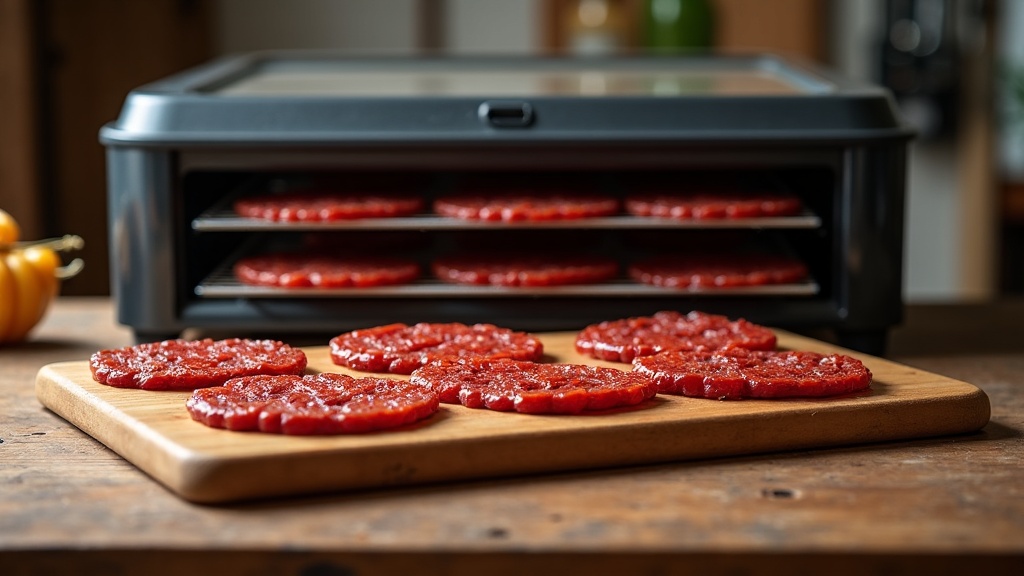
| Ground meat jerky | 160°F | 4-5 hours |
Step-by-Step: Using Your Dehydrator for Jerky
Step 1: Prep Your Meat Properly
Slice against the grain for tender jerky, with the grain for chewier texture. I go for 1/8″ to 1/4″ thick—any thicker and you’re adding hours to dry time. Partially freeze your meat (30-60 minutes) for easier slicing.
Pat your sliced meat dry with paper towels before marinating. Excess surface moisture just extends drying time.
Step 2: Marinate (But Not Too Long)
4-12 hours is the sweet spot. I usually do overnight. Less than 4 hours and the flavor doesn’t penetrate. More than 24 and your meat starts breaking down into mush.
After marinating, I pat the pieces down again to remove excess liquid. You want seasoning, not puddles.
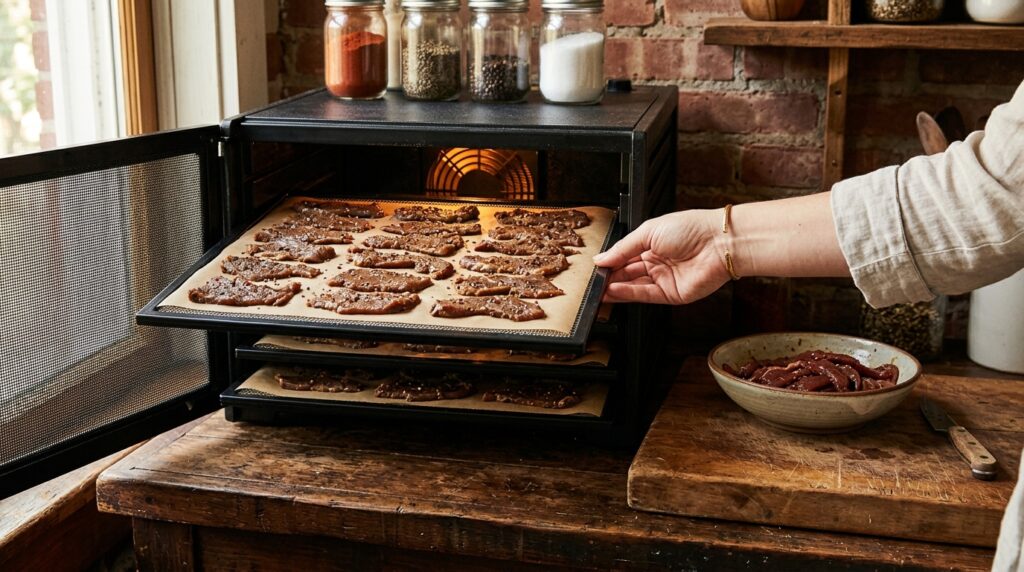
Step 3: Arrange on Trays Correctly
This is where I see the most mistakes. Single layer, no overlap, no touching. Air needs to circulate around every piece.
Leave about 1/4″ between pieces. Yes, this means you might need to run multiple batches. Trust me—overlapped pieces will stick together and dry unevenly.
If your dehydrator came with mesh screens or non-stick sheets, use them. They prevent smaller pieces from falling through and make cleanup easier.
Step 4: Set Temperature and Start
Preheat if your model has that option (mine doesn’t—never mattered). Set to 160°F and start the timer. I use a simple kitchen timer, nothing fancy.
For stackable dehydrators with bottom-mounted fans, rotate your trays every 2 hours. Box-style dehydrators with horizontal airflow don’t need rotation.
Step 5: Check for Doneness (Don’t Trust the Clock)
Start checking at the 4-hour mark. Jerky is done when it bends and cracks but doesn’t break in half. There should be no moisture when you squeeze a piece.
I pull a piece out, let it cool for 2 minutes (hot jerky feels drier than it is), then do the bend test. If it breaks clean in half, you’ve gone too far—it’ll be tough and crumbly.
Step 6: Cool and Store
Let your jerky cool completely on the trays—about 30 minutes. I then spread it on a cooling rack for another hour. Any residual moisture will redistribute during cooling.
Store in airtight containers or vacuum-sealed bags. Properly dried jerky lasts 1-2 months at room temp, 6+ months in the fridge.
Common Dehydrator Problems (And Fixes)
Jerky Drying Unevenly
Either you’ve overloaded the trays or your dehydrator has hot spots. Solution: space pieces farther apart and rotate trays halfway through. If you have a bottom-fan model, the top tray always dries slower—swap positions.
Outside Dry, Inside Still Moist
Temperature too high. You’re case-hardening—the outside forms a barrier that traps moisture inside. Drop your temp to 150-155°F and extend the time. Better slow than ruined.
Jerky Too Tough or Brittle
Over-dried. Pull it earlier next time. If you’ve already made this mistake, you can’t undo it, but you can crush the batch into ground jerky using a food processor—great for trail mix or camping meals.
Takes Forever (8+ Hours)
Your slices are too thick, you’ve overloaded the trays, or your dehydrator is underpowered. Check your wattage—anything under 400W struggles with full loads. Also make sure you’re patting down excess marinade.
Dehydrator Maintenance for Jerky Makers
Clean your trays immediately after use. Dried-on marinade is a pain to scrub. I soak mine in warm soapy water for 10 minutes, then wipe clean.
Every 5-10 batches, pull the bottom tray and vacuum out the fan housing. Meat particles and seasoning dust accumulate. Takes 2 minutes and extends your machine’s life by years.
If you smell burning plastic or the fan sounds weird, unplug immediately and check for debris around the heating element.
Frequently Asked Questions
How long does it take to dehydrate jerky?
4-6 hours at 160°F for most beef jerky. Thicker slices, fattier cuts, or lower temperatures will take longer. Poultry can take 5-7 hours. Always check texture, not just time.
Can you dehydrate jerky at 145°F?
Yes, but you’ll need 6-8 hours and you’re operating below USDA safety recommendations for killing bacteria. I don’t recommend it unless you’re using pre-cooked or cured meat. 160°F is safer and only adds about an hour.
Should I flip jerky while dehydrating?
Not necessary if you’ve arranged pieces in a single layer with good spacing. If you notice one side drying faster (happens with cheaper dehydrators), flip once at the halfway point. I never flip mine.
Why is my jerky sticky after dehydrating?
It’s not fully dry yet. Either run it another hour or your marinade had too much sugar (sugary marinades stay tacky longer). Properly dried jerky should be dry to the touch after cooling.
Can you over-dehydrate jerky?
Absolutely. Over-dehydrated jerky turns brittle and breaks apart instead of bending. It’s not unsafe, just unpleasant to eat. There’s no fix—you’ve removed too much moisture. Pull it earlier next batch.
Final Tips From 400+ Batches
Keep a notebook. I log every batch: cut, thickness, marinade, temp, time, and how it turned out. After 20 batches, you’ll have your process dialed in perfectly.
Don’t open the dehydrator door constantly to check. Every time you do, you’re adding 15-20 minutes to your dry time. Check at 4 hours, then every 30-45 minutes after that.
The bend test is king. When a cooled piece bends and cracks without breaking in half, you’re done. Everything else is just guidelines.
And remember: even bad jerky is still pretty good. You’ll figure this out faster than you think.