Memphis in May 2026: What Jerky Fans Can Learn from the World Championship BBQ Cooking Contest
Memphis in May 2026 runs May 13-16, and while I’m not flying down to Tennessee this year, I’ve been studying what the world’s best pitmasters do differently—and a lot of it translates directly to making better jerky. The World Championship BBQ Cooking Contest brings together teams who’ve spent decades perfecting smoke, meat handling, and flavor profiles, and those fundamentals matter whether you’re smoking a whole hog or dehydrating flank steak in your garage.
I’ve been making jerky for eight years now, and the biggest leaps in my batches came from borrowing techniques from competition BBQ. Not the fancy stuff—just the basic principles these teams use to handle meat, build smoke flavor, and balance seasoning. Here’s what Memphis in May teaches us.
Why Memphis in May Matters to Jerky Makers
The Memphis in May 2026 World Championship is the Super Bowl of BBQ. Over 200 teams compete across categories like whole hog, ribs, and shoulder, with judges scoring on appearance, taste, and tenderness. But strip away the competition drama, and what you’re watching is people who understand meat better than almost anyone.
The core skills overlap with jerky making more than you’d think:
- Smoke management — building clean smoke flavor without bitterness
- Meat selection and trimming — knowing which cuts work and how to prep them
- Moisture control — managing internal water content through temperature and time
- Seasoning ratios — balancing salt, sweet, heat, and acid
- Consistency — getting the same result batch after batch
Most pitmasters at Memphis in May have cooked thousands of hours. They’ve made every mistake already. Watching what they do—and understanding why—shortens your own learning curve.
Smoker Techniques That Translate to Jerky
Competition BBQ teams obsess over smoke quality. They’re not just dumping wood chunks into a firebox—they’re controlling combustion, airflow, and temperature to produce specific smoke characteristics. Here’s what applies to jerky:
Clean Smoke vs. Dirty Smoke
At Memphis in May, you’ll see teams managing thin, blue smoke—not thick white billows. White smoke means incomplete combustion, and it deposits creosote and bitter compounds on meat. That same principle applies when you’re smoking jerky in an electric smoker.
When I started using a smoker for pre-drying, I was generating too much smoke and ending up with acrid batches. Competition teams taught me to:
- Use fully seasoned wood (dried 6-12 months)
- Start with smaller wood pieces for cleaner combustion
- Keep airflow high enough to burn clean
- Add smoke early when meat is cold and surface is tacky
Your jerky absorbs smoke best in the first 1-2 hours when the surface is still moist. After that, the pellicle forms and smoke penetration drops. BBQ teams know this—they front-load smoke early, then coast on heat.
Temperature Control and Stall Points
Competition pitmasters talk about “the stall”—when evaporative cooling plateaus the internal temp around 150-170°F. They work around it by wrapping meat or pushing through it with steady heat. For jerky, understanding moisture evaporation curves helps you avoid over-drying edges while centers stay wet.
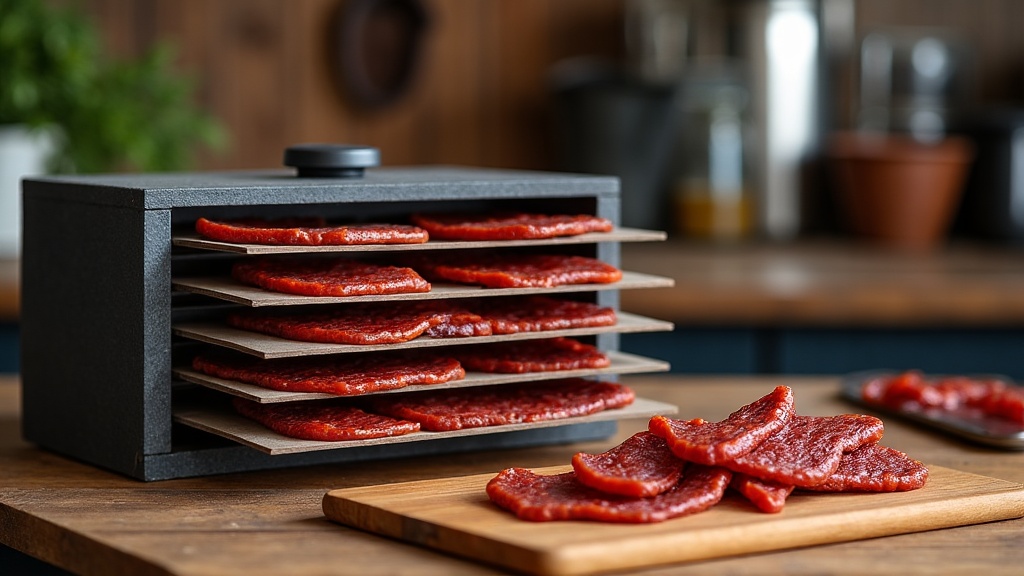
I run my dehydrator at 160°F for the first 2 hours, then drop to 145°F for the final 2-4 hours. This mimics what BBQ teams do—high heat to set the surface and kickstart rendering, then lower heat to finish without scorching. If you’re using a pellet smoker for jerky, this approach prevents case hardening.
Meat Handling: What Championship Teams Do Differently
Walk through the Memphis in May contest area and you’ll see teams treating meat like it’s worth its weight in gold. Because it is. At that level, meat selection and prep make or break your score.
Cut Selection
BBQ competitors spend hours sorting through whole muscle cuts to find the right marbling, grain direction, and fat distribution. For jerky, the same diligence pays off. I buy whole eye of round or top round and trim it myself rather than buying pre-sliced meat. You control:
- Grain direction (always slice across the grain for tender jerky)
- Fat removal (jerky fat goes rancid fast—trim it tight)
- Thickness consistency (uniform slices = even drying)
Championship teams also know that meat temp matters. They pull briskets and shoulders from the fridge 30-60 minutes before cooking to take the chill off. For jerky, I do the opposite—I freeze meat for 45 minutes before slicing. Firm meat slices cleaner and more uniform. Small detail, big difference.
Surface Preparation
BBQ teams talk about developing a “pellicle”—a tacky protein layer on the surface that helps smoke and seasoning adhere. You get this by air-drying meat for 30-60 minutes after seasoning. I started doing this with jerky after watching a Memphis team prep ribs, and my marinade adherence improved noticeably.
After I pull strips from marinade, I lay them on racks and run a fan over them for 20 minutes before they go in the dehydrator. The surface dries just enough to get sticky. Smoke and heat hit that tacky surface and the flavor locks in.
Flavor Trends from Memphis in May
Competition BBQ flavor profiles shift year to year. Teams experiment with regional styles, fusion influences, and ingredient trends. Here’s what’s been showing up at Memphis in May that translates to jerky:
Savory-Sweet Balance
The heavy molasses-and-brown-sugar sauces are fading. Teams are dialing back sweetness and leaning into savory complexity—umami-forward builds with soy, fish sauce, miso, and dried mushroom powders. For jerky, this means:
- Replacing half your brown sugar with coconut aminos or liquid aminos
- Adding a tablespoon of tomato paste or Worcestershire for depth
- Using smoked paprika instead of liquid smoke
I tested this in a batch last month—cut sugar by 40%, added 2 tablespoons of soy sauce and 1 tablespoon of tomato paste. The jerky had more complexity and didn’t leave that cloying sweetness on your palate.
Regional Fusion Styles
Memphis in May teams are blending styles—Texas brisket rubs with Carolina vinegar mops, Korean gochugaru with Memphis dry rub. The lesson for jerky makers: don’t be afraid to cross regions.
Some combinations I’ve borrowed from competition BBQ:
| Regional Base | Fusion Element | Result in Jerky |
|---|---|---|
| Texas (black pepper, salt, garlic) | Korean gochugaru and sesame oil | Savory heat with nutty finish |
| Carolina (vinegar, red pepper) | Maple syrup and bourbon | Tangy-sweet with depth |
| Memphis (paprika, garlic, brown sugar) | Chipotle and coffee | Smoky, earthy, slight bitterness |
| Kansas City (tomato, molasses) | Fish sauce and lime | Umami bomb with acid brightness |
The teams winning at Memphis in May aren’t just following recipes—they’re understanding flavor structure and adjusting balance. You can do the same with jerky marinades.
Consistency: The Championship Mindset
At Memphis in May 2026, every team will turn in one box of ribs, one pork shoulder, and one whole hog (depending on category). They get one shot. The teams that win are the ones who can replicate their process exactly, every single time.
That mindset matters for home jerky making. I keep a notebook logging every batch—cut used, marinade ratio, dry time, weather (humidity affects drying), and final texture. After 400+ batches, I can predict outcomes pretty accurately. Competition BBQ teams do the same thing, just at a higher level.
If you want to improve your jerky, treat it like a Memphis in May team treats their cook:
- Document everything — marinade weights, not volume measures
- Control variables — same cut, same thickness, same dehydrator placement
- Taste critically — not just “good” or “bad,” but what specific element is off
- Iterate deliberately — change one thing per batch, not five
Practical Takeaways for Your Next Batch
You don’t need to attend Memphis in May 2026 to apply what championship pitmasters know. Here’s what I’m using from competition BBQ in my garage jerky setup:
- Pre-smoke your meat — 1-2 hours in a charcoal smoker with thin blue smoke, then finish in a dehydrator. You get real smoke flavor without bitterness.
- Use a pellicle rest — after marinating, rest strips on racks under a fan for 20 minutes before drying. Better adhesion, better smoke uptake.
- Trim fat like you’re competing — championship-level fat trimming prevents rancidity and improves shelf life. Spend the extra 10 minutes.
- Balance savory and sweet — cut sugar by 30-40% and replace with umami sources like soy sauce, Worcestershire, or tomato paste.
- Log your batches — weight, time, temp, result. Build your own competition-level consistency.
Frequently Asked Questions
Can you actually smoke jerky like BBQ, or does it need a dehydrator?
You can absolutely smoke jerky from start to finish. Run your smoker at 160-180°F with minimal smoke after the first hour. The challenge is maintaining low, steady heat for 4-6 hours without over-smoking. I prefer smoking for 90 minutes, then moving to a dehydrator for better control. If you’re using a modern pellet grill with a smoke setting, you can do the whole process in one unit.
What wood do Memphis BBQ teams use, and does it work for jerky?
Memphis teams favor hickory and oak for pork, with some fruit woods like apple or cherry for sweetness. For jerky, I stick with mild woods—apple, cherry, or maple. Hickory can overpower thin strips of beef if you’re not careful. Mesquite is too strong unless you’re doing a Texas-style batch and even then, use it sparingly.
How do you prevent case hardening like BBQ pitmasters avoid bark splitting?
Case hardening happens when the outside dries too fast and seals moisture inside. BBQ teams avoid bark splitting by controlling humidity and temp ramps. For jerky, start at a higher temp (160°F) to set the surface, then drop to 145°F. Don’t blast it at 180°F from the start. Also, make sure your dehydrator has good airflow—stacking trays too tight causes uneven drying.
Is Memphis in May 2026 open to the public, and can you watch the teams cook?
Yes, Memphis in May is open to the public. The festival runs May 13-16, 2026, in Tom Lee Park along the Mississippi River. You can walk through the team sites, watch cooking in progress, and sample BBQ from vendors (though competition meat is for judges only). It’s worth attending if you’re serious about smoke and meat—you’ll pick up techniques just by watching setups and talking to teams.
What’s the single biggest thing competition BBQ taught you about making jerky?
Patience with smoke. I used to think more smoke = better flavor. Watching Memphis teams manage clean, light smoke for hours taught me that quality matters more than quantity. Now I smoke for 90 minutes max, with wood that’s fully seasoned and burning clean. The jerky tastes like smoke, not like an ashtray. That one change improved my batches more than any marinade tweak.