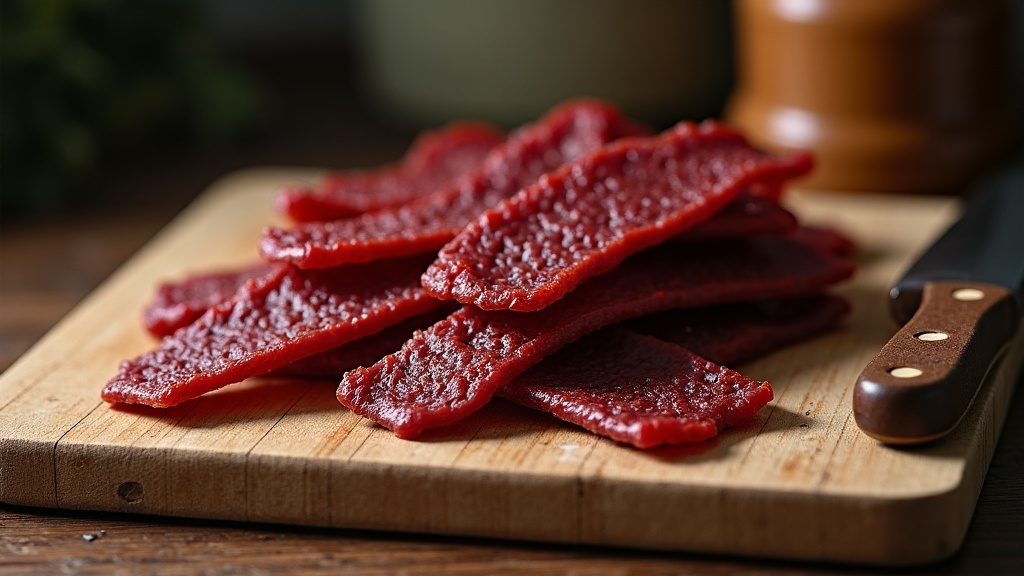
I’ve made over 400 batches of jerky in the last eight years, and I keep coming back to this old-fashioned recipe because it works. No gimmicks, no trendy ingredients—just lean beef, basic seasonings, and time.
This is the recipe my neighbor Frank taught me when I first started, and it’s the same method people have been using for decades. It takes about 6-8 hours in a dehydrator, but the result is chewy, savory jerky that actually tastes like beef.
What Makes a Jerky Recipe “Old Fashioned”?
Old-fashioned beef jerky sticks to the basics: soy sauce, Worcestershire sauce, black pepper, garlic powder, and onion powder. You won’t find liquid smoke, sriracha, or maple syrup here. The traditional method lets the beef flavor come through instead of covering it up.
The other key difference is slicing against the grain and drying it low and slow. Modern recipes often go hotter and faster, but the traditional approach gives you that classic chewy texture without turning the meat into cardboard.
Ingredients for Traditional Beef Jerky
This recipe makes about 1 pound of finished jerky from 2 pounds of raw beef.
The Meat
- 2 pounds beef (top round, bottom round, or eye of round)
- Trimmed of all visible fat
- Sliced 1/4 inch thick against the grain
The Marinade
- 1/2 cup soy sauce
- 1/4 cup Worcestershire sauce
- 2 teaspoons black pepper (coarsely ground)
- 2 teaspoons garlic powder
- 2 teaspoons onion powder
- 1 teaspoon salt
That’s it. No brown sugar, no honey, no liquid smoke. If you want authentic old-fashioned jerky, keep it simple.
Step-by-Step Instructions
1. Select and Prep Your Beef
Top round is my go-to cut. It’s lean, affordable, and widely available. Bottom round works just as well. Eye of round is leaner but can be tougher—still good if you slice it thin enough.
The most important step is trimming every bit of fat. Fat doesn’t dry—it goes rancid. Spend the extra five minutes with a sharp knife removing the silverskin and fat cap. Your jerky will last weeks longer.
For easier slicing, freeze the meat for 1-2 hours until it’s firm but not rock solid. Slice against the grain at 1/4 inch thick. Against the grain means cutting perpendicular to the muscle fibers—this makes the jerky easier to chew.
2. Mix the Marinade
Combine all marinade ingredients in a large bowl or gallon zip-top bag. Whisk it together—nothing fancy.
3. Marinate the Beef
Add the sliced beef to the marinade. Make sure every piece is coated. I use a gallon freezer bag, squeeze out the air, seal it, and massage the bag to distribute the marinade.
Refrigerate for 6-24 hours. I usually go for 12 hours. Less than 6 and the flavor doesn’t penetrate. More than 24 and the texture starts getting mushy from the soy sauce.
4. Prepare for Drying
Pull the beef out of the marinade. Pat each piece dry with paper towels. This removes excess liquid and speeds up drying time.
If you’re using a food dehydrator, arrange the strips on the trays without overlapping. Air circulation is critical.
If you’re using an oven, place the strips directly on the racks with a baking sheet on the bottom rack to catch drips. Prop the oven door open a couple inches with a wooden spoon to let moisture escape.
5. Dry the Jerky
Dehydrator method: Set the temperature to 155-160°F. This is the USDA-recommended temperature for safely drying meat. Dry for 4-6 hours, checking after 4 hours. Rotate trays halfway through for even drying.
Oven method: Set to the lowest temperature (usually 170°F). Dry for 3-5 hours, checking every hour. Oven drying is faster but less forgiving—it’s easier to over-dry.
6. Test for Doneness
Jerky is done when it bends and cracks but doesn’t break in half. It should be firm and dry to the touch with no moisture beading up when you squeeze it. If it bends like a wet noodle, it needs more time. If it snaps like a cracker, you’ve gone too far.
Let the jerky cool for 10 minutes before testing. It firms up as it cools.
7. Condition and Store
After drying, I condition the jerky. Put all the finished pieces in a large jar or airtight container for 24 hours. This redistributes any remaining moisture evenly throughout the batch. If you see condensation forming inside the container, the jerky needs more drying time.
Store finished jerky in vacuum seal bags or airtight containers. It’ll keep at room temperature for 1-2 weeks, in the fridge for 1-2 months, or in the freezer for 6+ months.
Old Fashioned vs. Modern Jerky Recipes
| Aspect | Old Fashioned | Modern |
|---|---|---|
| Marinade Base | Soy sauce, Worcestershire | May include teriyaki, BBQ sauce, hot sauce |
| Sweetness | None or minimal | Often includes brown sugar, honey, maple syrup |
| Smoke Flavor | None (or from actual smoking) | Liquid smoke common |
| Drying Temp | 155-160°F, low and slow | 165-175°F, faster |
| Texture | Chewy, substantial | Varies—can be tender or brittle |
| Flavor Profile | Savory, beefy, salty | Sweet, spicy, complex |
Common Mistakes and How to Avoid Them
Leaving Fat On
I’ve said it once, I’ll say it again: trim the fat. Every single time someone tells me their jerky went bad after a few days, it’s because they left fat on. Fat = shorter shelf life.
Slicing With the Grain
This makes the jerky tough as hell. You’ll be chewing for five minutes on one piece. Always slice against the grain unless you’re looking for a jaw workout.
Over-Marinating
More than 24 hours and the soy sauce starts breaking down the meat too much. The texture gets spongy and weird. 12-18 hours is the sweet spot.
Crowding the Dehydrator Trays
Overlapping pieces won’t dry evenly. You’ll end up with some strips that are perfect and others that are still wet. Leave space between each piece.
Not Testing Multiple Pieces
Check 3-4 different pieces from different trays when testing for doneness. Thicker pieces or pieces near the edges dry at different rates. Don’t pull the whole batch based on one piece.
Equipment You’ll Need
You don’t need much, but a few tools make the process easier:
- Food dehydrator (or an oven)
- Sharp slicing knife
- Cutting board
- Large bowl or gallon zip-top bags
- Paper towels
- Airtight containers for storage
I’ve been using the same 5-tray dehydrator for eight years. Nothing fancy—basic model, adjustable temperature. If you’re buying your first one, look for something with at least 4 trays and a temperature control that goes up to 160°F.
Variations on the Traditional Recipe
Even with an old-fashioned recipe, you’ve got room to adjust:
Extra pepper: Double the black pepper if you like a sharp bite. I go up to 1 tablespoon sometimes.
Cayenne kick: Add 1/2 teaspoon cayenne pepper for heat without changing the traditional flavor profile.
Coarse salt finish: After drying, while the jerky is still warm, sprinkle a tiny bit of coarse sea salt on it. Adds a nice texture.
What I don’t recommend is adding sugar or liquid smoke. At that point you’re making a different style of jerky entirely—still good, just not old-fashioned anymore.
How Long Does Homemade Jerky Last?
Properly dried and stored jerky keeps for:
- Room temperature (pantry): 1-2 weeks in an airtight container
- Refrigerator: 1-2 months in a sealed bag or container
- Freezer: 6+ months in vacuum-sealed bags
The key is making sure it’s completely dry before storing. Any moisture left in the meat shortens shelf life significantly. That’s why the 24-hour conditioning step matters—it helps you catch any pieces that still have moisture before you seal them up.
Frequently Asked Questions
Can I use ground beef for old-fashioned jerky?
Not for this recipe. Traditional jerky uses whole muscle meat sliced thin. Ground beef jerky is a different product with a different texture—it’s more like a meat stick. If you want authentic old-fashioned jerky, stick with solid cuts like top round or bottom round.
Do I need curing salt (pink salt) for beef jerky?
Not if you’re drying at 155-160°F. The USDA says that temperature is sufficient to kill bacteria. Curing salt adds safety margin and a slight flavor change, but it’s not required for dehydrator or oven jerky. If you’re smoking jerky at lower temperatures (under 140°F), then yes, use curing salt.
Why is my homemade jerky tough and hard to chew?
Two reasons: you either sliced with the grain instead of against it, or you over-dried it. Jerky should bend and crack, not snap like a twig. Pull it from the dehydrator when it’s still slightly pliable—it’ll firm up as it cools.
Can I make this recipe without a dehydrator?
Yes. Use your oven set to the lowest temperature (usually 170°F) with the door propped open a couple inches. Put the beef strips directly on the oven racks with a pan on the bottom to catch drips. It’ll take 3-5 hours. The downsides: oven drying uses more energy and you have to watch it more closely to avoid over-drying.
How much jerky does 2 pounds of raw beef make?
About 1 pound of finished jerky, sometimes a bit less. Beef loses roughly 50-60% of its weight during drying as the moisture evaporates. That’s why jerky is expensive—you’re paying for twice the amount of raw meat.

