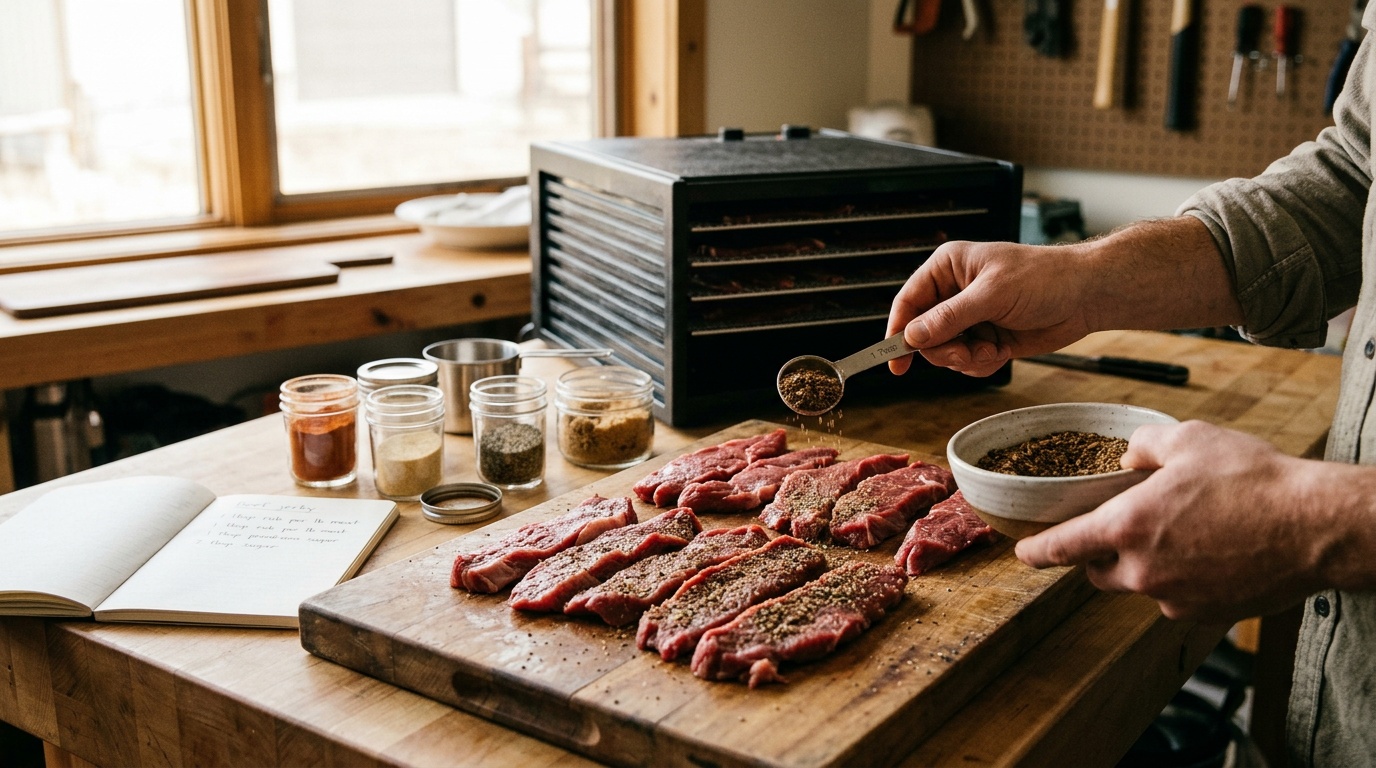
I start with 1 tablespoon of salt-free spices per pound of trimmed raw beef, then measure salt separately. For a commercial jerky seasoning, I use the package’s per-pound rate instead. That’s my practical answer to how much jerky seasoning per pound of meat: first figure out what’s in the spoon. A tablespoon of garlic and pepper is a very different thing from a tablespoon of salty premix.
If you are trying to get a batch right without wasting good meat, In my Milwaukee garage jerky lab, the expensive mistake is seasoning a whole roast before sorting that out. With three kids working through the snack bags, I want repeatable batches, not five pounds of beef nobody wants. Here’s how I measure a one-pound trial, scale it, and keep stronger flavor from turning into stronger salt.
The Short Answer
For the homemade dry blend below, use 1 tablespoon of spices plus 5 grams of plain salt per pound of meat. That’s a flavor starting point for this recipe, not a universal seasoning dose or preservation formula. For a salty store-bought blend, follow its label. For a kit with a separate cure packet, measure seasoning and cure independently according to that exact kit’s directions.
Always calculate against raw meat after trimming and slicing, before adding marinade. One pound is about 454 grams. If a roast starts at five pounds but leaves you with four pounds of usable strips, season four pounds. Finished jerky weight doesn’t belong in this calculation; drying removes water after you’ve already added the seasoning.
A simple scaling reference
| Trimmed raw meat | Salt-free spices for this recipe | Plain salt for this recipe |
|---|---|---|
| 1 pound | 1 tablespoon | 5 grams |
| 2 pounds | 2 tablespoons | 10 grams |
| 3 pounds | 3 tablespoons | 15 grams |
| 5 pounds | 5 tablespoons | 25 grams |
This table assumes no soy sauce, Worcestershire, salty rub, or curing mix. For commercial products, use label amount ? label meat weight ? actual meat weight. If seasoning directions specify 30 grams for three pounds, a 2.5-pound batch needs 25 grams. That’s an arithmetic example, not a suggested dose for an unidentified product.
Why This Technique Works
“Seasoning” can mean almost anything on a jerky label. Separating its jobs makes the batch easier to control. You can boost garlic without boosting sodium, or keep the same salt level while changing from peppery to smoky.
- Spices set the flavor. Pepper, garlic, onion, and paprika provide different strengths and textures. One tablespoon is a useful starting volume for the specific blend below, not for straight cayenne.
- Salt needs its own accounting. Plain salt, soy sauce, and salty seasoning blends all contribute. Adding a full dose of each is an easy route to an unpleasant finished strip.
- Liquid changes distribution. A small splash helps spread a homemade blend. A large marinade bath changes dilution and how much seasoning leaves with the discarded liquid.
- Drying concentrates what remains. Water leaves while much of the salt and spice stays. A raw marinade’s intensity doesn’t predict the finished jerky’s balance reliably.
I keep salt steady when comparing flavors. Otherwise, “better pepper flavor” can really mean “saltier.” Spices also have different densities: don’t assume a tablespoon of every blend weighs the same. Level spoons are fine for this homemade spice recipe; grams make an established recipe easier to repeat.
Where curing salt fits
Cure is a separate ingredient with product-specific dosing. Never apply the tablespoon rule to curing salt, substitute one brand’s cure dose for another, or increase cure for stronger flavor. A kit’s diluted cure blend and concentrated Cure #1 are not interchangeable. Follow the exact product’s directions, including meat type and resting time. If a combined seasoning contains cure, don’t casually reduce or increase that blend to adjust taste.
For example, Hi Mountain’s jerky instructions distinguish whole-muscle and ground-meat preparation and direct you to weigh meat after trimming. Keep the instructions with the remaining packets. An unmarked bag of white powder isn’t something I want beside tomorrow’s beef.
Step-by-Step Method
For a first trial, use one pound of lean eye of round or top round. I save the bigger batch for a flavor that’s already earned its place. Compare cost per trimmed pound when shopping: a cheap roast with a heavy fat cap can lose its advantage at the cutting board.
To budget that trial before scaling up, use the Yield & Cost Calculator to compare purchased weight, trimming loss, expected finished weight, and batch cost. Keep seasoning amounts tied to trimmed raw meat; the calculator does not set seasoning or cure doses.
- Trim, slice, then weigh. Remove visible fat and tough connective tissue. Firm the meat briefly in the freezer for easier cutting, then slice evenly, about 1/8 to 1/4 inch thick. Cut across the grain for easier chewing or with it for a longer pull. Weigh the usable strips in a tared bowl.
- Measure the one-pound blend. Combine 1 teaspoon black pepper, 1 teaspoon garlic powder, 1/2 teaspoon onion powder, and 1/2 teaspoon smoked paprika. Those three teaspoons total one tablespoon. Add 5 grams plain salt and, optionally, 1 teaspoon brown sugar. Use garlic and onion powder, not garlic or onion salt.
- Coat every strip. Stir the blend with 2 tablespoons cold water, toss thoroughly with the beef, and separate folded pieces. This makes a light coating rather than a deep bath. Seal in a food-safe bag or covered container and refrigerate at 40°F or below for 8–12 hours, turning once. This resting window is for this uncured flavor recipe; kits may specify longer.
- Heat safely, then dry. Steam or roast the strips to an internal 160°F before dehydrating, checking several pieces with a suitable food thermometer. Arrange heated strips in one layer with gaps on clean dehydrator trays. Follow the drying guidance below and discard liquid that contacted raw meat.
The 5 grams of salt equals roughly 1.1% of the raw beef weight. It’s a moderate trial level, not a claim about shelf stability. If your cooled finished batch needs more flavor, increase one salt-free spice next time. Keep salt unchanged until you’ve judged a fully dried sample.
Tools worth buying for this job
A digital kitchen scale with 0.1-gram resolution helps measure small salt and spice quantities. Choose one with enough capacity for your bowl and meat, and check its stated minimum weighing range. Display resolution alone doesn’t guarantee accuracy, especially for tiny cure quantities.
If you want fewer jars, a salt-free garlic and pepper seasoning blend keeps flavor adjustment separate from salt. Check ingredients for your preferred flavor profile; an herb-heavy blend won’t taste like the recipe above. As an Amazon Associate, I earn from qualifying purchases.
Time, Texture, and Doneness Cues
Keep the seasoning ratio tied to meat weight, but adapt the process to strip thickness and equipment. Doubling the meat doesn’t automatically double marinade time or drying time. Crowding the same trays, however, restricts airflow and makes a larger batch less predictable.
- Resting: Use the 8–12-hour refrigerated window for this thin-sliced homemade batch. Don’t compensate for a rushed rest with extra seasoning. Separate stuck strips and distribute the coating properly.
- Heating: USDA jerky guidance recommends heating meat to 160°F and poultry to 165°F before dehydration. Neither marinade nor cure replaces this step. A dehydrator’s dial shows an air-temperature setting, not the meat’s internal temperature.
- Drying: After heating, use a dehydrator that maintains 130–140°F, as USDA advises. Expect a substantial drying session; thickness, airflow, load, and preheating method change the duration. Begin checking around four hours and continue as needed. That is a checking point, not a promised finish time.
- Texture: Cool a test strip before bending it. Look for a leathery piece that cracks without snapping apart, with no wet interior. Check thicker pieces and different trays. This texture check doesn’t verify pathogen destruction or shelf stability.
I stopped judging seasoning from hot strips because I kept changing recipes that needed a fair comparison. Let a finished piece cool, chew it, and note salt, heat, and texture separately. Cool the remaining jerky before packaging; refrigerate homemade batches and freeze portions for longer storage.
Mistakes That Ruin the Batch
Stacking salty ingredients is the big one. Don’t add the table’s full salt quantity to a soy-based marinade or a salted commercial mix. Use a complete recipe designed around those ingredients. You can’t accurately calculate retained salt from marinade volume alone because some liquid gets discarded. Adding water also doesn’t magically remove an excessive salt dose; it changes the marinade and makes the outcome harder to predict.
Changing several things at once wastes the lesson. If a batch seems weak, don’t simultaneously double seasoning, extend the soak, and slice thinner. Increase a single salt-free spice by about 1/4 teaspoon per pound, then keep everything else steady. If you overmeasured cure, don’t taste-test your way out of it or improvise a rinse. Stop and consult the manufacturer before proceeding.
Keep ground jerky on its own worksheet
Ground meat holds mixed-in ingredients throughout the batch; sliced meat can leave seasoning behind in the container. Commercial kits may therefore specify different amounts and added water for each. Follow the ground-meat directions instead of borrowing the sliced-meat ratio. Use lean ground beef, mix evenly, and follow a ground-jerky process that includes heating to 160°F before drying.
Bottom Line
For this homemade blend, start with 1 tablespoon salt-free spices and 5 grams plain salt per pound of trimmed raw beef. For commercial seasoning, use the label rate. Keep cure separate and follow its exact instructions. Scale by actual meat weight, including partial pounds.
My batch note is simple: meat weight, spice amounts, salt, slice thickness, refrigerated rest, and finished verdict. One good pound gives you a recipe worth multiplying. That’s a better use of the grocery budget than discovering halfway through a five-pound bag that nobody likes the salt level.

