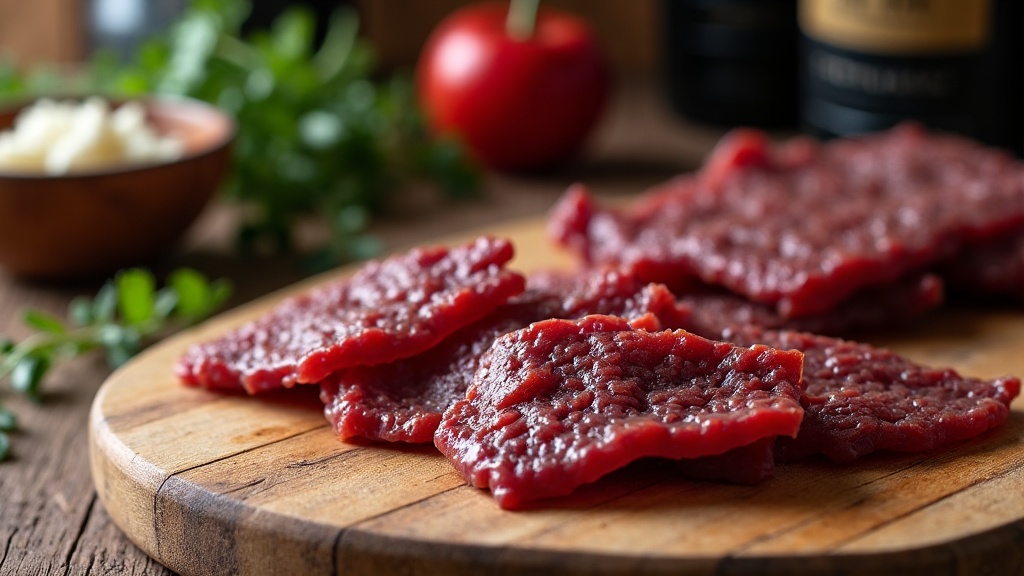
How Long Does Homemade Beef Jerky Last? Storage and Safety Guide
Your homemade beef jerky will last 1-2 months at room temperature when stored properly, 6 months in the fridge, or up to a year in the freezer. I’ve been making jerky in my garage for eight years, and I’ve learned the hard way that storage method matters way more than the recipe.
Let me walk you through exactly how to store your jerky so it stays safe and tastes great, plus the warning signs that it’s gone bad.
Why Homemade Jerky Expires Faster Than Store-Bought
Commercial jerky lasts 12-18 months unopened because manufacturers use preservatives like sodium nitrite, vacuum-seal their packages, and sometimes add oxygen absorbers. Your homemade batch doesn’t have those advantages.
Here’s what actually determines shelf life:
- Moisture content: The drier your jerky, the longer it lasts. I aim for jerky that bends and cracks but doesn’t snap completely.
- Storage container: Airtight is non-negotiable. Even a small air leak can cut shelf life in half.
- Temperature: Heat speeds up fat oxidation, which makes jerky taste rancid.
- Fat content: Leaner cuts last longer. That’s why I use eye of round or top round, not ribeye.
Shelf Life By Storage Method
I’ve tested every storage method over the years. Here’s what actually works:
| Storage Method | Shelf Life | Best For |
|---|---|---|
| Room temperature (airtight container) | 1-2 months | Batches you’ll finish quickly |
| Refrigerator (sealed container) | 4-6 months | Medium-term storage |
| Freezer (vacuum-sealed) | 12+ months | Long-term bulk storage |
| Vacuum-sealed with oxygen absorber (room temp) | 3-4 months | Gift bags, road trips |
The Right Way to Store Homemade Jerky
Room Temperature Storage (1-2 Months)
This is my go-to for batches I’m actively eating. After the jerky cools completely from the dehydrator — and I mean completely, still-warm jerky creates condensation — I pack it into airtight glass containers or quality resealable mylar bags.
I keep them in my pantry away from the stove and direct sunlight. Heat and light are jerky killers. In summer when my garage hits 85°F, I move everything to the fridge.
Refrigerator Storage (4-6 Months)
The fridge is perfect for batches I won’t finish in a month. Same airtight container rule applies. I use the back of the fridge where temperature stays most consistent, not the door.
One tip: let refrigerated jerky come to room temperature before opening the container. Otherwise, condensation forms on the cold jerky when warm air hits it, and moisture is the enemy.
Freezer Storage (12+ Months)
For long-term storage, I vacuum-seal in portion sizes my family will eat in one sitting. If you don’t have a vacuum sealer, vacuum sealers run about $30-50 and they’re worth it if you make jerky regularly.
Without a vacuum sealer, use heavy-duty freezer bags and squeeze out as much air as possible. I’ve kept properly frozen jerky for 18 months with no quality loss.
Thaw in the fridge overnight, not on the counter. Room-temperature thawing can create a breeding ground for bacteria on the surface.
Vacuum Sealing + Oxygen Absorbers
For road trips, gifts, or emergency stashes, I vacuum-seal with oxygen absorber packets. This setup at room temperature gives me 3-4 months of shelf life.
Use 100cc oxygen absorbers for quart-sized bags. Drop the packet in, seal most of the bag, then finish sealing. The packet will pull out residual oxygen over the next few hours.
How to Tell If Your Jerky Has Gone Bad
I’ve seen bad jerky exactly three times in 400+ batches, all from experiments I pushed too far. Here’s what to watch for:
Visual Signs
- Mold: White, green, or black fuzzy spots. This is obvious. Toss the whole batch.
- Discoloration: Gray or greenish patches that weren’t there before. Not the white salt deposits that sometimes form — those are harmless — but actual color change in the meat.
- Moisture beads: If you see condensation inside a sealed bag that wasn’t there when you packed it, bacteria might be growing.
Smell Test
Fresh jerky smells like the marinade and smoke (if you used liquid smoke or a smoker). Bad jerky smells sour, like old gym socks, or has an ammonia-like odor. Trust your nose. If it smells off, it is off.
Texture and Taste
Jerky that’s gone rancid feels slimy or sticky instead of dry. It tastes bitter or metallic. I had this happen once with a batch made from slightly fatty beef that I stored too warm for too long. The fat oxidized and the whole batch tasted like old pennies.
When in doubt, throw it out. Homemade jerky costs maybe $12-15 a pound to make. Food poisoning costs way more.
Extending Shelf Life: What Actually Works
Dehydrate Thoroughly
The biggest mistake I see beginners make is under-dehydrating. Your jerky should bend and crack slightly, not fold smoothly. When I started, I thought “tender” meant better. It doesn’t. It means shorter shelf life.
I run my dehydrator at 160°F for 4-6 hours depending on slice thickness. Thicker pieces take longer. Test a piece by bending it — you want it to crack but not completely snap in half.
Trim All Visible Fat
Fat goes rancid. Lean meat doesn’t. I spend an extra 10 minutes trimming every visible fat streak before marinating. Eye of round, top round, and bottom round are naturally lean cuts that make excellent jerky.
Cool Completely Before Packing
This seems obvious but I’ve rushed it. Warm jerky creates steam in your container. Steam = moisture = bacteria growth = mold. Let your batch cool on the dehydrator trays for 30 minutes before packing.
Add a Silica Gel Packet
I throw a food-safe silica gel packet into room-temperature storage containers. These absorb any residual moisture. Buy the ones that change color when saturated so you know when to replace them.
Common Storage Mistakes That Cut Shelf Life
After talking to hundreds of jerky makers over the years, these mistakes come up constantly:
- Using regular plastic bags: Sandwich bags aren’t airtight. They’re fine for a week, not a month.
- Opening and closing containers constantly: Every time you open the container, you introduce fresh air and moisture. Portion your jerky into smaller containers.
- Storing in the garage: Temperature swings destroy jerky. Unless you have climate control, keep it indoors.
- Mixing old and new batches: If you’re adding fresh jerky to a container with older pieces, you reset the shelf life clock. The older jerky might contaminate the new batch.
- Leaving it in direct sunlight: UV light breaks down proteins and accelerates fat oxidation. Dark pantry or opaque containers only.
FAQ: Homemade Beef Jerky Storage
Can you store homemade jerky in Mason jars?
Yes, Mason jars work great for room temperature and refrigerator storage. They’re airtight when sealed properly and you can see exactly what you have. I use quart-sized jars for most batches. Just make sure the jerky is completely cool before sealing, or condensation will form inside.
Does homemade jerky need to be refrigerated?
No, properly dehydrated jerky doesn’t need refrigeration for 1-2 months. But refrigeration extends shelf life to 4-6 months with no downside except taking up fridge space. If you made a big batch or used slightly fattier meat, refrigerate it. If you’re eating it this month, room temperature is fine.
How long does homemade turkey or chicken jerky last?
Poultry jerky has slightly shorter shelf life than beef because it’s harder to get as dry and the fat oxidizes faster. I’d give it 2-3 weeks at room temperature, 3-4 months refrigerated, or 6-8 months frozen. Use the same storage methods but be extra careful about dehydrating thoroughly — poultry needs to hit 165°F internal temperature for safety.
Can you vacuum seal jerky without a machine?
Sort of. You can use the water displacement method with freezer bags: put jerky in a freezer bag, seal most of it, then slowly submerge the bag in water (keep the opening above water). The water pressure pushes air out. Seal it completely just before the opening goes under. It’s not as effective as a vacuum sealer but it’s better than nothing.
What’s the white stuff on my jerky?
Usually salt deposits from the marinade. If your marinade was salty and your jerky is very dry, salt can crystallize on the surface as a white powder or small crystals. Totally harmless and safe to eat. Mold is fuzzy, not crystalline. If you’re not sure, smell it — salt deposits have no odor, mold smells musty.

