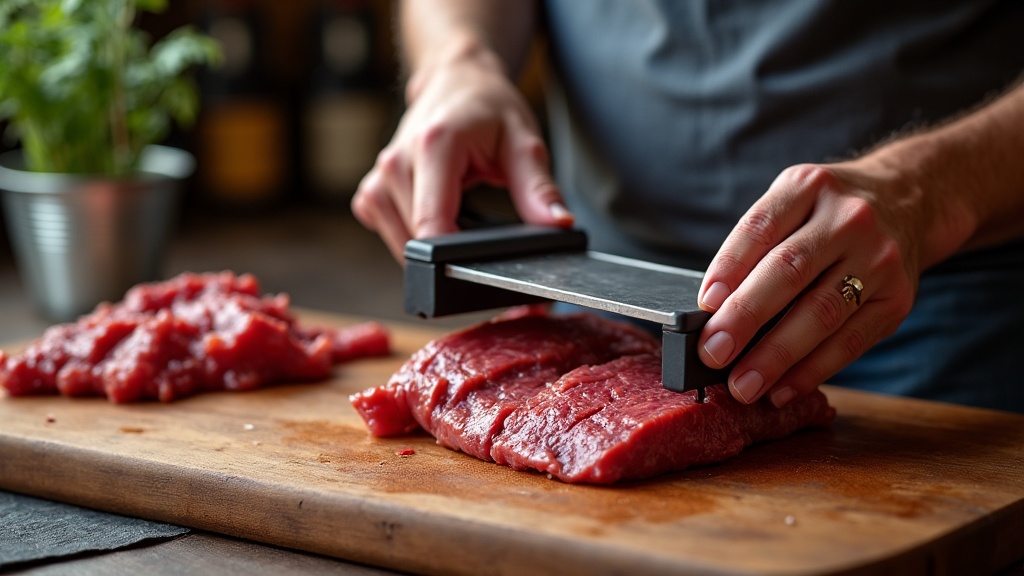
Best Meat Slicers for Beef Jerky in 2026
After eight years and 400+ batches of homemade jerky, I can tell you the single upgrade that changed everything: a decent meat slicer. I spent three years hand-slicing with a chef’s knife before my brother-in-law loaned me his old Cuisinart, and I’ll never go back.
The best meat slicer for beef jerky is one that cuts consistent 1/4-inch slices through partially frozen meat without jamming, bogging down, or requiring ten minutes of cleanup between batches. For most home jerky makers, that means a mid-range electric food slicer in the $150-$250 range with a 7.5-9 inch blade and a motor that doesn’t overheat after 15 minutes.
Why You Actually Need a Meat Slicer for Jerky
I resisted buying a slicer for years. “I’ve got a sharp knife,” I told myself. “Why spend $200 on a unitasker?”
Then I timed myself. Hand-slicing 5 pounds of top round took me 42 minutes, and half the slices were still uneven—some thick enough to stay chewy in the center, others so thin they turned into chips. With a slicer, the same 5 pounds takes about 8 minutes, and every slice comes out identical.
Consistency matters more than you’d think. When your slices vary by even 1/8 inch, you end up with some pieces overdried and leathery while others are still too moist. A slicer fixes that problem completely.
What to Look for in a Jerky Slicer
Blade Size
For jerky, you want at least a 7.5-inch blade. Smaller blades force you to cut roasts into awkward shapes before slicing. I run a 9-inch blade now and can handle full London broils without pre-trimming.
Anything over 10 inches is commercial territory—more money, more counter space, and no real advantage for home batches under 10 pounds.
Motor Power
This is where cheap slicers fail. You’re cutting partially frozen meat (more on that below), which means resistance. A wimpy motor will bog down, overheat, or worse—burn out after a dozen uses.
Look for at least 150 watts. My current slicer runs 180 watts and handles 20-minute slicing sessions without getting warm. The $89 model I tried first had a 130-watt motor and started smoking after two roasts.
Blade Material
Stainless steel blades only. I don’t care what the marketing says about “carbon steel sharpness”—you’re going to be washing this thing after handling raw meat, and carbon steel rusts if you look at it wrong.
Some models come with serrated blades, some with straight edges. For jerky, either works fine. I slightly prefer straight-edge because they’re easier to sharpen at home.
Thickness Adjustment
You need precise control from paper-thin up to at least 1/2 inch. Most slicers have a dial or knob that adjusts thickness—make sure it locks in place and doesn’t drift during cutting.
I run most of my jerky at 1/4 inch (about 6mm). Thinner slices (1/8 inch) make great crispy jerky. Thicker cuts (3/8-1/2 inch) work for traditional chewy styles or “steak jerky.”
Cleanup
This matters more than people think. You’re handling raw meat, and unless you want to spend 20 minutes scrubbing, you need a slicer where the blade, food carriage, and deflector all come off for washing.
I avoid slicers with tons of crevices and hidden spots. Flat surfaces, removable parts, dishwasher-safe components—that’s what you want.
Top Slicers for Home Jerky Making
Best Overall: Mid-Range Electric Food Slicers
For most people making 5-10 pound batches, a Cuisinart FS-22 or similar 7.5-inch electric slicer hits the sweet spot. Around $180-$220, 150+ watt motor, removable blade for cleaning, adjustable thickness down to deli-thin.
I’ve used a Cuisinart model for four years now. It’s handled everything from partially frozen flank steak to weird cuts like beef heart (don’t knock it till you try it). The carriage slides smooth, the blade stays sharp with occasional honing, and cleanup takes about five minutes.
Budget Option: Entry-Level 7-Inch Slicers
If you’re just starting out or only make jerky a few times a year, a basic 7-inch electric slicer in the $120-$150 range will work. Motor power drops to 130-150 watts, and you might need to give it rest breaks during long sessions, but it’ll slice meat.
Just don’t expect it to last through 400 batches. These are fine for casual users, not for weekend warriors making 10 pounds of jerky a month.
Upgrade Pick: 9-10 Inch Commercial-Style Slicers
If you’re slicing more than 15 pounds at a time, or if you want a slicer that’ll outlive you, consider a 9-10 inch commercial-style slicer. These run $300-$500, but you get belt-driven motors, heavier flywheels, and build quality that doesn’t care if you’re slicing 30 pounds of frozen venison.
I borrowed my buddy’s Chef’s Choice commercial slicer for a big batch last year, and yeah—it’s noticeably smoother and more powerful. But it’s also 35 pounds, takes up half my counter, and costs as much as my dehydrator. For most home users, it’s overkill.
Manual Slicers: Skip Them for Jerky
I’ve tried the hand-crank manual slicers, thinking I’d save money and counter space. Don’t bother.
Manual slicers are fine for salami or cold cuts—soft stuff. Partially frozen beef? Your hand will cramp after one roast, the slices won’t be consistent, and you’ll wish you’d just used a knife. Save the $60 and put it toward a real electric model.
How to Slice Meat for Jerky (The Right Way)
Step 1: Freeze It First
This is non-negotiable. Fresh, room-temperature meat is too soft and floppy for clean slicing. It’ll squish under the blade and give you ragged, uneven cuts.
I freeze my roasts for 1-2 hours before slicing—long enough to firm up, but not frozen solid. You want the texture of a firm avocado, not a brick. If you’ve frozen meat solid, let it thaw for 20-30 minutes first.
Step 2: Trim Excess Fat
Fat doesn’t dehydrate well and goes rancid faster than lean meat. Before you start slicing, trim off big fat caps and silver skin. You don’t need to be obsessive about it—some marbling is fine—but remove the obvious chunks.
Step 3: Set Your Thickness
Start at 1/4 inch. That’s the Goldilocks zone for most jerky styles—thick enough for chew, thin enough to dry in 4-6 hours.
If you want crispier jerky, go down to 1/8 inch. For traditional chewy steak jerky, try 3/8 inch. Anything thicker than 1/2 inch takes forever to dry and risks under-drying in the center.
Step 4: Slice Against the Grain (Usually)
Slicing against the grain gives you tender jerky that breaks apart easily. Slicing with the grain makes chewier, stringier jerky.
I usually go against the grain for beef. For game meat like venison or elk, I go with the grain because it’s already pretty tender.
Step 5: Clean Immediately
Don’t let raw meat residue sit on your slicer. As soon as you’re done, disassemble the blade and carriage, wash everything in hot soapy water, and dry thoroughly.
I wipe down the blade with a paper towel before washing to get the bulk of the meat off. Makes the actual cleaning way faster.
Slicer Comparison: What You’re Actually Paying For
| Price Range | Blade Size | Motor Power | Best For |
|---|---|---|---|
| $100-$150 | 7-7.5″ | 130-150W | Occasional jerky makers, small batches (under 5 lbs) |
| $150-$250 | 7.5-9″ | 150-180W | Regular jerky makers, 5-10 lb batches, best value |
| $250-$500 | 9-10″ | 200W+ | Heavy users, large batches (15+ lbs), commercial quality |
Common Slicer Problems (And How to Fix Them)
The Blade Keeps Jamming
Your meat isn’t cold enough. If the blade is catching or stalling mid-slice, the meat is too soft. Throw it back in the freezer for 20 minutes.
Also check that you’re not forcing the carriage too fast. Let the blade do the work—push slow and steady.
Slices Are Uneven
Either your thickness setting is loose and drifting, or your blade is dull. Tighten the adjustment dial, and if that doesn’t fix it, sharpen or replace the blade.
I sharpen mine every 30-40 batches using a honing stone. Takes five minutes and keeps cuts clean.
Motor Overheats
You’re either slicing too much at once, or your motor isn’t powerful enough for the job. Give it a 10-minute rest between big roasts.
If it overheats constantly, you probably bought a slicer that’s under-powered for jerky. Consider upgrading to a 150W+ model.
Cleanup Takes Forever
You need a slicer with more removable parts. Some cheaper models have fixed components that are a nightmare to clean. Look for blades, carriages, and deflectors that pop off easily.
Also, clean right away. Raw meat gets sticky fast.
Is a Meat Slicer Worth It for Jerky?
If you make jerky more than a few times a year, absolutely. The time savings alone are worth it—what used to take me 40 minutes now takes 8. But the real win is consistency. Every slice comes out identical, which means even drying, better texture, and way less waste from over-dried or under-dried pieces.
I ran the numbers once: across 400+ batches, I’ve sliced roughly 2,000 pounds of meat with my $190 Cuisinart. That’s about 10 cents per pound for perfectly consistent slices. Compare that to buying pre-sliced jerky meat (if you can even find it), and the slicer paid for itself in the first 20 batches.
Even the cheap $120 slicers beat hand-cutting by a mile. You’ll save time, reduce waste, and make better jerky. Just don’t cheap out so far that you end up with a motor that dies after ten uses.
Frequently Asked Questions
What thickness should I slice beef for jerky?
Most jerky works best at 1/4 inch (about 6mm). This gives you a good balance of chew and drying time. Go thinner (1/8 inch) for crispy jerky, or thicker (3/8 inch) for traditional chewy jerky. Anything over 1/2 inch takes too long to dry safely.
Do I need a commercial meat slicer for jerky?
No. Commercial slicers are great if you’re making huge batches (20+ pounds at a time) or want something that’ll last forever, but for most home jerky makers, a mid-range home electric slicer in the $150-$250 range is plenty. Save the extra $200 for more meat.
Can I slice meat without freezing it first?
You can, but you shouldn’t. Room-temperature meat is too soft and floppy for clean slicing. You’ll end up with ragged, uneven cuts that don’t dry properly. Freeze your meat for 1-2 hours before slicing—just long enough to firm it up, not freeze it solid.
How do I clean a meat slicer after raw meat?
Disassemble the blade, carriage, and any removable guards immediately after slicing. Wipe off loose meat with paper towels, then wash all parts in hot soapy water. Rinse thoroughly and dry completely before reassembling. Don’t let raw meat residue sit on the slicer—it gets sticky and nasty fast.
Should I slice jerky with or against the grain?
For tender, easy-to-bite jerky, slice against the grain. For chewier, stringier jerky, slice with the grain. I usually go against the grain for beef, but with the grain for game meat like venison since it’s already pretty tender. Try both and see what texture you prefer.

