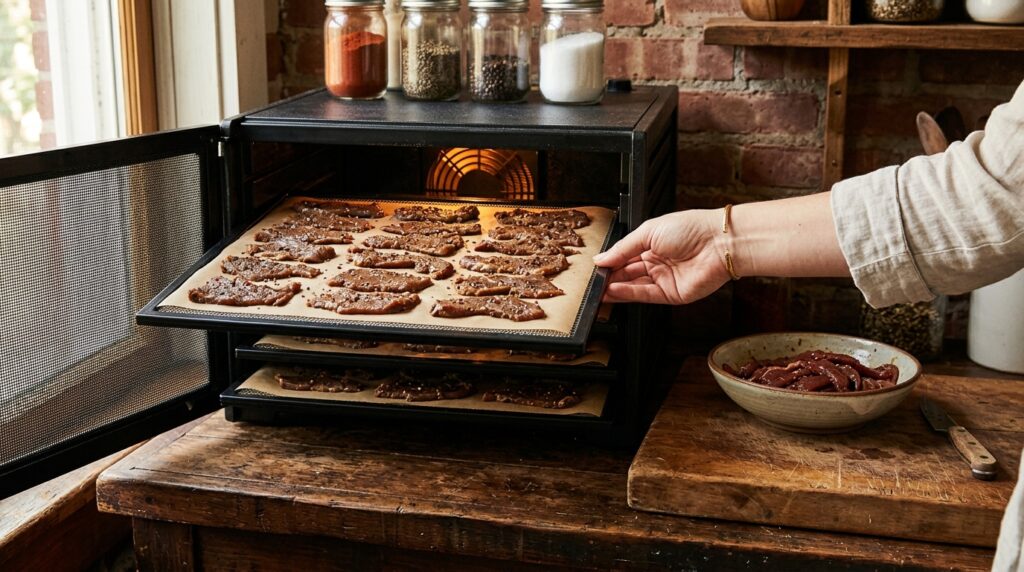
I’ve run enough jerky batches to tell you this up front: if your goal is better homemade meat snacks, a food dehydrator beats freeze-dried for almost everybody. Freeze-dried food has a place, but for jerky, venison strips, peppered beef, turkey bites, and the stuff you actually want to chew on during a drive or after a long Saturday in the garage, dehydration is the more practical tool by a mile.
The confusion comes from comparing two different things. A food dehydrator is the machine most of us should buy. Freeze-dried is the end result you get from a freeze dryer, which is a much more expensive, slower, bulkier setup built for long-term storage more than everyday snacking. I’ve ruined enough over-dried meat and wasted enough money on gear upgrades to say this plainly: if you want texture, sane batch costs, and a workflow that fits normal life, start with a dehydrator and don’t overcomplicate it.
The Short Answer
Food Dehydrator Vs Freeze Dried comes down to purpose. A food dehydrator removes moisture with warm moving air, leaves meat chewy, concentrates flavor, costs far less to get started, and makes the kind of jerky most people expect. Freeze-drying removes moisture by freezing food and pulling water out under vacuum, which gives you a crisp, airy result with very long shelf-life potential when packaged right, but it takes much pricier equipment and usually does not deliver classic jerky texture.
If you asked me which setup makes more sense for a home cook, hunter, or dad trying to keep a snack stash in the basement, I’d pick the dehydrator first every single time. A good dehydrator is cheaper, simpler, easier to clean, and better suited to lean cuts like top round, eye of round, venison, or turkey breast. Freeze-drying wins when your priority is ultra-light storage food, not when your priority is satisfying jerky. That’s why I’d point most people toward a solid jerky machine like the Excalibur 3926TB 9-tray food dehydrator or a mid-range rear-fan unit rather than jumping straight to a home freeze dryer.
Comparison Table
Here’s the direct comparison I wish somebody had handed me before I started pricing equipment and imagining every preserved meat option as basically the same thing.
| Factor | Food Dehydrator | Freeze-Dried |
|---|---|---|
| Texture | Chewy, bendable, classic jerky bite | Light, crisp, porous, often brittle |
| Best use | Jerky, fruit leather, dried fruit, mushrooms, herbs | Long-term storage meals, backpacking ingredients, crunchy snacks |
| Equipment cost | Usually low to moderate | Very high compared with dehydrators |
| Batch time | Often 4 to 10 hours for jerky | Usually much longer from freeze to fully dry |
| Flavor impact | Concentrated, savory, dense | Cleaner and lighter, but less jerky-like |
| Yield feel | Shrinks hard; dense finished product | Keeps more shape; feels larger for the weight |
| Cleanup | Trays, liners, marinade drips | Trays plus chamber and pump-related upkeep |
| Storage upside | Good short-to-medium storage when dried and packed well | Best for very long storage if sealed properly |
| Best for lean meats | Excellent, especially for jerky strips | Possible, but not the same eating experience |
| Who should buy | Almost every first-time jerky maker | Preparedness-heavy households and specialty users |
The big thing hiding inside that table is this: dehydrated meat and freeze-dried meat are not interchangeable just because both are dry. One is a snack with chew. The other is closer to shelf-stable ingredient territory unless you specifically want that airy crunch. If you are shopping tools, compare a dehydrator against a freeze dryer honestly, not just “dry food versus dry food.”
Where Each Option Wins
The food dehydrator wins on practicality, and not by a little. For normal jerky making, it is the better answer on cost, learning curve, and repeatability. You can buy lean beef, trim it hard, marinate overnight, lay it on trays, and have finished jerky the same day. You do not need a dedicated corner of the house, a vacuum pump setup, or a giant jump in budget. More important, the texture lands where jerky should land: dry on the outside, flexible in the middle, with enough resistance that you feel like you are eating meat instead of an edible packing peanut. That matters more than people think. I’ve had batches that were technically preserved but not enjoyable, and that’s a waste whether the process was fancy or not.
Freeze-dried food wins when storage life and weight matter more than chew. If you are building emergency food, camping meals, or ingredient jars that can sit sealed for a long stretch, freeze-drying has a real advantage. University and extension guidance consistently points out the long-term storage upside when freeze-dried food is packaged correctly, and Harvest Right’s current home units are built around that use case, not around making better jerky. That’s why the gear conversation changes so fast. A home freeze dryer can make sense for a serious preparedness setup, but for everyday use it is a whole different category of investment. If that is your lane, then something like a Harvest Right home freeze dryer is the kind of machine people compare, not a slightly nicer dehydrator.
What I learned the expensive way
First lesson: don’t pay for storage performance when what you really want is snack quality. A lot of beginners get sucked into “best preservation method” thinking and forget to ask whether they actually like the final texture. Second lesson: lean meat economics matter. Dehydration already shrinks yield a lot, so buying fatty cuts makes it worse because you trim more, store it for less time, and still don’t improve the final chew. Third lesson: cleanup counts. When a machine is annoying to wash, you run fewer batches. That sounds minor until it turns a good hobby into garage clutter.
What the Tradeoffs Feel Like in a Real Batch
In a real jerky batch, the dehydrator feels straightforward. I slice top round or venison around a quarter inch, marinate it, pat it dry, then run it at jerky-safe temps until it bends and cracks without snapping. The whole workflow is built around checking texture, not just moisture removal. You can pull a tray early for the kids who like softer pieces, leave another tray in longer for the people who want it tougher, and make decisions on the fly. That flexibility is a big deal. It lets you save a batch instead of losing it. One of my dumbest early mistakes was treating dry time like a fixed recipe instead of a range. Meat thickness, sugar in the marinade, and tray crowding change everything. A dehydrator makes those adjustments easy.
Freeze-drying feels more like a production process. That is not automatically bad, but it is different. The cycle is longer, the machine cost is dramatically higher, and the end product behaves differently in your mouth and in storage. With meat, especially lean strips, the final bite is lighter and more brittle. Some people like that for backpacking or emergency prep, but when I’m craving jerky, it misses the point. It also changes how flavor reads. Dehydrated jerky gives you dense salt, pepper, smoke, soy, and beefy concentration all in one chew. Freeze-dried meat hits cleaner and drier, sometimes almost too fast, then disappears. Practical tradeoff number two is packaging. Jerky can live happily in a jar, bag, or vacuum pouch depending on how long you are keeping it. Freeze-dried food asks for stricter storage habits if you want the long-shelf-life payoff that justified the machine in the first place.
Batch economics nobody mentions enough
Here is the real-talk math. A good dehydrator is reachable for normal households and starts paying you back fast if you make jerky regularly. You can buy larger lean cuts on sale, trim them yourself, and turn them into snack food that actually replaces pricey store bags. I have absolutely saved money doing this over time, but only because I kept the process simple. If I had started with a freeze dryer, I would have spent a lot more upfront chasing a use case I did not really have. When people ask me how to cut costs, my answer is boring but correct: buy lean meat on sale, trim hard, avoid sugary marinades that extend dry time, and use the right tool instead of the fanciest tool.
Mistakes to avoid
- Don’t compare dehydrated jerky to freeze-dried fruit and assume the same texture logic applies. Meat is less forgiving.
- Don’t buy a freeze dryer because it sounds like the advanced version of a dehydrator. It is a different lane.
- Don’t use fatty cuts just because freeze-drying sounds like it preserves everything. Fat is still your storage enemy.
- Don’t ignore workflow. The best machine is the one you will actually run twice a month without dreading cleanup.
Which One I Would Choose
If I were starting from scratch today, I would buy a food dehydrator first and not hesitate. For jerky, dried meat sticks, fruit, peppers, mushrooms, and all the practical stuff that comes out of a home kitchen or garage setup, the dehydrator gives you the best balance of cost, consistency, control, and final texture. It is the tool that matches how most people really use preserved food. Even if you later decide you want a freeze dryer for long-term storage, a dehydrator still earns its keep because it solves the everyday job better.
My honest winner is the dehydrator for probably 90 percent of readers landing on this topic. Choose freeze-dried only if your top priority is maximum shelf-life potential, lightweight storage, and a much bigger equipment commitment. Choose a food dehydrator if you want actual jerky, manageable batch costs, and a machine you will use all year. If you make snacks for family, hunting trips, road days, lunchboxes, or game-day grazing, the dehydrator is simply the better fit. That is the practical answer, and after 400-plus batches, it is the one I trust.
Quick questions I’d answer before spending money
Is freeze-dried meat better than dehydrated jerky?
Not for classic jerky eating. Freeze-dried meat stores differently and weighs less, but dehydrated jerky has the better chew, stronger flavor concentration, and lower equipment cost.
Can a food dehydrator do the same job as a freeze dryer?
No. A dehydrator dries with heat and airflow. A freeze dryer uses freezing and vacuum pressure. They overlap on preservation, but the process, texture, and storage outcome are different.
What should a beginner buy first?
A dehydrator, no question. Learn how lean cuts, slice thickness, marinade sugar, and drying time affect your batches before you even think about specialty preservation gear.
What I Would Change on the Next Batch
When a batch does not quite hit the mark, I almost never start by reinventing everything. I look at the cut, slice thickness, marinade balance, and drying setup in that order, because those four variables explain most of the wins and failures I see in home jerky.
I also think the smartest home cooks keep notes on what the batch actually did, not just whether it tasted good in the moment. Texture after cooling, yield, cleanup, and next-day chew tell you more than the first warm bite off the tray.
That habit is what turns one decent batch into a repeatable method. It also keeps you from blaming the wrong variable and chasing fixes that do not actually solve the real problem.