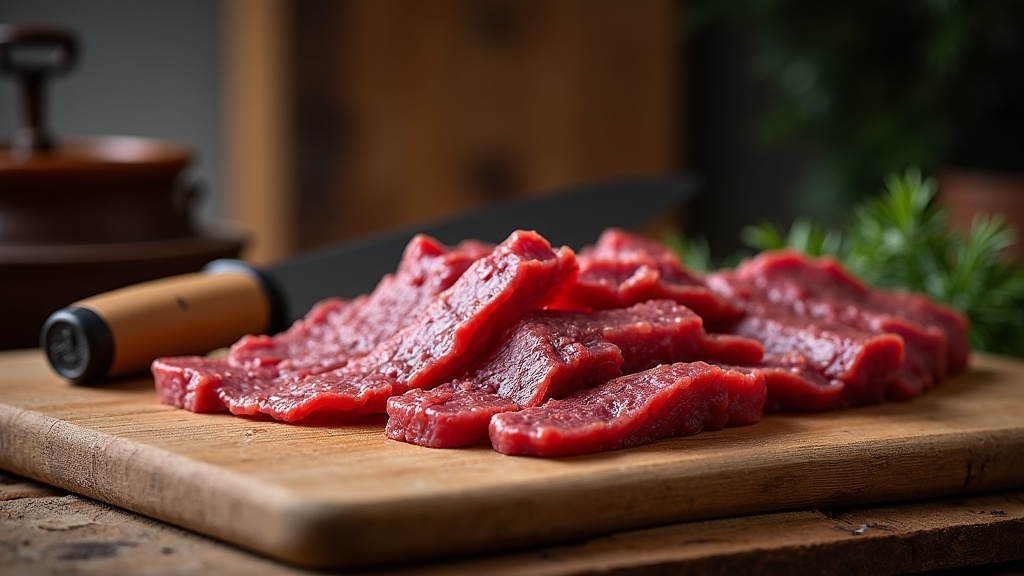
Best Cuts of Beef for Jerky: What Works Best and Why
After making over 400 batches of jerky in my garage, I can tell you the best cuts of beef for jerky are eye of round, bottom round, and top round — lean cuts from the rear leg that slice clean, dry fast, and won’t leave you with greasy jerky or a greasy wallet. The worst thing you can do is grab whatever’s on sale at the meat counter without checking the fat content first.
I learned this the hard way back in year two when I tried making jerky from chuck roast because it was $2.99 a pound. Spent three hours trimming fat, lost half the weight, and still ended up with jerky that left oil stains on the paper towels. Never again.
What Makes a Good Jerky Cut
Before we get into specific cuts, here’s what you’re looking for:
- Low fat content: Less than 10% if possible. Fat doesn’t dehydrate — it goes rancid.
- Consistent grain: You want muscle fibers running in one direction so you can slice with or against the grain consistently.
- Minimal connective tissue: Silver skin and thick membranes don’t break down during dehydrating. They just get chewy in a bad way.
- Good size: A roast that’s at least 3-4 inches in diameter gives you proper slices. Too small and you’re making jerky bites, not strips.
Price matters too. I’m feeding three kids and I’m not buying tenderloin to turn into jerky. The sweet spot is $4-7 per pound for whole roasts.
The Big Three: Round Cuts
These three cuts come from the rear leg of the cow. They’re naturally lean because those muscles do a lot of work. They’re also usually the cheapest lean cuts you’ll find.
Eye of Round
This is my go-to. Eye of round is a small, compact roast that’s almost perfectly cylindrical. The grain runs straight through it, fat content is typically under 5%, and there’s minimal trimming needed.
The downside? It’s small — usually 2-3 pounds. For a big batch, you’ll need multiple roasts. But the consistency is unbeatable. Every slice comes out the same thickness, same texture. When I’m making jerky for gifts or want guaranteed results, I grab eye of round every time.
Slicing tip: Partially freeze it for 60-90 minutes first. Eye of round firms up nicely and you can get paper-thin slices if you want them.
Bottom Round
Bottom round is the workhorse of my jerky operation. It’s bigger than eye of round (usually 4-6 pounds), almost as lean, and often runs $1-2 less per pound. This is what I buy when I’m making jerky for the week or stocking up for road trips.
The grain can be a little inconsistent — you might find it splits into two muscle groups with grain running in different directions. Not a deal breaker. Just adjust your knife angle as you slice.
There’s usually a thin fat cap on one side and maybe a membrane or two to trim off. Takes me about 5 minutes with a sharp knife. I save the trimmings for the dog.
Top Round (London Broil)
Top round is sold as “London Broil” in a lot of stores. It’s the most tender of the three round cuts — not that “tender” means much when you’re making jerky, but it does have a slightly less dense texture.
It’s also the fattiest of the three, though still lean by beef standards. You’ll see more marbling than eye of round. I’ve made hundreds of batches with top round and never had a rancidity problem, but if I’m making jerky I plan to store for 3+ months, I go leaner.
Top round is usually the widest of the round cuts, which means bigger slices. Good if you like that classic jerky strip look.
Cut Comparison Table
| Cut | Fat Content | Price Range | Best For | Trimming Required |
|---|---|---|---|---|
| Eye of Round | Very Low (~5%) | $5-7/lb | Consistency, long storage | Minimal |
| Bottom Round | Low (~6-8%) | $4-6/lb | Large batches, budget-friendly | Light (5-10 min) |
| Top Round | Low (~8-10%) | $5-7/lb | Bigger slices, slightly more tender | Light to moderate |
| Flank Steak | Low-Moderate (~10-12%) | $8-12/lb | Premium texture, special occasions | Minimal |
| Sirloin Tip | Low (~7-9%) | $5-8/lb | Good all-rounder | Moderate |
Other Cuts Worth Considering
Flank Steak
Flank steak makes excellent jerky. The grain is super pronounced, which gives you that classic jerky texture — chewy but not tough. It’s also thin, so you can slice it into strips without much work.
The problem is price. Flank steak runs $8-12 per pound around here, sometimes more. That’s ribeye territory. I’ve used it for special batches — gifts for my father-in-law, jerky for a camping trip with buddies — but for weekly jerky? I’m not spending that.
If you find flank on sale or want to make a premium batch, go for it. Just slice with the grain for traditional chewy jerky or against the grain if you want it more tender.
Sirloin Tip
Sirloin tip is a solid middle-ground option. Leaner than top round, bigger than eye of round, and usually priced between the two. The grain can be a little wonky — it’s actually made up of several smaller muscles — so you’ll need to pay attention while slicing.
I use sirloin tip when my usual cuts aren’t on sale or when I want to mix things up. It’s reliable, just not my first choice.
Brisket (Flat Only)
I’m going to get some pushback on this one, but hear me out: the flat section of a brisket can make good jerky if you trim it aggressively. The point is too fatty — don’t even try — but the flat is workable.
You’ll spend 15-20 minutes trimming fat and you’ll lose 20-30% of the weight. But if you can get a whole packer brisket on sale for $3/lb, trim the flat, and use the point for something else, the math works out.
This is an advanced move. If you’re new to jerky, stick with the round cuts.
Cuts to Avoid
Here’s what I don’t use and why:
- Chuck roast: Too much fat, too much connective tissue. Even after aggressive trimming, you’ll have inconsistent texture.
- Ribeye/Strip/Tenderloin: Marbling is great for steaks, terrible for jerky. Also way too expensive.
- Ground beef: Ground beef jerky is a different product entirely. You need to add binders, press it into sheets, and the texture is more like a meat chip. Nothing wrong with it, but it’s not what I’m making.
- Stew meat: You don’t know what cut it came from, the pieces are inconsistent sizes, and it’s usually overpriced for what you’re getting.
How to Pick Good Meat at the Store
I’ve bought hundreds of roasts at this point. Here’s my checklist:
- Look for deep red color: Bright red can mean it’s been treated with carbon monoxide (legal, but I prefer meat that hasn’t been). Deep red or burgundy is what you want.
- Check the fat cap: A thin fat cap is fine — you’ll trim it. A thick cap means you’re paying for fat you’ll throw away.
- Feel for firmness: The meat should feel firm, not mushy. If you press it and it stays dented, that’s not fresh.
- Check the grain through the packaging: For round cuts especially, look for consistent grain direction. If the roast looks like it’s splitting or separating, pick a different one.
- Compare price per pound, not package price: I see people grab the cheapest package without checking weight. A $15 roast that’s 4 pounds is cheaper than a $12 roast that’s 2 pounds.
If your store has a butcher counter, ask when they get fresh deliveries. I go Thursday mornings because that’s when my local store restocks. Better selection, better quality.
A Word on Grass-Fed vs. Grain-Fed
Grass-fed beef is leaner than grain-fed, which sounds ideal for jerky. And it is — from a fat percentage standpoint. But grass-fed also costs $3-5 more per pound and has a stronger, gamier flavor that comes through in the jerky.
I’ve done side-by-side batches with the same marinade. My kids prefer the grain-fed version. I don’t mind the grass-fed flavor, but I’m not paying the premium for it. If you’re already buying grass-fed beef for other reasons, it’ll work great for jerky. Just know you’re not getting a better product, just a different one.
My Actual Shopping Routine
I hit two stores: a regular grocery chain and a Costco-style warehouse about 20 minutes away. The grocery store has better sales on smaller roasts (eye of round, small top rounds). The warehouse has bottom round in 5-6 pound slabs for $4-5 per pound year-round.
Every 2-3 weeks I buy 8-12 pounds of whatever’s cheapest between eye of round and bottom round. If nothing’s on sale, I wait. Meat goes on sale often enough that I’ve never had to pay full price in years.
I’ll portion the meat into 1-2 pound sections, freeze what I’m not using immediately, and thaw it in the fridge 24 hours before I need it. A 10-pound haul keeps me in jerky for a month, sometimes longer.
Equipment That Makes a Difference
You don’t need much, but these tools matter:
A sharp slicing knife: I use a 10-inch Victorinox Fibrox. Costs about $40, holds an edge, and has enough length to slice through a whole roast in one pass. The sharper your knife, the less you’ll tear the meat.
A dehydrator with temperature control: Consistent heat at 160°F is non-negotiable for food safety. You can use an oven, but a dehydrator gives better airflow and more consistent results.
A cutting board with a drip tray: Raw meat is messy. A board with a channel around the edge or a removable tray keeps your counter clean.
I don’t use a meat slicer. I know some people swear by them, but I’ve gotten fast enough with a knife that I can process a 5-pound roast in 10-15 minutes. Meat slicers are expensive, take up space, and are a pain to clean. Your call.
FAQ: Best Cuts of Beef for Jerky
What’s the absolute cheapest cut I can use for beef jerky?
Bottom round is usually the cheapest lean cut that makes good jerky. I regularly find it for $4-5 per pound, sometimes less on sale. Eye of round is close behind. Avoid the temptation to buy fatty cuts just because they’re cheap — you’ll waste money trimming and end up with less usable meat.
Can I use pre-sliced deli meat for jerky?
No. Deli meat is already cooked, has added water and preservatives, and won’t dehydrate properly. You need raw, whole-muscle cuts to make real jerky. Pre-sliced stir-fry beef from the meat counter can work in a pinch, but you’re paying a premium for the convenience and you don’t control the slice thickness.
Should I trim all the fat off before or after marinating?
Before. Always before. Marinade doesn’t penetrate fat anyway, so you’re just wasting marinade. Trim the fat first, then slice, then marinate. Takes me 5-10 minutes depending on the cut.
What’s better for jerky: slicing with the grain or against the grain?
With the grain for traditional chewy jerky, against the grain for more tender jerky that’s easier to bite through. I slice with the grain 90% of the time because I like the texture and it holds together better. If I’m making jerky for someone with dental work or kids with braces, I’ll slice against the grain.
How much does beef shrink when you make jerky?
Plan on losing 60-70% of the weight during dehydrating. A 5-pound roast yields about 1.5-2 pounds of finished jerky. The exact amount depends on how lean the meat is, how thick you slice it, and how dry you like your jerky. I’ve tracked this across dozens of batches and the average is right around 65% loss.

