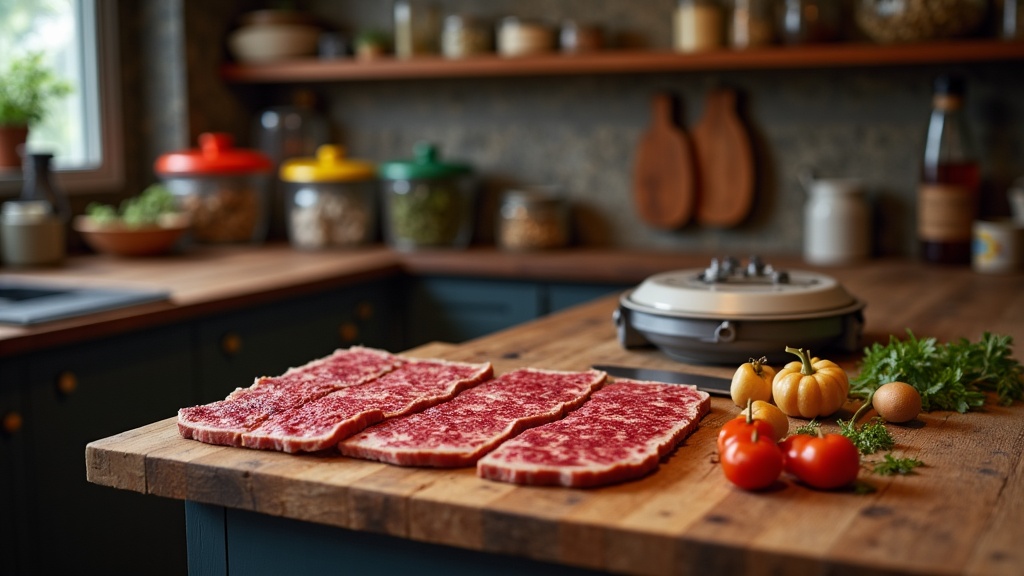
I get this question a lot, and the honest answer is: most jerky meat does not need an overnight brine. For the kind of lean beef I use in my garage batches, a wet brine or salty marinade usually does its job in about 4 to 12 hours, with 6 to 8 hours being the sweet spot for most strips. Go much longer than that and you can absolutely make the meat too salty, a little hammy, and weirdly firm.
That answer comes from ruining enough batches to stop guessing. I have pushed beef to 24 hours thinking “more flavor has to be better,” and the result was a batch my kids ignored after one bite. If you are brining chicken or turkey instead of beef jerky meat, the timing shifts a bit based on thickness, but the same rule holds: long enough to season and improve moisture, not so long that the texture turns cured.
The Short Answer
For jerky, I tell people to brine thin sliced lean beef for 4 to 12 hours in the refrigerator, and aim for 6 to 8 hours unless you have a strong reason to go shorter or longer. Thin slices absorb salt fast. A lot faster than a whole chicken, pork loin, or turkey breast.
Thickness matters more than almost anything else. Exploratorium’s basic brine guidance suggests about 2 to 3 hours per inch of thickness for meat, which is a helpful reminder that time should follow size, not just the clock (Exploratorium). For larger poultry, Clemson notes a 16- to 20-pound turkey may sit in a wet brine for 24 to 36 hours, which shows how different big roasts are from thin jerky slices (Clemson Home & Garden). USDA also stresses keeping brining refrigerated the entire time for safety (USDA).
Why This Technique Works
Brining works because salt changes how the meat holds water and how seasoning moves into the surface. You are not magically flavoring a thick roast all the way to the center in an hour, but you are improving the outer layers where most of the bite happens, especially with jerky. In practical garage terms, a good brine gives you better seasoning balance, more even texture, and less risk of dry cardboard edges after dehydration.
- Salt seasons efficiently: even a few hours can noticeably improve flavor in thin sliced beef.
- It helps with moisture retention: that matters most when you are going to dry the meat for hours.
- Thickness controls timing: thin jerky strips need hours, while big poultry pieces may need much longer.
- Temperature and concentration matter: food science work on brining systems shows that salt concentration and temperature meaningfully affect physical properties, which is why a “just leave it forever” approach is sloppy (PubMed).
The other thing people miss is that brining is not one fixed formula. A calculator like Destination BBQ’s brining calculator is useful because it frames salt level and minimum time more realistically than random forum guesses (Destination BBQ). Genuine Ideas also points out that lower salt concentrations, under about 0.5%, are more about seasoning, while stronger brines move toward preservation territory (Genuine Ideas). For home jerky, I am almost always chasing better flavor and better drying texture, not old-school preservation.
Step-by-Step Method
If you want the simple version I actually use, here it is. This works for eye of round, top round, bottom round, venison, and most lean cuts people turn into jerky at home. It also keeps batch cost under control, because oversalted meat is an expensive lesson when beef is not cheap.
- Slice the meat evenly: aim for about 1/8 to 1/4 inch thick. Thin and consistent beats thick and random every time.
- Mix a moderate brine or salty marinade: enough salt to season, not enough to cure. If soy sauce is in the mix, remember that already brings a lot of salt.
- Refrigerate 4 to 12 hours: toss once or twice if the strips are packed tightly so every piece gets equal contact.
- Drain and pat dry before dehydrating: too much surface moisture slows drying and can leave the outside tacky.
Here is the timing chart I use as a starting point when somebody asks, “How long should I brine?”
| Meat or Cut | Typical Thickness | Good Starting Brine Time | My Notes |
|---|---|---|---|
| Beef jerky strips | 1/8 inch | 4 to 6 hours | Good for stronger soy-based marinades |
| Beef jerky strips | 1/4 inch | 6 to 8 hours | Best all-around range for most home batches |
| Chicken breast for grilling | Whole breast | 30 minutes to 2 hours | Longer can get mushy or too salty |
| Chicken pieces | Bone-in | 2 to 6 hours | Depends on size and salt strength |
| Whole turkey | Large bird | 24 to 36 hours | Use established poultry guidance, not jerky timing |
One lesson I learned the expensive way: if your marinade includes soy sauce, Worcestershire, bottled teriyaki, and added salt, you are effectively stacking salt on salt. In that case, stay toward the short end. I have had ?8-hour recipes? taste perfect with low-salt mixes and borderline inedible with salty bottled marinades.
Time, Texture, and Doneness Cues
Brining time is really a texture decision disguised as a timing question. Shorter brines give you a cleaner beef flavor and firmer chew. Longer brines push more seasoning in, but they also increase the odds of a cured, denser bite. That is not always bad, but you should choose it on purpose.
- Is a 30 minute brine good for chicken? Yes, for small or thin chicken pieces it can help, especially if you are short on time. For jerky beef, 30 minutes is usually too short to do much.
- How many hours should chicken be brined? For boneless chicken breasts, 30 minutes to 2 hours is often enough. For larger or bone-in pieces, 2 to 6 hours is more realistic.
- For jerky strips, watch texture: 4 to 6 hours keeps the bite beefier; 8 to 12 hours gives deeper seasoning but can tighten the texture.
- Doneness still happens in the dehydrator, not the brine: the finished strip should bend and crack slightly, not snap clean like a cracker and not feel wet in the middle.
My own preference for most family batches is a medium brine, then a full pat-dry before the racks. That gets me better bark, more even drying, and less sugary surface tack if I used brown sugar or honey in the marinade. If the meat comes out tasting salty before it is even dry, that batch was over-brined. I have made that mistake enough times that now I label the container with the start time in big marker.
Mistakes That Ruin the Batch
The biggest mistake is treating all cuts the same. A whole turkey and a thin sliced eye round are not even close. Using poultry brine timing on jerky meat is how people end up asking why their batch tastes like deli beef. Another common mistake is forgetting that salty ingredients count toward the brine. Soy sauce, liquid aminos, Worcestershire, fish sauce, teriyaki, and even some hot sauces all move the needle.
The second batch-ruiner is bad process control. Brine in the refrigerator, not on the counter, because USDA food safety guidance is clear on cold holding during brining (USDA). Do not leave excess liquid clinging to the meat before drying unless you want longer dehydrator time and patchy texture. And do not assume “longer is safer” or “longer is more flavorful.” It often just means saltier and more expensive. If you are experimenting, split one batch into 4-hour, 8-hour, and 12-hour bags and compare them side by side. That one test taught me more than a dozen copied recipes ever did.
Bottom Line
If you want the practical answer, brine jerky meat for 6 to 8 hours most of the time, shorten it to 4 to 6 hours for thin strips or salty marinades, and only push toward 12 hours when the cut is thicker or the brine is fairly mild. For chicken, a 30-minute brine can help, but most pieces do better somewhere in the 1- to 6-hour range depending on size. Whole poultry is a different category and needs established poultry-specific timing.
The best brine time is the one that gives you the texture you actually like without wasting meat. Start moderate, keep notes, and adjust one variable at a time. That is how I got from random decent batches to repeatable good ones. If you can answer “How salty was the marinade?” and “How thick were the slices?” you are already asking better questions than most recipes do.
FAQ
What are common mistakes when brining? The big ones are over-brining, using too many salty ingredients at once, leaving the meat unrefrigerated, and drying strips that are still dripping wet.
Should I rinse meat after brining? Usually I do not rinse a balanced jerky marinade, but I do pat it dry very well. If the brine was strong or the surface looks heavily salted, a quick rinse can help.
Can you brine too long? Absolutely. The meat can get too salty, too dense, and more cured than you wanted.

