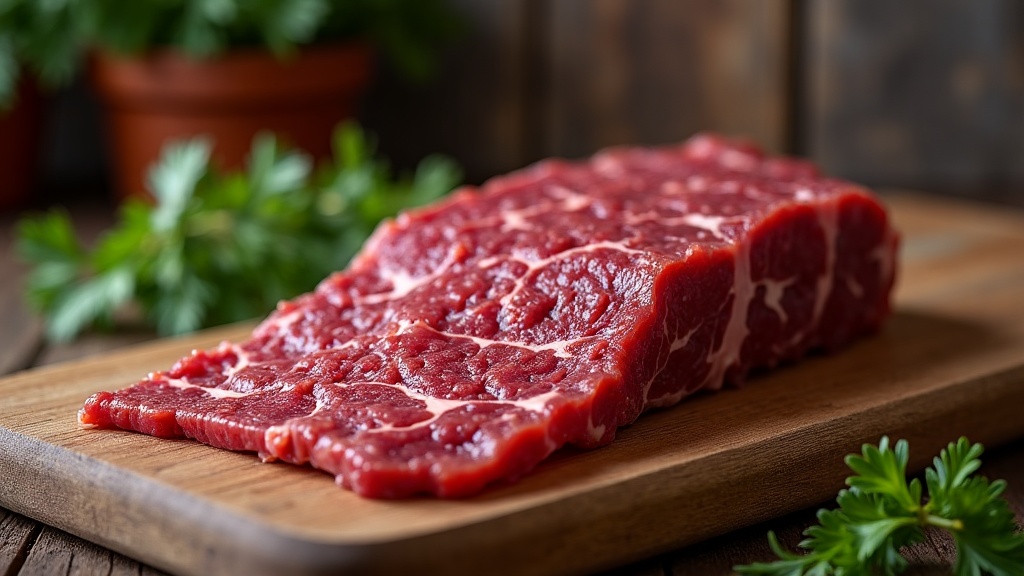
After more than 400 batches in my garage, I can tell you the best cut of beef for jerky depends on what you care about most. If you only buy one roast and want the safest all-around choice, buy eye of round. If you want the best value for a bigger batch, buy bottom round. If you want wider slices and a slightly softer bite, top round is usually the better pick. That is the real answer. There is no single winner unless you decide what kind of win you want.
I did not think about jerky this way when I started. Back then I was always hunting for the one magic cut that would solve everything. What I eventually learned is that home jerky is a tradeoff game: cost, trim waste, slice shape, chew, drying speed, and shelf life all pull against each other a little. Once I started buying with a decision guide instead of a one-size-fits-all rule, my batches got more consistent and my grocery bill got a little less stupid.
So if you are trying to choose the right beef cut for your next batch, here is the framework I actually use.
If you only buy one cut, buy eye of round
If a friend asked me for the safest recommendation with no extra context, I would say eye of round. It is lean, clean, and predictable. The grain runs straight, the trimming is minimal, and it dries with very little drama. That makes it the easiest cut to recommend when I do not know how much jerky experience someone has.
The main downside is size. Eye of round is not huge, so it is not always the best value per batch if you are feeding a family or filling a dehydrator to the edges. But when I want the longest shelf life and the fewest surprises, this is still the roast I trust most.
That is also why I think beginners do well with it. A roast that behaves predictably teaches you more than a bargain cut that forces you to troubleshoot every step.
My decision guide for the best jerky cut
| If your priority is… | Best cut | Why it wins | Main tradeoff |
|---|---|---|---|
| Safest all-around choice | Eye of round | Very lean, easy to slice, consistent drying | Smaller roast, narrower strips |
| Best value | Bottom round | Bigger roast, strong yield, usually cheaper per pound | Grain can vary a little |
| Easiest slicing | Eye of round | Straight grain and tidy shape | Less impressive strip size |
| Most tender bite | Top round | Broader slices and slightly softer chew | A bit more marbling |
| Longest shelf life | Eye of round | Lowest fat and very little waste | Costs a bit more sometimes |
| Big batch on a budget | Bottom round | Best value for home dehydrator loads | Needs a little more attention while slicing |
Best value: bottom round wins more often than people expect
If your first concern is cost, bottom round is usually the best value cut in the meat case. It is often cheaper per pound than eye of round, and because the roast is bigger, it makes more sense when I am loading up trays for a full family batch or a road-trip stash.
This is probably the cut I buy most when I want the most jerky for the least money without dropping into junk territory. It still needs some trimming, and the grain is not always as obedient as eye of round, but those are manageable problems. I would rather spend five extra minutes slicing carefully than waste money on a roast that carries more fat than actual jerky potential.
That is one of the biggest budget lessons I learned: the sticker price is not the real price. The real price is what the lean usable strips cost you after trimming and drying.
Easiest to slice: eye of round is still the cleanest worker
When I want the easiest slicing session, eye of round wins. It is compact, tidy, and straight-grained enough that even a moderately experienced home cook can turn out even strips with a sharp knife. If you partially freeze it first, it gets even easier.
I think this matters more than people realize. Uneven slices are one of the biggest reasons a batch dries inconsistently. One strip turns brittle while another stays too soft. That is not a marinade problem. It usually starts with the cut.
A sharp slicing knife helps a lot here, but the roast shape still matters. A good tool cannot fully rescue a bad starting piece of meat.
Most tender bite: top round has a real case
Top round is not my best overall pick, but it is often the right answer if you want jerky that chews a little easier. It gives you broader slices and a slightly softer texture than eye of round, especially if you slice against the grain. For some people, that makes it the most enjoyable eating experience of the three.
The tradeoff is fat. We are not talking ribeye levels of trouble, but top round usually shows a little more marbling. If I am making jerky to store for a long time, I lean away from it. If I am making a batch that will disappear over a weekend, I worry less.
So if your question is really “What cut gives me the most tender homemade jerky?” then top round is a stronger answer than generic articles usually admit.
Longest shelf life: go leaner, not cheaper
If your goal is jerky that stores well, the leanest cut usually wins. That pushes me back toward eye of round, with well-trimmed bottom round as a close second. Fat is the enemy of long storage. It turns shelf-stable jerky into a countdown clock.
This is where I think some home jerky advice gets too casual. People obsess over marinade ratios and ignore the fat line running through the center of the roast. If I see obvious marbling or thick seams, I either trim aggressively or pick another cut entirely. It is easier to fix the decision at the store than after six hours in the dehydrator.
For anyone serious about repeatable results, a dehydrator with temperature control also matters. Good meat plus steady heat gives you a much better shot at clean storage.
When I would actually choose each cut
- I choose eye of round when I want the safest bet, the easiest slicing, or the longest shelf life.
- I choose bottom round when I want the best value and a big practical batch.
- I choose top round when I want wider strips and a slightly more tender chew.
That is really the heart of the decision guide. Stop asking for the mythical best cut in a vacuum. Ask what kind of batch you are making. That one shift makes shopping much easier.
If I am buying for a mixed household, I usually start with bottom round. If I am buying for a cleaner, lower-risk batch that I want to vacuum seal, I usually grab eye of round. If I know the batch will be eaten fast and I want a softer bite, top round gets the nod.
Mistakes that make a good cut act like a bad one
Even the right roast can disappoint if you handle it badly. I have ruined enough meat to be honest about that.
- Buying based on sale price alone instead of usable lean yield
- Slicing unevenly because the roast was too soft or the knife was dull
- Leaving visible fat seams because trimming felt tedious
- Choosing the wrong slice direction for the texture you actually want
- Trying to make one cut serve every goal equally well
A large meat cutting board makes prep less annoying, but the bigger fix is mental: buy the roast for the batch you want, not for the fantasy batch in your head.
My bottom line
If you want the simplest possible answer, buy eye of round. If you want the best value, buy bottom round. If you want the most tender chew, buy top round. That is the cleanest way I know to answer this question without pretending one cut wins every category.
After a few hundred batches, that is how I think about it now. Not as one universal champion, but as a set of better choices depending on what matters most to you. Once you start shopping that way, jerky gets easier, cheaper, and a lot more consistent.
FAQ
What is the best value cut of beef for jerky?
Bottom round is usually the best value because it is lean enough for good jerky, often cheaper per pound, and large enough for serious home batches.
What is the easiest beef cut to slice for jerky?
Eye of round is usually the easiest because the grain is straight and the roast shape is tidy. Partially freezing it first makes slicing even simpler.
What beef cut makes the most tender jerky?
Top round usually gives a slightly more tender bite, especially if you slice against the grain. It is still lean enough to work well, though it is not my top choice for long storage.
What cut is best if I want jerky to last longer?
Eye of round is one of the best options for long shelf life because it is very lean and usually needs minimal trimming.
If I am a beginner, which cut should I start with?
Start with eye of round. It is the safest all-around recommendation because it slices cleanly, dries predictably, and gives you fewer variables to fight on your first few batches.

